
In the evolving landscape of AI, two distinct models are shaping the way businesses approach communications.
You may have heard of generative AI —the model associated with your friendly chatbots or assistants—ChatGPT, Google's Gemini, or image-generation tools like DALL-E. Not as well known, discriminative AI is a layer of artificial intelligence for classifying data.
While both play a pivotal role in enhancing how companies interact with audiences, their functions are quite different. From content automation to audience insights, understanding the strengths and limitations of both generative and discriminative AI can help communication professionals optimize their use of AI in the workplace.
Not all AI is created equal. In this article, we’ll explore the key differences between generative AI and discriminative AI models and how each affects your day-to-day workflows and strategies.
Generative vs. Discriminative AI: What are the key differences?
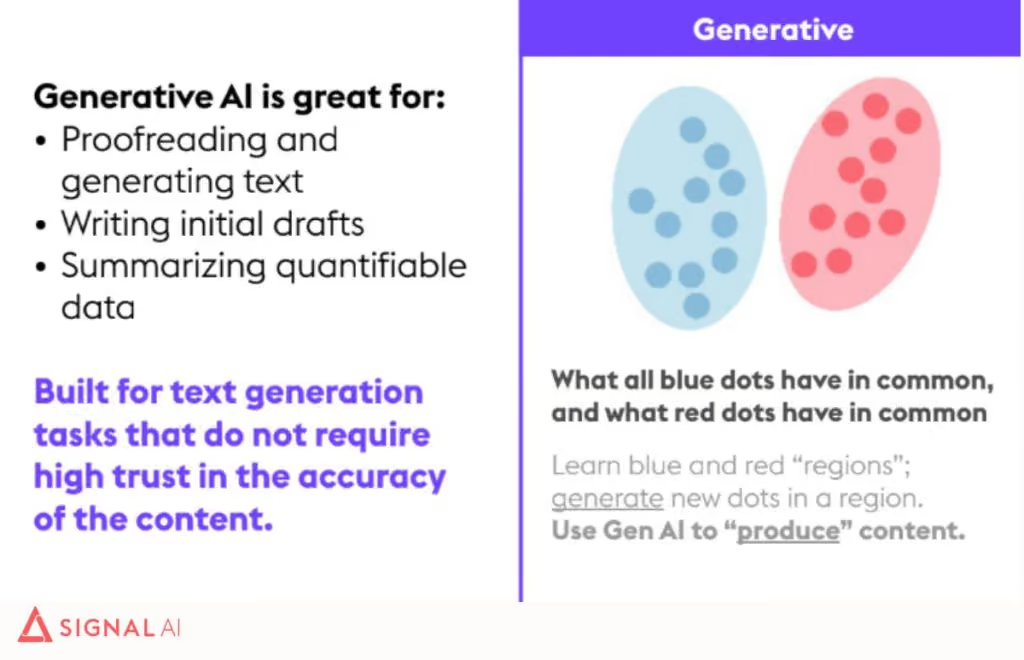
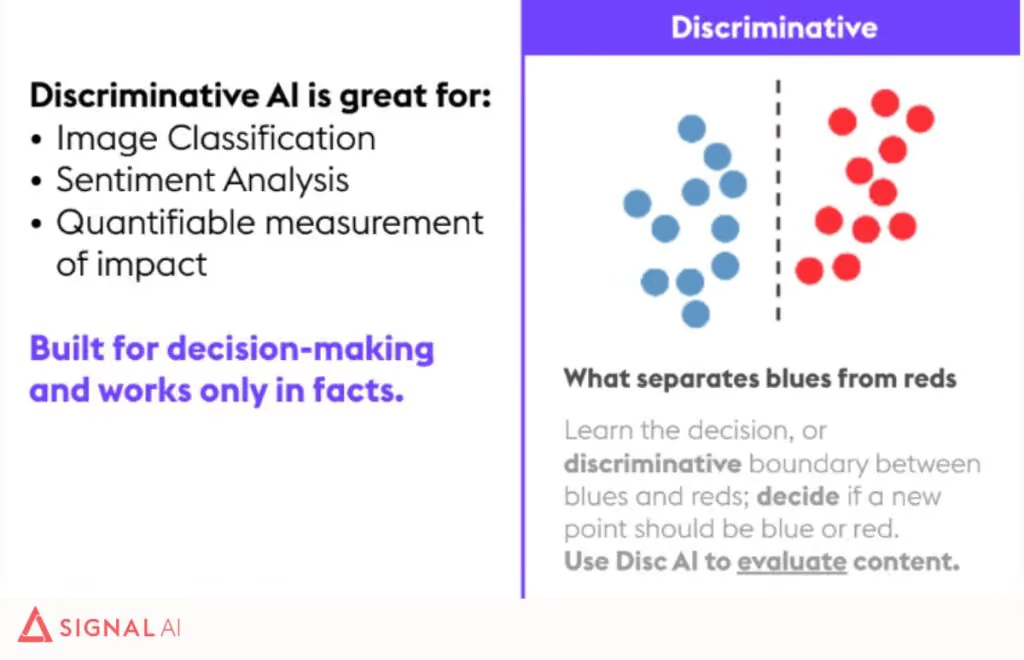
In our Black Box of AI webinar, Signal AI Founder and CEO David Benigson explains the differences between these two models using the visual of red and blue dots. To put it simply, generative AI is about generation, while discriminative AI is about classification.
https://youtu.be/0UxRfLzZx-Y
Generative AI excels at creating new content, making it a valuable resource for generating ideas, drafting content, and summarizing data.
By searching for commonalities amongst data sets, it identifies patterns across data sets and produces original outputs based on what it learns from those commonalities. It's important to note that generative AI can hallucinate and is built for text-generation tasks that don't require high trust in the accuracy of the content.
It's great for:
- Proofreading and generating text
- Writing initial drafts
- Summarizing quantifiable data
Discriminative AI, by contrast, specializes in distinguishing and categorizing data to separate and classify information. In a communications context, it helps organizations analyze sentiment, identify trends, and make data-driven decisions. Since discriminative AI focuses solely on factual analysis, it doesn’t generate speculative or misleading information, making it a reliable tool for strategic tasks like sentiment analysis and audience segmentation.
It's great for:
- Image classification
- Sentiment analysis
- Quantifiable measurement of impact
How do generative and discriminative AI help in Communications?
Now, there's a basic understanding of how AI works - but also how it can work for you.
The best approach to using AI will depend on the specific task that you are trying to accomplish. You don’t want to trust Gen AI to help you with a task that’s suited for discriminative AI and vice versa.
In communications, both types of AI bring unique advantages. Generative AI can handle creative tasks like drafting and content curation, while discriminative AI sharpens decision-making and data interpretation, ensuring factual accuracy and insights into audience behavior.
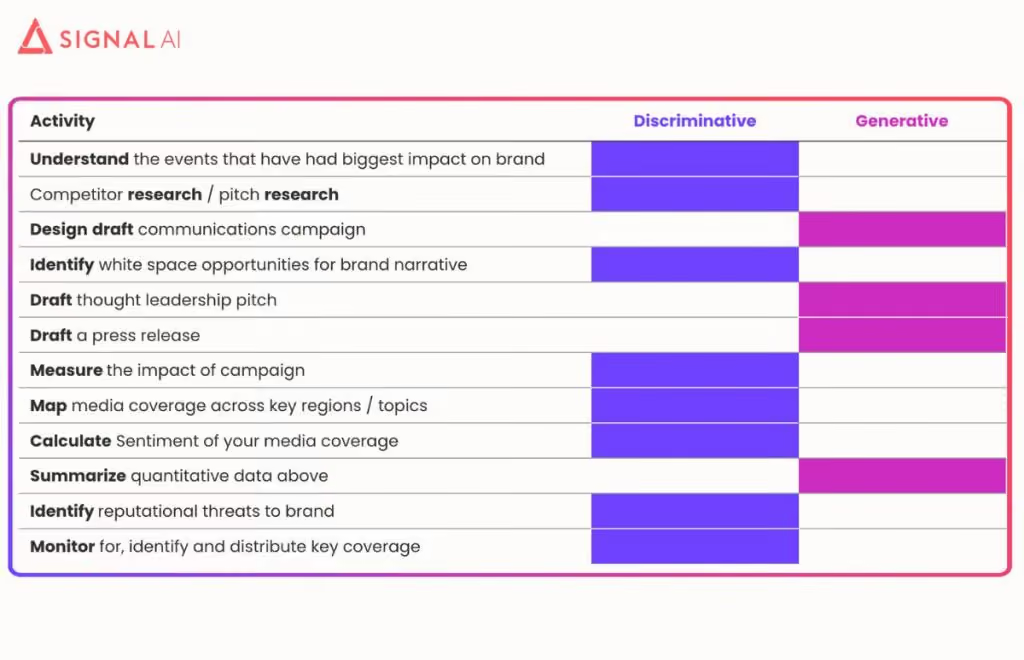
For Communicators, use can use Generative AI for:
- Automating content creation, e.g., drafting press releases or creative copy
- Designing communications campaigns or brainstorming new ideas
- Summarize quantitative data
Communicators can use Discriminative AI for:
- Understand the sentiment of your media coverage
- Identify reputational threats through media monitoring
- Improving PR strategy, e.g., finding whitespace opportunities for brand narratives
Here's a helpful checklist for which activities might make the most sense for generative AI vs. discriminative AI:
For more on how you can apply AI for cutting-edge reputation management, watch our webinar here.
What are the risks associated with AI?
With all new technologies, there are inherent risks, and in this case, Gen AI has been found to potentially construct or hallucinate based on non-factual content. To mitigate risks associated with AI, it's important to adopt and integrate AI with a trusted partner like Signal AI. We only use reliable sources, and our AI processes are hallucination-free, so our customers can have confidence in our product.
A combined approach: Retrieval-augmented generation (RAG)
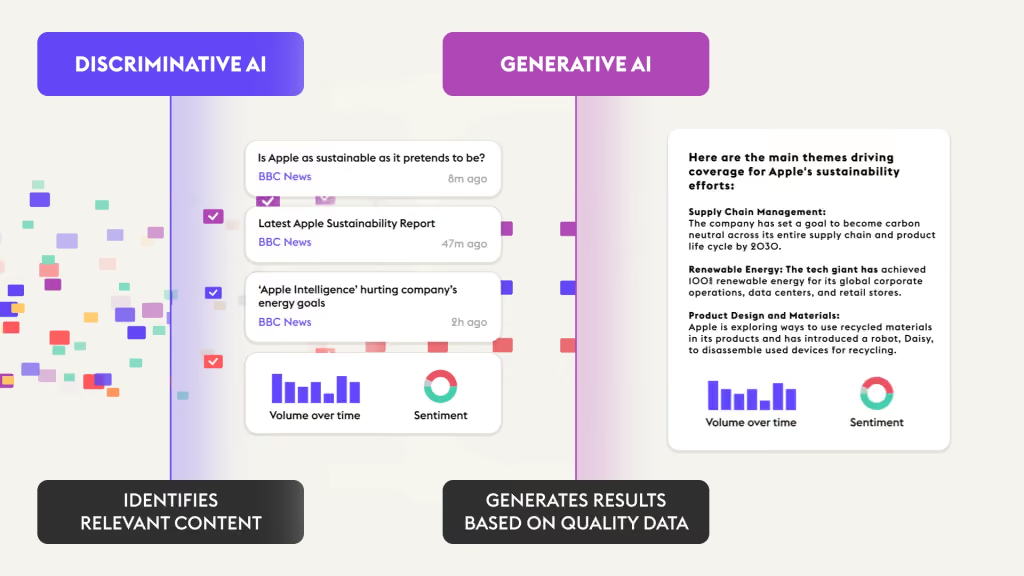
At Signal AI, we combine approaches, using discriminative AI to filter for accurate information and generative AI to connect the dots and provide natural language insights. This approach, called Retrieval-Augmented Generation helps mitigate the risk of AI "hallucinating" incorrect information, ensuring our outputs are fact-based and traceable to reliable sources.
Retrieval-augmented generation is "the process of optimizing the output of a large language model (LLM), so it references an authoritative knowledge base outside of its training data sources before generating a response."
We’ve been using AI for more than 10 years to help customers identify unforeseen reputational risks, measure the impact of their work, build proactive comms strategies, and deliver differentiated narratives. Learn more about our approach to artificial intelligence here.