The way people find information and answers to their questions is actively shifting. We’re moving from a world of clicking blue links to one where Large Language Models (LLMs) like ChatGPT, Gemini, and Perplexity give us the answers directly (and in tune with individual preferences).
For PR and Communications teams, this shift created an entirely new source to track ‘where and how is my brand being mentioned?’ Traditional SEO tools tell you how you rank on Google, but they can't tell you how often an AI model mentions your brand or, more importantly, which articles it’s using to form its opinion of you.
That’s why we’re introducing AI Citations. AI Citations reveal how brands surface in AI-generated answers and which narratives drive that visibility.
LLMs are the new front page
When an LLM answers a question about your industry, it isn't pulling random facts out of thin air. In fact, industry data shows that 80-90% of LLM responses rely on earned media rather than a company's owned content.
If your brand isn’t being cited, you’re invisible to a growing segment of your audience. If it is being cited, you need to know if the AI is using a positive feature story or a three-year-old crisis report as its primary source.
In our webinar, The Intelligence Advantage, featuring Jake Daubenspeck, Managing Director & Head of Data Solutions at Prosek Partners, he shared the following sentiment about tracking brand mentions on LLMs:
"That whole process of triaging reputational issues has also gotten a lot more difficult. It’s no longer simply about 'What would a human think about this?' – now you must consider how information is going to be interpreted by AI search platforms that make their own determinations regarding reputation. Having insight into that information is critically important."
What AI Citations actually tells you
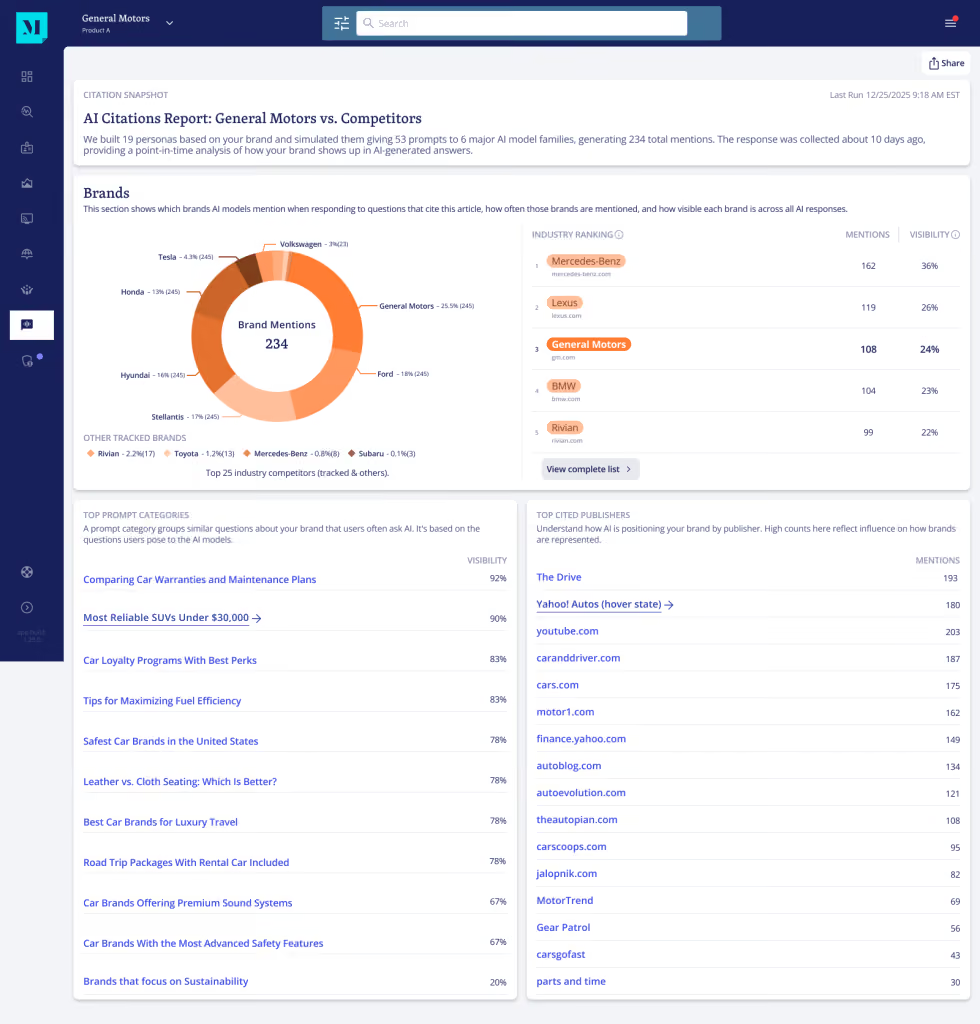
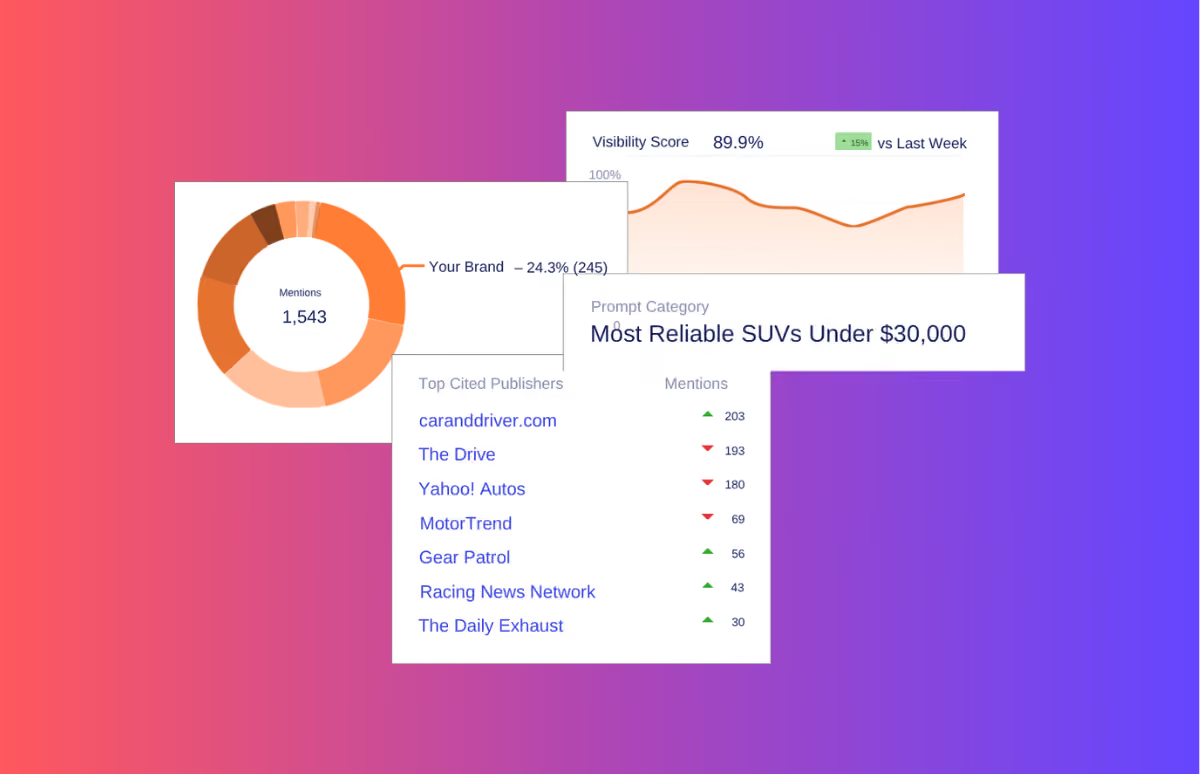
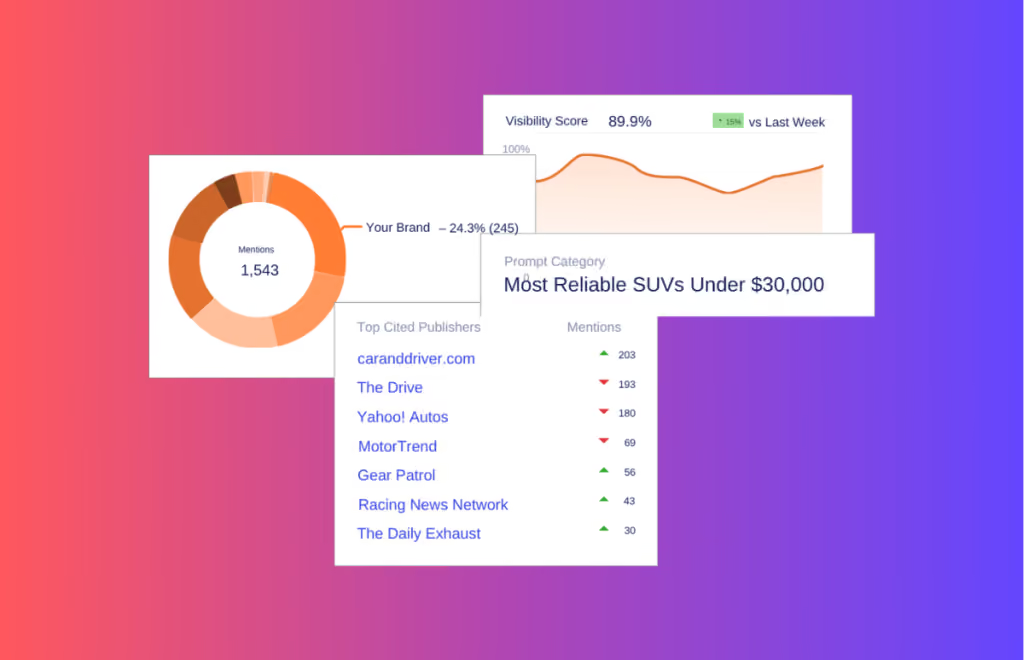
AI Citations allow users to see how AI models describe their brand, how often the brand name appears, how it compares to competitors’ visibility, and which earned media LLMs trust as a source by revealing the exact articles and publishers. Then, you can benchmark these metrics over time to understand changes, emerging, or declining brand narratives across AI models.
This tool provides a dedicated way to audit and influence your brand's presence and key narratives across the AI ecosystem. It moves beyond traditional SEO and GEO tools by focusing on the following key metrics:
- Brand Visibility Score: A clear percentage showing how often a brand appears in responses out of the total number of conversations. Paired with Readership Data, you can better understand the impact of earned media beyond traditional monitoring.
- Focal Mentions: A specific count of total citations for your brand name and the number of articles, compared to your competitors, flagging gaps in AI authority
- Top Prompt Categories: A grouping of similar categories about your brand that users often ask AI models. Unlike technical GEO tools, AI Citations focus on the narrative, showing the full prompts and the responses that trigger citations.
- Top Cited Publishers: A leaderboard of the specific domains LLMs use as their trusted sources for your brand, helping you shape earned media strategy
Why this matters for GEO
There’s no denying that Generative Engine Optimization (GEO) is the new frontier for search optimization, particularly for owned content. You shouldn’t conduct traditional SEO for an LLM; you have to understand the interplay between high-quality earned media and AI training sets.
Here’s how to think about the difference between AI Citations and GEO:
Think of AI Citations as your scouting report. It identifies which "players" (publishers or articles) the AI trusts and where your competitors are currently winning the narrative. You can’t build an earned media strategy without that intel.
GEO is your game plan. It’s the practice of optimizing the owned content you create and the pitches you make to ensure that when the AI ingests data, your brand is the one that comes out on top.
If GEO is the practice of optimizing owned content for LLMs, AI Citations is the necessary measurement tool for measuring how that message is reverberating in the earned media landscape and reflected in LLM responses. It’s a way to bring more clarity to what’s being cited and how this fits into broader readership and reputation strategy.
Karlie Santucci, Chief Customer Officer at Signal AI, says:
“What we found with customers at both Memo and Signal AI is a need for better tools to track and measure their earned media impact, with the idea that GEO is the solution. But without AI Citations and readership data, GEO is just guessing what to optimize. That’s why we created AI Citations.”
AI Citations Case Study: The Credit Card Landscape
Imagine you are a traditional credit card company—let's call it Brand A. When we ran the data through AI Citations, we found that Brand A appeared in only 33% of AI conversations.
LLMs most frequently cited listicles/rankings and roundups/industry overviews, whereas readership was highest for Stocks & Markets and Personal Finance Advice articles.
LLMs surface information from a wide range of sources, including earned media. Evaluating AI citations alongside readership provides a more complete view of how consumers encounter and learn about a brand.
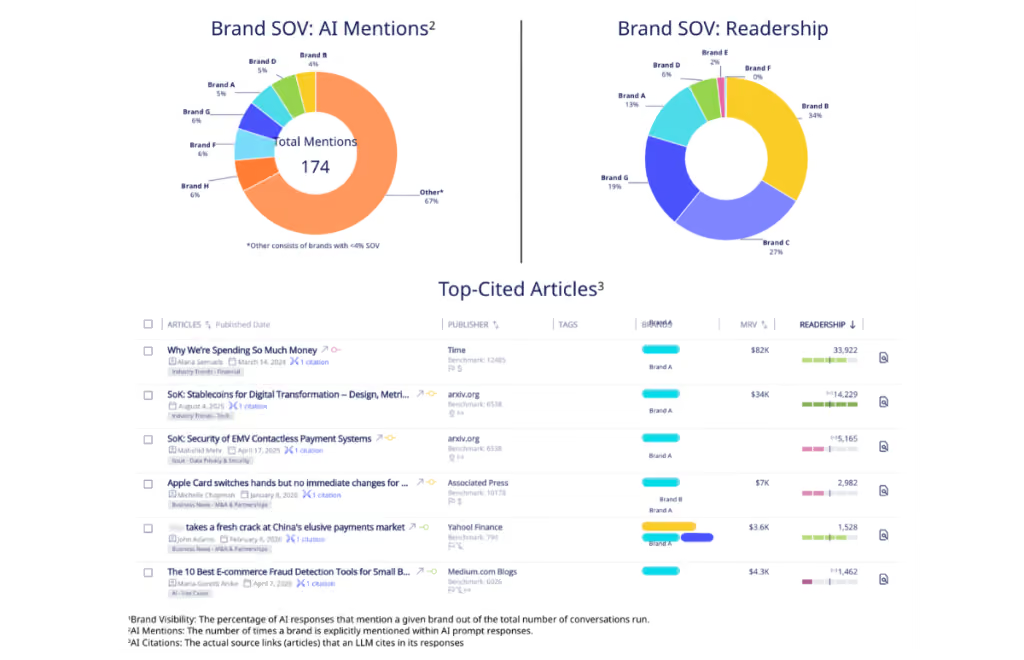
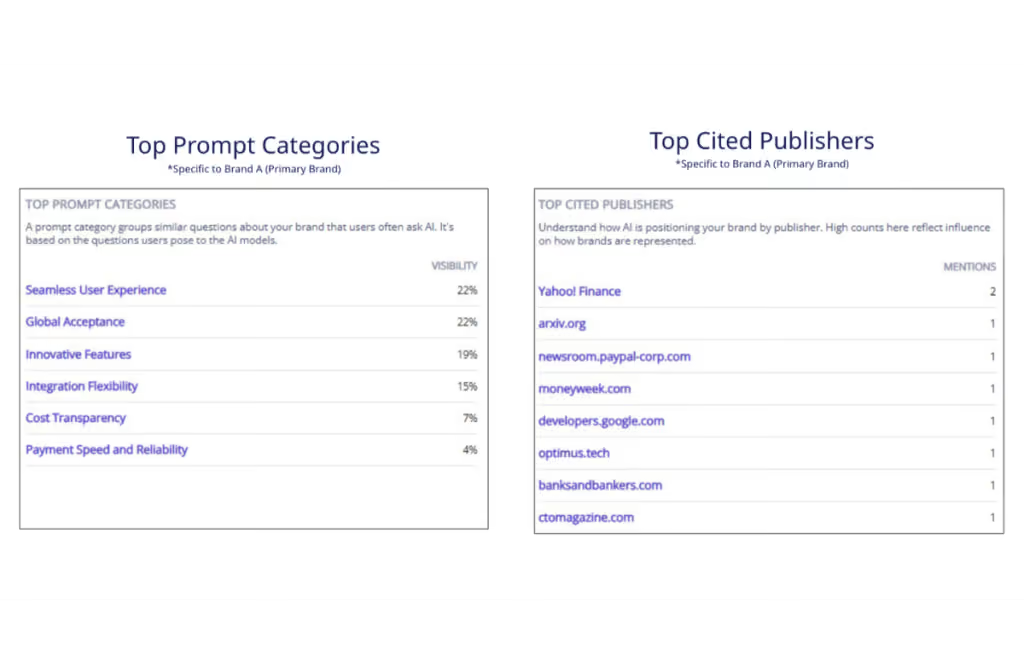
In Top Cited Publishers, Yahoo! Finance was a top driver of both AI citations and readership for Brand A. While various niche publications fueled AI citations, national news outlets like The New York Times and Business Insider generated strong readership for Brand A. Both niche and national sources play an important role, as consumers increasingly rely on both LLM-generated answers and trusted earned media when evaluating brands and making financial decisions.
In Prompt Categories, Brand A saw the strongest LLM visibility around Seamless User Experience, Global Acceptance, and Innovative Features narratives. In contrast, the brand had lower visibility in conversations related to Cost Transparency and Payment Speed & Reliability.
This presents an opportunity for the brand to engage niche fintech reporters on themes of transparency and reliability, helping strengthen its positioning against digital-first challengers.
Now that Brand A has this "scouting report," their earned media strategy has shifted. Instead of chasing broad national headlines, they are now targeting the specific niche fintech reporters that the AI actually trusts. By winning over the sources the LLMs cite, they can move their Visibility Score and ensure they aren't left out of the conversation.
Signal AI + Memo: The Reputation Intelligence Advantage
This type of impact measurement isn't just about counting mentions. With Signal AI’s acquisition of Memo, we’ve combined industry-leading reputation intelligence with the world’s only platform that provides direct readership data from publishers.
Viewing AI Citations alongside readership data shows which earned media sources AI models rely on and whether those sources have low or high readership. Evaluating both metrics together reveals the full picture of brand impact.
We aren't just showing you what the AI says; we’re showing you the why behind it. You get a holistic view of your reputation: from the journalists writing the stories to the humans reading them, and finally, to the AI citing them.
Monitor, measure, and maximize your brand’s visibility in LLM responses with AI Citations
How is your team currently tracking brand mentions within AI-generated search results? It’s time to stop guessing and start measuring your impact where it actually counts.
Learn more about how Signal AI’s acquisition of Memo is bringing forth the future of reputation intelligence.