Most Enterprise Risk Management teams are good at managing risks once they've materialized. The real problem is the narrow window before that: when signals are forming in the external environment but haven't yet reached the board agenda, the risk register, or the morning briefing.
Ask any CRO how their team currently monitors emerging risks, and you'll hear a familiar answer: consultants, industry reports, executive conversations, and a lot of manual reading. The challenge isn't effort, but coverage and timing. No human team can possibly read widely or quickly enough, translate across languages and geographies, or map complex risk intersections across categories, to catch every early signal in every market that could affect their business.
And even when signals do surface, verifying their priority and severity against your specific risk profile is a problem in its own right. Generic monitoring tools flood you with noise. They don't tell you what actually matters to your organization, or how urgently. By the time the dots get connected, the damage is often already done.
Risk Scanner was built to close that gap.
What Signal AI’s Risk Scanner does
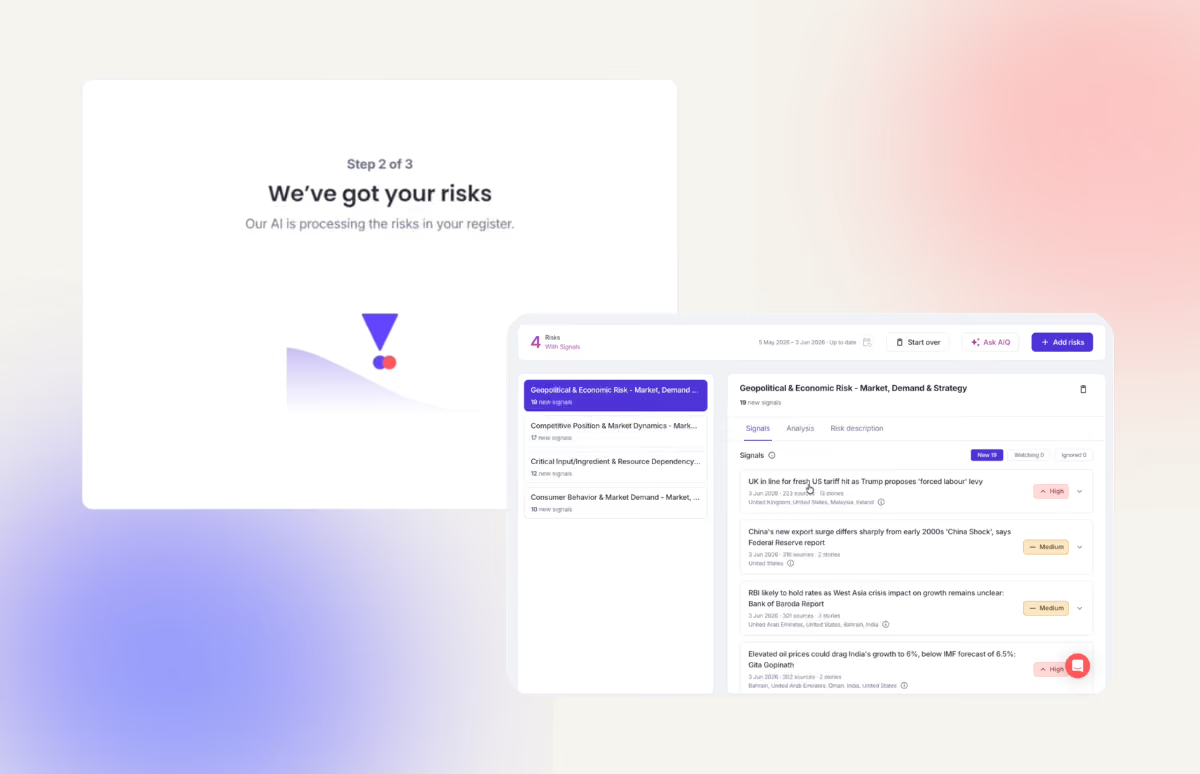
The Risk Scanner takes your existing risk register in whatever format (spreadsheet, PDF, Word document, or CSV) and automatically scans Signal AI's global news coverage to surface early signals relevant to each risk you're tracking.
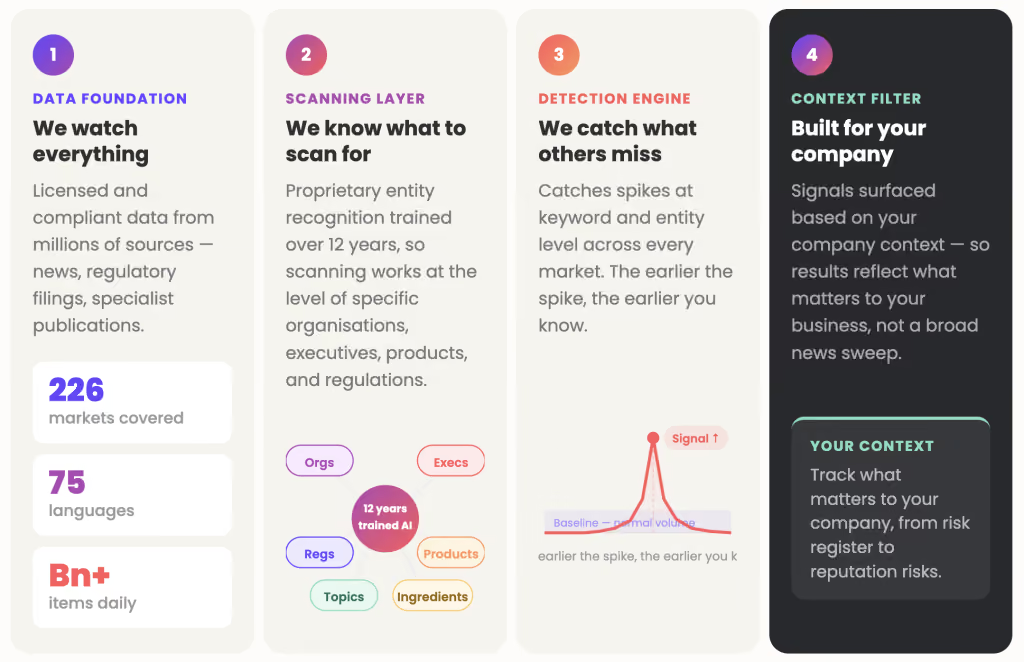
Signal AI ingests billions of articles a day and transforms them by labeling 100M+ entities and topics every day using our proprietary engine, AIQ. The Risk Scanner filters all of that down to what actually matters for your business, using anomaly detection to identify genuine spikes in coverage, rather than just counting mentions of your organization.
If a risk event that normally generates 50 mentions a day suddenly jumps to 500 in three hours, that's flagged immediately. That's an early signal, not background noise. Each signal is rated on impact and likelihood (1–5 each), multiplied into a combined score from 1–25, and explained in plain language — so your team can prioritize and assess risks quickly to brief leadership with confidence.
Don't have a risk register yet? Risk Scanner can generate one for you based on your company profile.
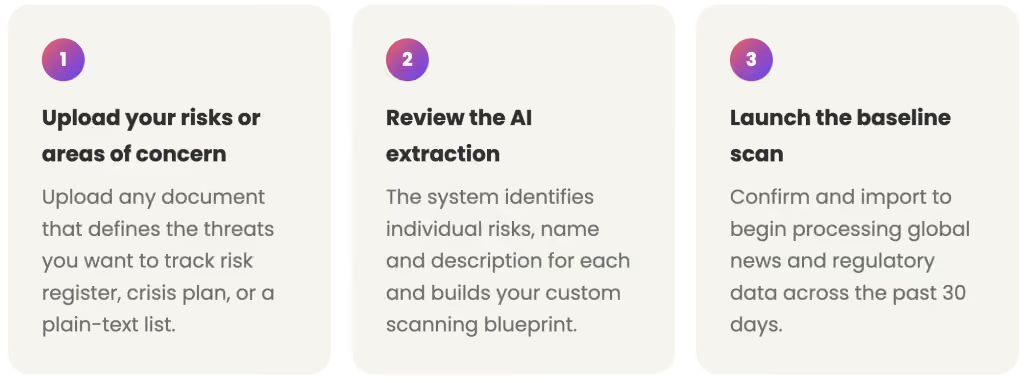
How it works: 3 simple steps
Step 1: Upload your risk register. Upload any document that defines the threats you want to track in your risk register, crisis plan, or plain-text list. The AI extracts your individual risk areas and descriptions. Then it gets to work.
Step 2: Review the AI extraction. The system identifies individual risks, names, and descriptions for each and builds your custom scanning blueprint.
Step 3: Launch the baseline scan. Confirm and import to begin processing global news and regulatory data across the past 30 days.
Risk Proximity: Direct, Adjacent, and Horizon risks in one view
One of the most valuable things Risk Scanner surfaces isn't just what's happening directly to your business. It's what's happening in your broader ecosystem.
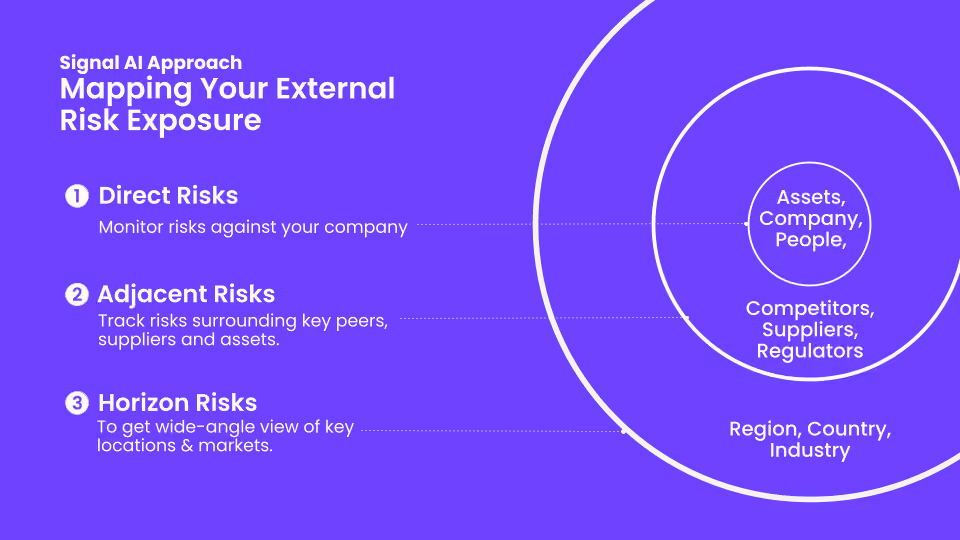
Signal AI's Risk Proximity framework gives you visibility across three layers:
- Direct risks are the threats most immediately relevant to your organization: regulatory changes, sector-specific disruptions, or risks named explicitly in your register.
- Adjacent risks sit one step removed — what's happening to your competitors, your supply chain partners, or the industries you depend on. These are often the earliest indicators that a risk is heading your way.
- Horizon risks are macro signals still forming at the edges: geopolitical shifts, emerging regulatory trends, or industry-wide patterns that haven't yet hit your sector but are accelerating.
Most tools give you the first layer. Risk Scanner gives you all three.
Consider a supply chain risk team monitoring geopolitical exposure. By the time a regional conflict reaches mainstream news coverage, the adjacent signals — shipping route disruption, regulatory commentary, sector-specific volatility — have often been accelerating for weeks. Risk Scanner picks up that acceleration early, giving teams time to assess exposure and brief leadership before it becomes a crisis response.
What you get
- Automated Signal Detection: Continuously monitor your specific corporate risks against billions of global data points to catch emerging external threats before they escalate.
- Entity and Asset Mapping: Connect complex global events and shifting regulatory landscapes directly to relevant business units, portfolios, or supply chains.
- Anomaly Detection Using Verified Data: Signal AI’s proprietary impact and likelihood scoring (1–25) with AI-generated explanations for each signal helps flag genuine spikes, not just noise
- Cross-Language Threat Detection: Breaks down geographical barriers by tracking your risk factors across multiple languages and regions, ensuring that global enterprises maintain an accurate macro view of their operational exposure.
- Streamlined Workflows: Works with any risk register format — or generates one for you. A 30-day baseline scan on setup, with on-demand refresh at any time.
See it in action
Risk Scanner is available now in early access. If you want to see how it performs against your specific risk register, our team can walk you through it. Talk to our team.