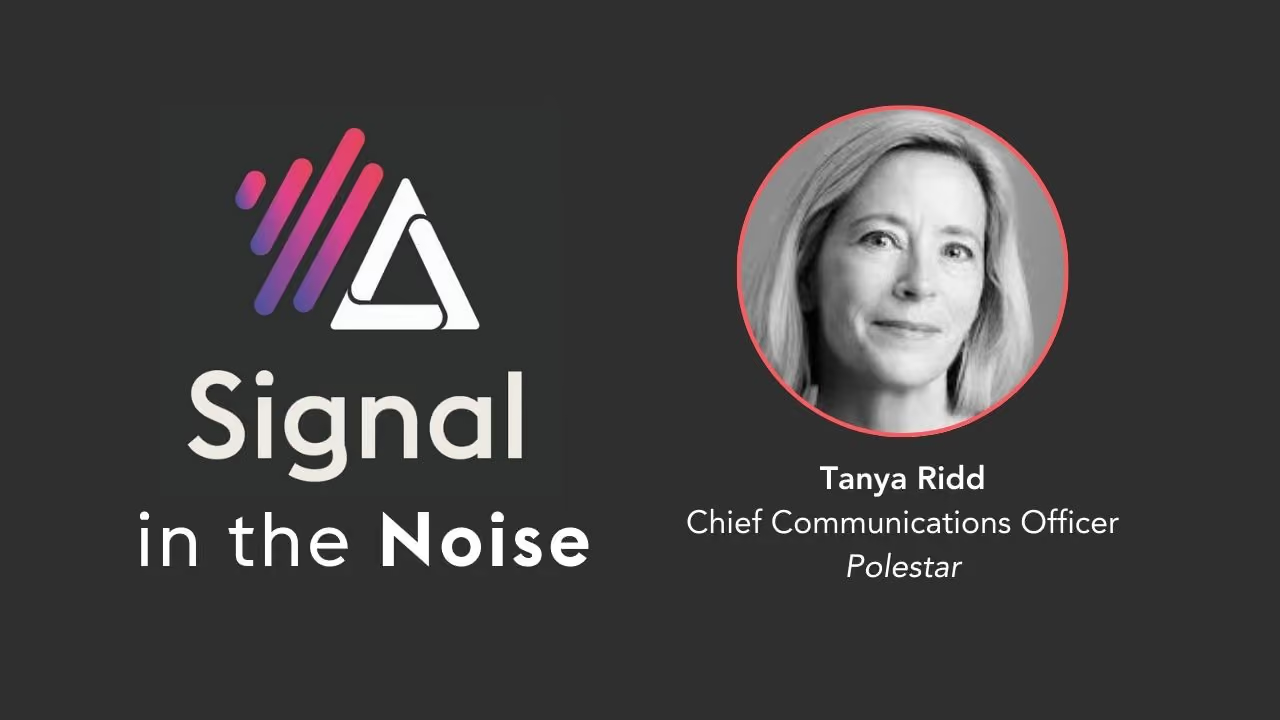
In this episode, we sit down with Tanya Ridd, a communications powerhouse with experience leading comms for iconic brands like Apple, Spotify, Polestar, and Snap. Tanya delves into the importance of keeping the product front and center to build a strong brand, crafting a core message that evolves with the times, and uncovering an organization’s authentic voice to create lasting impact. We also dive into the thought-provoking theme of “how technology shapes society” and its profound implications for communications and branding.
Below is just a snippet of the conversation. For more episodes, check out the Spotify channel to listen or the YouTube channel. This transcript has been edited for length and clarity.
“We always started by thinking about how we tell that story through the prism of the product and through the design approach that's been taken.” - Tanya Ridd.
Dan Gaynor: You [talk] about putting design and product in the center of all these companies.... From communications at Snap to computing at Apple, to really revamping the entire business of music at Spotify to bringing mass-market EV production to scale at Polestar, I'd be interested as a communicator who is not like the engineer behind the scenes on the algorithm, let alone designing the headlights on a car, how you embed yourself in that design thinking ethos, and how that informs the narrative you try to convey on behalf of those brands.
Tanya Ridd: I think with all of these companies, you want to put the product front and center. How you put the product front and center doesn't necessarily mean you just have to talk about the functionality of the product, but you have to sort of start the conversation or the story with the product and jump off from there.
Whenever we were working certainly across all of those different companies around the business objective we were solving for or the outcome that we wanted to achieve, we always started by thinking about how we tell that story through the prism of the product and through the design approach that's been taken.
Snap is a really interesting example where a lot of the thinking about what Snap was trying to achieve from a product perspective was a solution to some of the problems with social media around adding friends that you didn't know, about chasing likes, and it was about trying to be your authentic self. That was why ephemerality was such an important part of it. And so when you're kind of having the conversations that we wanted to have around some of the issues out there and some of the way that Gen Z and their use of technology was both inspiring because it was often about this kind of unfiltered self, and how the product, therefore, allows that. So it was often for us about sort of starting from that point from the product and what the design was trying to do to how we then built the storyline or how we then sort of talked about.
"Being able to have a static, old-fashioned messaging house, I don't think really exists in a communications function today." - Tanya Ridd.
DG: I would love to hear, do you have a process for architecting, what are the core messages, who they're aimed at, and where we deploy those messages? In other words, do you have a sense of company after company, how you create that narrative architecture?
TR: Yes, I think there are obviously base principles that are not going to surprise any communicator around sitting with a lot of your internal stakeholders and your external stakeholders and figuring out what matters, you know, taking a temperature check as well as kind of delving deep, both into the sort of present of the business and the future of the business.
But you've also got to have a high degree of flexibility because there are always curveballs coming at you. And so having that true essence at the core, that's vital to know exactly who you are and what you're trying to achieve and trying to stay true to that, letting that guide you and keeping that very sort of stable, but very, very kind of clear in your mind.
But being able then to sort of shift and adapt to what's happening in the world around you. As you say, in all of these sectors, there are a lot of things happening. And part of it is a kind of change in society. Part of it is geopolitical. Part of it is technological and driven by innovation. So being able to kind of have a static kind of old fashioned messaging house, I don't think really exists in a communications function today.
I think that sense of who you are and what the business wants to achieve, and then remaining extremely flexible to kind of how you deal with different issues as they arise. And that often involves deep collaboration across the business, as you can imagine, if you're talking about geopolitical regulatory issues, you're often working in lockstep with your kind of colleagues in sort of policy and legal and, you know, also sort of in the CEO office, but Then you might move over to things that are more affecting consumer confidence. And that might be something that you're working more in lockstep with your marketing colleagues and your commercial colleagues. So I think this idea of sort of constant flexibility, but having an iron core at the center of it.
"I remember somebody talking about the communication function as being the spider in the web in an organization." - Tanya Ridd.
TR: [...] I remember somebody talking about the communication function as being the spider in the web in an organization. And I think it's very true. You know, you are part of many different conversations. I would say sometimes you're probably more the dilettante than the sort of expert because you do have to retain lots of pockets of information across lots of different topic areas and somehow draw patterns or create connections between that information.
And that is, I think, incredibly difficult. Motivating, you know, it's a really interesting area. You're always learning, you're always kind of dealing with something different. And I think if you sort of shape it towards not only sort of trying to support and help and guide the business that you're working at, but also, you hope to have a positive, broader impact through what you do, I think that is what is incredibly motivating about the industry or the function.
---
Signal in the Noise is a podcast dedicated to helping today's business leaders navigate the complexities of decision-making by leveraging data and groundbreaking technology—first and foremost, artificial intelligence (AI). You can also watch the interview on our Signal AI YouTube channel here.