Congress has approved legislation that may lead to a TikTok ban unless its Chinese owner, ByteDance Ltd., sells the app within a year.
Such a ban would reshape the social media scene, impacting giants like Meta and Alphabet, while ByteDance would likely contest the decision in court.
Why should Big Tech and social media players monitor the TikTok ban coverage concerning their reputational risk? With insights from our traditional and social media intelligence, here’s how the TikTok ban could play out.
Key Findings:
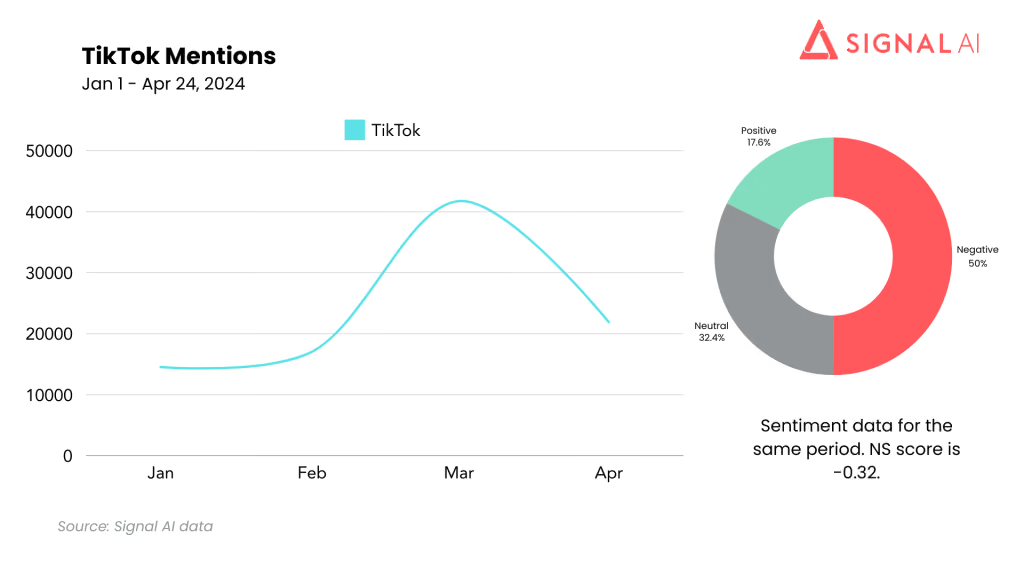
- Overall mentions of TikTok spiked in March 2024 around TikTok ban news. The Net Sentiment (NS) score for TikTok in Q1 2024 is -.32.
- Mentions of ‘National Security’ also peaked in March. National Security is a key concern regarding the TikTok ban conversation compared to topics like data protection and content moderation. Sentiment around this topic is overwhelmingly negative (93.23% of coverage is negative, NS is -0.92; high salience mentions).
- 33.27% of coverage in Q1 discusses regulation. Sentiment around this topic is still overwhelmingly negative (85.79%, NS is -0.82), but not as negative as sentiment around it being a threat to national security (high salience mentions).
Let’s dig into the data.
What’s Happening: Will TikTok Face a Ban or Be Sold?
In March 2024, the House passed a bill requiring ByteDance, TikTok's Chinese owner, to sell the US operations to someone who isn't based in a "foreign adversary" country. If not, the app would effectively be banned in the US, requiring Google and Apple to remove TikTok from their app stores.
Since then, the bill's sponsors have bundled it with a $95-billion foreign aid package that includes measures calling for US aid to Ukraine and Israel (a questionable practice, but that’s for another article).
While forcing TikTok to sell has had mixed political support, the aid packages had been a priority for much of Congress. Combining all three things meant the TikTok bill would likely be approved as part of the package deal. The legislation now awaits President Biden’s signature, anticipated to be forthcoming.
The enactment of a ban or mandated sale won’t be immediate. ByteDance would have around nine months to comply, extendable by another 90 days at the president’s discretion.
ByteDance plans to challenge the law as unconstitutional. However, the legislation’s terms suggest limited delays, directing legal challenges directly to the U.S. Court of Appeals for the D.C. Circuit.
Potential Acquirers?
ByteDance might seek a buyer for TikTok, but complexities remain, notably China’s control over the Company’s algorithm. Microsoft and Oracle are speculated to be potential buyers. Former Treasury Secretary Steven Mnuchin has also said he is putting together an investor group to buy the company potentially, but that is seen as a longshot.
A significant difficulty is that China would have to approve any sale of TikTok’s algorithm. In 2020, when the Trump administration was considering a TikTok ban, the Chinese government added content-recommendation algorithms to its export-control list, essentially making TikTok’s algorithm off-limits to a foreign owner unless the government signed off.
What’s the temperature of this decision to ban?
After the House's approval, ByteDance criticized the bill for infringing on the free speech rights of millions and potentially harming numerous businesses. ByteDance might contend the law is unconstitutional, arguing it unfairly targets a specific entity without due process.
TikTok has shaped the social media sphere, influencing our culture across industries. Removing such a cultural juggernaut will leave a big hole behind, displacing creator communities and raising questions for other social media apps. From a regulatory standpoint, it could affect perhaps any company with ties to China.
According to sentiment analysis, what’s the temperature of this ban? Who else might feel its effects?
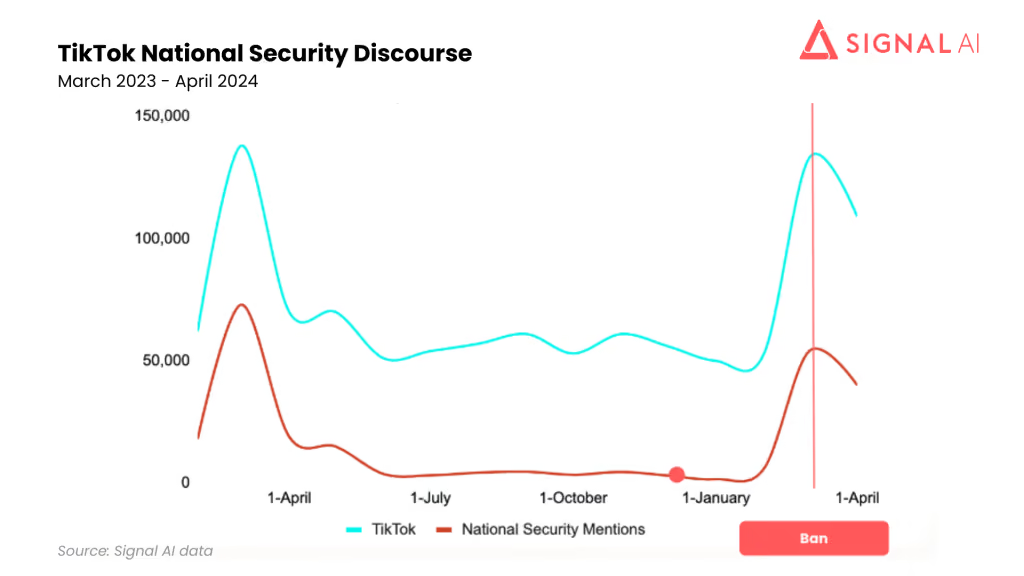
TikTok National Security Discourse Peak in March
Like a boomerang effect, Congress has discussed banning TikTok in the same context.
In the chart below, you’ll see the spike of TikTok mentions on the topic of National Security back in March of 2023 and peaking again in March of 2024.
National Security Sentiment is Overwhelmingly Negative at 93%
- According to Signal AI data for Q1 2024, 24.63% of articles about TikTok mentioned threats to national security. Sentiment around this topic is overwhelmingly negative (93.23% of coverage is negative, NS is -0.92; high salience mentions).
- 33.27% of coverage discusses regulation. Sentiment around this topic is still overwhelmingly negative (85.79%, NS is -0.82), but not as negative as sentiment around it being a threat to national security (high salience mentions).
- Data protection & information privacy occupies a much smaller share of the conversation - 9.24%, but also very negative (83.99% negative, NS is -0.80; high salience mentions).
- When we remove news coverage related to the threat of legislation, national security, and the China/Ukraine connections, net sentiment about TikTok goes up from -0.32 to 0.10 (high salience mentions).
TikTok Ban Discourse
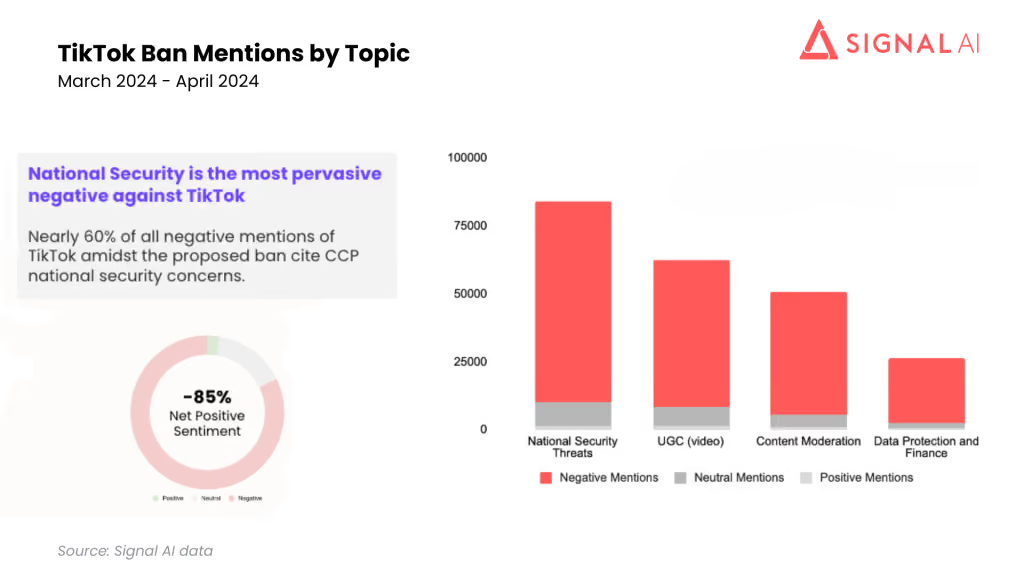
Overall, National Security is the biggest reputational risk to social media companies. Nearly 60% of all negative mentions of TikTok amidst the proposed ban cite CCP national security concerns.
Regarding topics of interest, we’ve found similar results when tracking U.S. Elections insights with our Elections Index. Between Ukraine v. Russia and Israel v. Hamas, foreign policy remains at the forefront of US Elections discourse. Security remains the media’s focal point, as foreign policy topics are featured in 76% of all election discussions.
What's the potential impact of a ban or sale?
Impact on Content Creators
170 million social media users, the company’s advertisers, and content creators will likely need to find an alternative platform and rebuild their influence should ByteDance fail to sell.
It’s no secret that Meta Platforms, Facebook and Instagram, are high on the list. Instagram’s Reels has been working hard to attract TikTok content creators. According to a Wedbush survey, about 60% of TikTok users identified Facebook or Instagram as their most likely alternative in case of a TikTok ban.
According to the Wedbush survey, Alphabet’s YouTube channel would also benefit, with about 19% of TikTok users identifying YouTube as their most likely alternative. YouTube said its TikTok challenger “YouTube Shorts” has an average of 70 billion daily views.
Impact on Small Businesses
TikTok has reported that more than 7 million American businesses market or sell their products through the app.
According to a study issued Wednesday by Oxford Economics, a financial consultancy, TikTok drove $14.7 billion in revenue for small-business owners last year and contributed $24.2 billion to U.S. gross domestic product. The study also found that TikTok supports at least 224,000 American jobs, with the greatest economic impact in California, Texas, Florida, New York, and Illinois.
Impact on US-China Relations
The legislation that passed to ban TikTok could extend to other Chinese apps deemed security threats, like CapCut or Temu.
As reported by Axios, the ban would trigger economic tensions between the U.S. and its rivals and “set a precedent for other nations to force U.S. tech companies to sell off their local operations.”
Newsweek also reports that the TikTok ban could be a risk factor for U.S. companies with operations in China, like Apple or Tesla, as it could be the start of a war on data.
Companies reliant on global markets could face business threats due to geopolitical tensions, as we’ve reported similar reputational risk factors on the fast-moving consumer goods industry and retail supply chains.
What if TikTok gets sold to someone else?
ByteDance, TikTok’s parent, is subject to Chinese law, and the Chinese government has stated that it opposes the sale.
In the past year or so, China has implemented controls governing the exportation of algorithms, a policy that includes the incredibly successful algorithm that powers TikTok’s recommendation engine. If the Chinese government doesn’t want ByteDance to relinquish TikTok’s algorithm, the sale could be blocked outright. As an alternative, it could allow TikTok to be sold but without the lucrative algorithm that forms the basis for its popularity.
But without the secret sauce that has propelled the app to 170 million US users, the app could be dead in the water.
What Now?
In all of the buzz about the ban, a clear messaging point for other tech and social media companies should be addressing national security concerns.
While there aren’t current talks about banning other social media platforms, Big Tech should pay close attention to claims of national security issues. It’s one of the few topics that can generate the political buzz to unite Washington.
Businesses often face unexpected risks and regulatory changes that can harm their reputation, operations, and finances. With Signal AI’s reputation and enterprise risk management tools, business leaders can proactively monitor potential threats to manage enterprise risk before it affects business performance. Learn more about our risk and reputation management solutions here.