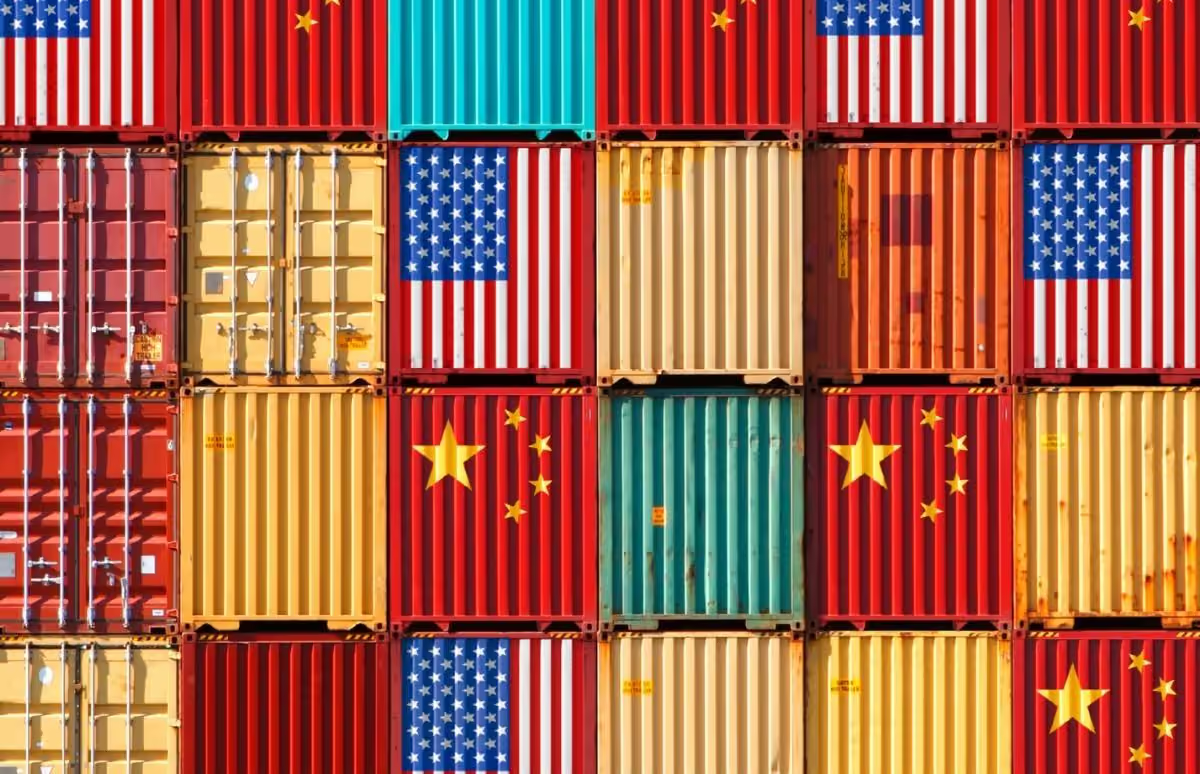
President Trump's sweeping "reciprocal tariffs" have fundamentally reshaped the global economic landscape. With minimum 10% tariffs on goods from all countries and rates soaring to 145% for China, we're witnessing the most aggressive trade policy shift in over a century.
How have these dramatic tariff policies impacted different industries, and which sectors face the greatest challenges in this new trade environment? Through AI-powered data analysis, here's what we discovered.
Key Findings:
- Tariffs dominate 68% of conversations about Trump's second-term agenda, far outpacing immigration (13.7%) and the newly formed DOGE (15.3%).
- The automotive industry accounts for approximately 34% of tariff discussions with a negative outlook facing an estimated $100 billion in annual costs. Vehicle prices could potentially increase by $5,000-$15,000.
- On average, tariff mentions cause a 64.7% decline in sentiment across auto companies, with Toyota maintaining the most positive sentiment at 51.7%.
- The Hardware & Semiconductors sector showed improved sentiment (+0.10 monthly), while Consumer Electronics has declined (-0.09 monthly) despite temporary exemptions.
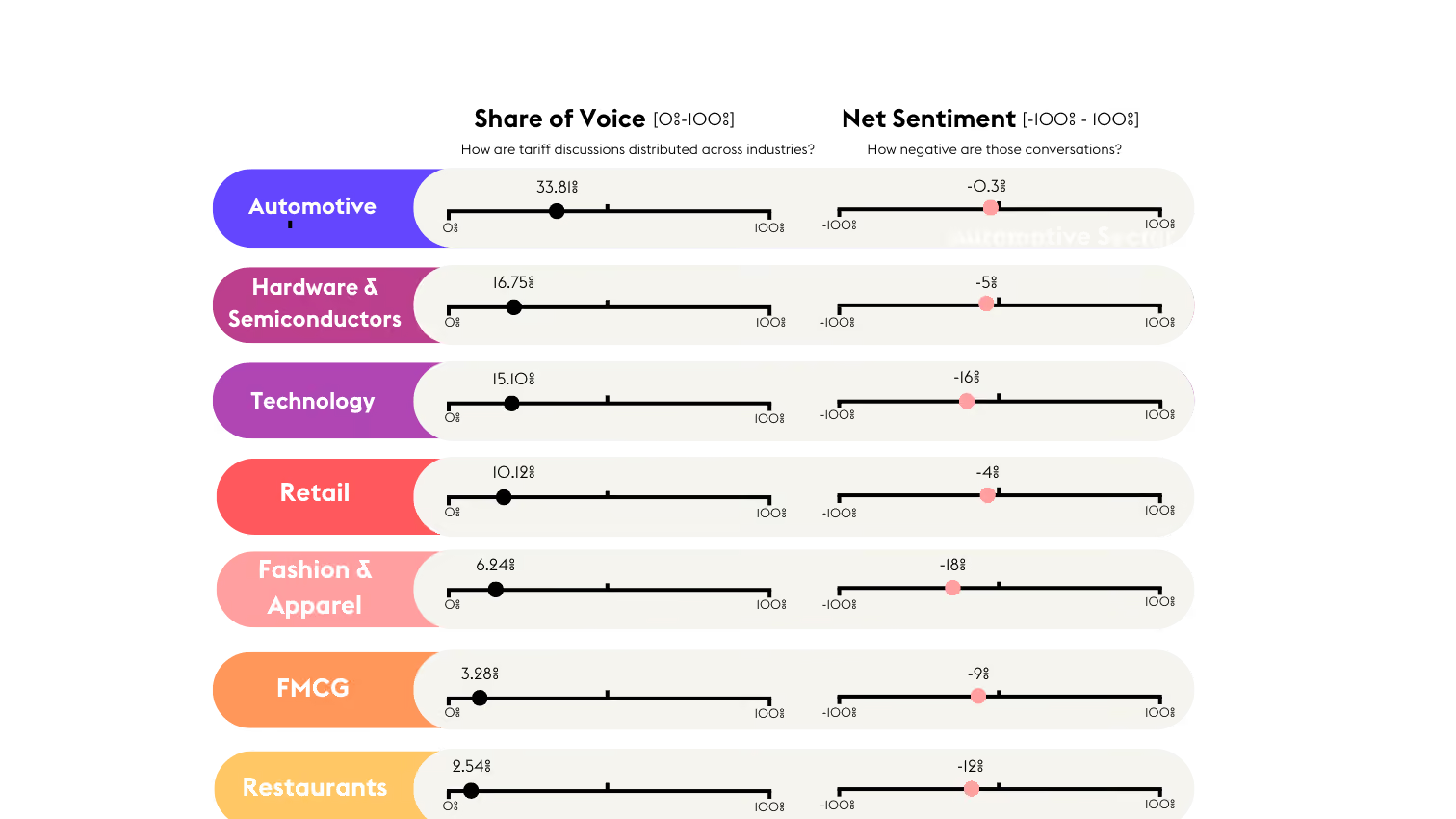
- Fashion and retail sectors (6.2% of coverage) face the most severe sentiment impacts at -18%, with a direct correlation between Chinese manufacturing exposure and negative public sentiment.
Tariff policy continues to dominate Trump's agenda, receiving an overwhelmingly negative reception across the aisle.
The average U.S. tariff on imports has risen to 24-27% - the highest in over a century, with media sentiment maintaining 70-80% negative since the inauguration. Tariffs now dominate 68% of conversations about Trump's second-term agenda, far outpacing other policy priorities like immigration (13.7%) and DOGE (15.3%).
Learn more about how Trump’s new immigration policies are causing disruptions for businesses.
Since Trump's inauguration on January 20, the trade conflict has unfolded rapidly. On February 1, Trump signed an executive order imposing 10% tariffs on Chinese imports and 25% on imports from Mexico and Canada. Implementation began February 4 with 10% tariffs across all Chinese imports, prompting immediate Chinese retaliation including duties on American goods and an anti-monopoly investigation into Google.
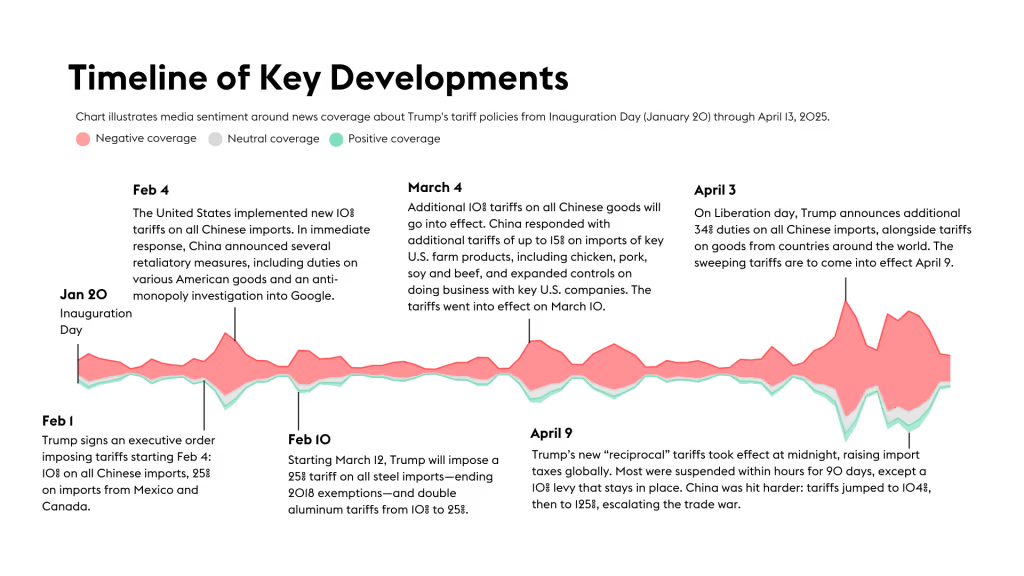
By February 10, Trump announced 25% tariffs on all steel imports and doubled aluminum tariffs from 10% to 25%. March 4 saw additional 10% tariffs on Chinese goods take effect, with China responding with up to 15% duties on key U.S. farm products and expanded controls on doing business with key U.S. companies. The most dramatic move came on April 3, dubbed "Liberation Day," when Trump announced additional 34% duties on Chinese imports alongside tariffs on goods worldwide.
When the "reciprocal" tariffs were implemented on April 9, most were suspended within hours for 90 days, except a 10% levy that stays in place. China was hit harder, with tariffs jumping to 104%, then escalating to 125%, intensifying the trade war.
Impact
The tariff policies are creating significantly different impacts across industries and regions, reshaping global economic relationships and supply chains.
Automotive Industry
Trump's 25% tariff on foreign-made vehicles (with another 25% on auto parts coming in May) has severely disrupted the global automotive industry. Representing 33.8% of tariff discussions with a negative sentiment of -0.3%, the sector has seen immediate market consequences: auto stocks have plummeted (GM down 8%, Ford down 18%, Stellantis down 20% in April), while steel and aluminum prices have jumped 21%.
Manufacturers have taken immediate defensive actions: JLR paused US exports, Stellantis halted production in Canada and Mexico while laying off 900 US workers, and VW suspended vehicle shipments from Mexico and Europe. The tariffs are projected to add approximately $100 billion in annual costs to the auto sector, increasing vehicle prices by $5,000-$15,000 and potentially reducing new car sales by 15-20% in 2025.
On average, the mention of tariffs causes a 64.7% decline in sentiment across auto companies. Stellantis (22.4% share of voice, -6.07% sentiment) and General Motors (19% share of voice, 3.92% sentiment) are receiving the most coverage, while Toyota (8.8% share of voice) maintains the most positive sentiment at 51.7%.
Technology Industry
The technology sector shows mixed impacts across its subsectors. Hardware & Semiconductors (16.8% of overall tariff coverage, -5% sentiment) showed the strongest positive sentiment trajectory with an average monthly improvement of +0.10, culminating in an overall gain of +0.31 from January to April. This improvement came after Trump announced exemptions for chips, smartphones, and computers.
Consumer Electronics (10.1% of tariff coverage, -4% sentiment) has consistently struggled since Trump's inauguration, with sentiment declining every month for an average monthly decrease of -0.09. Apple secured a temporary smartphone exemption but remains vulnerable with 90% of iPhones manufactured in China. Despite production shifts to Vietnam and India, the company faces mounting challenges that could lead to iPhone prices rising by up to 40%.
Despite carved-out exemptions for some semiconductor imports, most chips arrive in the US already packaged into products that aren't exempt. Tariffs increase costs for chipmaking equipment from countries like the Netherlands and Japan (20-24% tariffs), threatening US manufacturing revival efforts.
Retail and Fashion Industries
The fashion and retail sectors (6.2% of tariff coverage, -18% sentiment) face immediate and severe disruption. China faces a staggering 125% tariff, while other key production hubs like Vietnam (46%), Cambodia (49%), and the EU (20%) are also heavily affected, drastically increasing costs throughout the global supply chain.
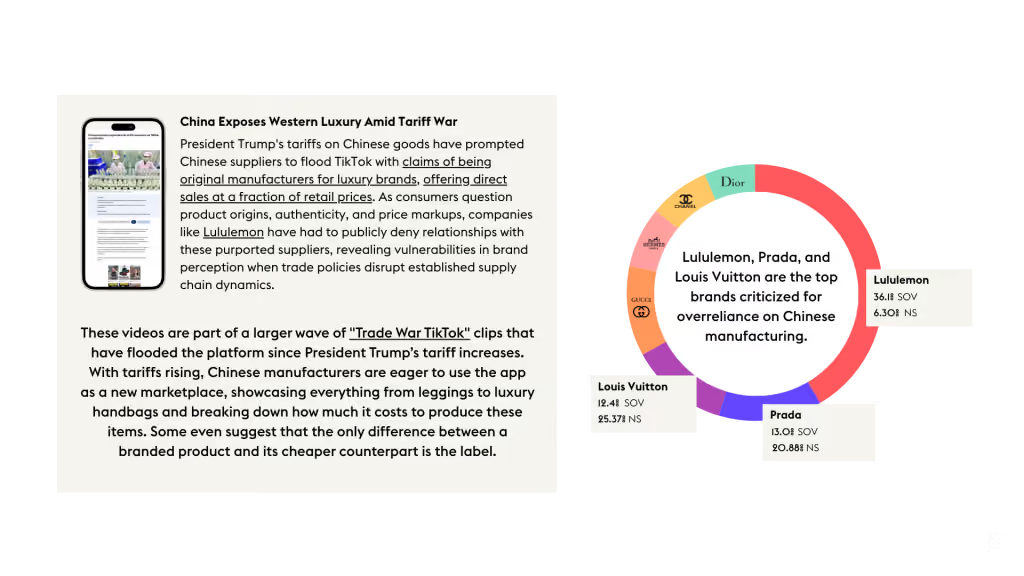
The immediate effects include plummeting stock prices (Ralph Lauren down 7%, Lululemon down 10%, and luxury brands like Burberry suffering significant losses), projected consumer price increases of 5-15% across the board, and supply chain chaos as companies scramble to relocate production.
Our analysis shows a negative correlation between discussion of luxury brands manufacturing in China and public sentiment. A 1% increase in share of voice corresponds to a 0.71-point drop in sentiment, indicating that more attention to Chinese manufacturing may weaken consumer perception.
Global Economic Impact
The tariffs are reshaping the global economy. US tariffs could reduce China's GDP by up to 2.4%, with forecasts showing growth falling below the government's 5% target to 4-4.5% in 2025. This impact is significant as US imports represent 3% of China's GDP. Meanwhile, Trump's tariffs could reduce U.S. GDP by 0.8-1.0% when accounting for foreign retaliation.
Other countries face varied impacts: Canada would see a 25% tariff reduce GDP by 1.2% over five years while increasing inflation by up to 1.7%; Japan has experienced a $10 trillion market wipeout from the 25% levy on Japanese autos; Mexico has largely avoided the latest round due to USMCA protection but still faces challenges from existing tariffs; and South Korea has unveiled a $23.25 billion support package for its semiconductor industry to counter rising costs and Chinese competition.
What Does This Mean For The Future?
The tariff environment now represents the most significant change to global trade since the 1947 General Agreement on Trade and Tariffs. With average U.S. tariffs reaching 24-27% – the highest in a century – we're witnessing the potential end of the "most favored nation" principle that has governed international trade for decades.
For businesses, this creates both challenges and strategic opportunities. Companies that have built "geopolitical muscle" will be better positioned to navigate this landscape. Management teams must now evaluate what permanent high tariffs would do to their supply chains, considering whether to expand domestic footprints, how to maneuver among sources of supply, and whether deregulation benefits might offset higher costs.
Several key principles will define successful adaptation to this new environment:
Trade policy volatility is the new normal. The days of stable, predictable trade relationships are likely over for the foreseeable future. Companies must build adaptive capabilities and resilient systems rather than optimizing for a single trade policy environment.
Effective response requires cross-functional coordination. The complex nature of tariff impacts necessitates breaking down silos between supply chain, finance, communications, and government affairs functions. Companies that establish effective cross-functional teams will navigate the challenges more successfully.
Communication strategy is a critical success factor. How companies communicate about tariff impacts to various stakeholders can significantly influence their ability to maintain customer relationships, investor confidence, and employee engagement during periods of disruption.
Learn how risk and communications teams can drive better business outcomes together.
Geographic diversification alone is insufficient. Companies that shifted production to avoid China tariffs still faced higher tariffs elsewhere, proving diversification alone fails when tariffs target multiple regions.

The uncertainty will be a defining attribute of global trade for the foreseeable future – not just regarding the possibility of further tariffs, but also concerning the stability of U.S. relationships with trading partners. Organizations that treat this volatility as a permanent strategic variable rather than a temporary disruption will convert today's challenges into tomorrow's competitive advantage.