
Welcome to Signal in the Noise, where we show you the real-world impact behind trending news.
Most organizations know what they spend on sponsorships. Far fewer know what those sponsorships are doing to their reputation. This week, Signal AI analyst Raquel Oliveria published the 2026 Sponsorship Benchmarking Report: a cross-industry analysis of sentiment, media volume, and reputational impact, built from 30,000+ articles across 50+ brands and 7 sectors.
The question we’re asking: What is the reputational return of sponsorship activations, and more importantly, what makes sponsorship strategy effective?
1. Sponsorship Coverage is more positive than general brand coverage, in every sector tracked
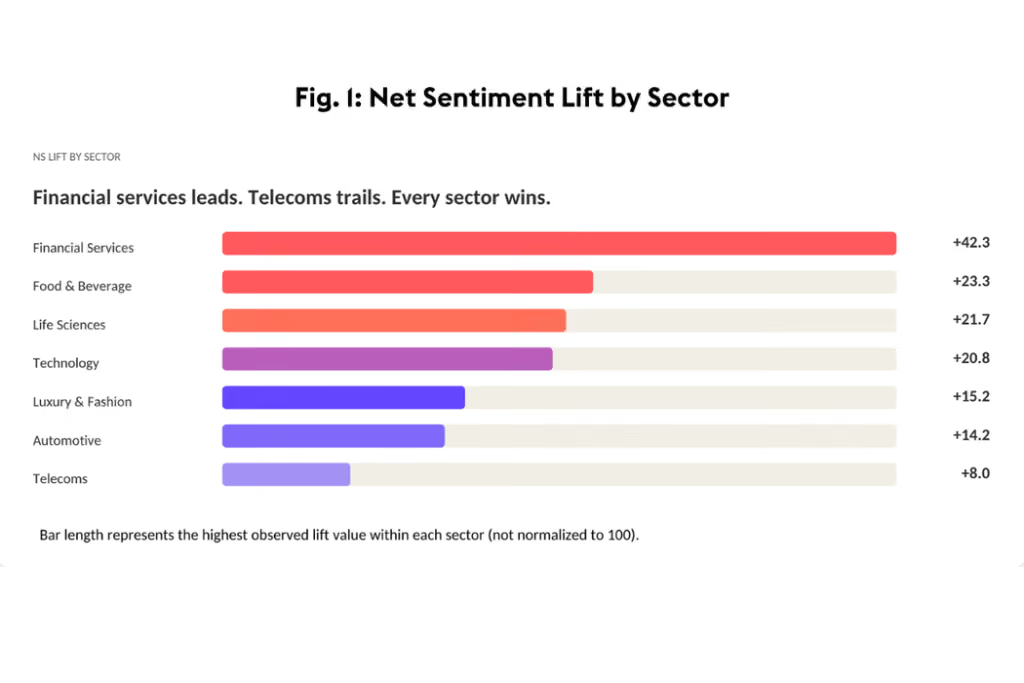
Signal AI analyzed net sentiment (NS) across sponsored and non-sponsored brand coverage for 50+ companies. Sponsorships outperformed general coverage in all 7 sectors.
The average NS lift is +20.8 points. Financial services leads at +42.3, driven by long-term institutional partnerships. UBS's 30-year relationship with Art Basel is the benchmark. Telecoms trails at +8.0.
In 2026, sponsorship effectiveness is no longer defined by visibility. It's defined by the quality of the coverage it creates.
2. Culture & Arts is the only no-loss bet. ESG isn't.
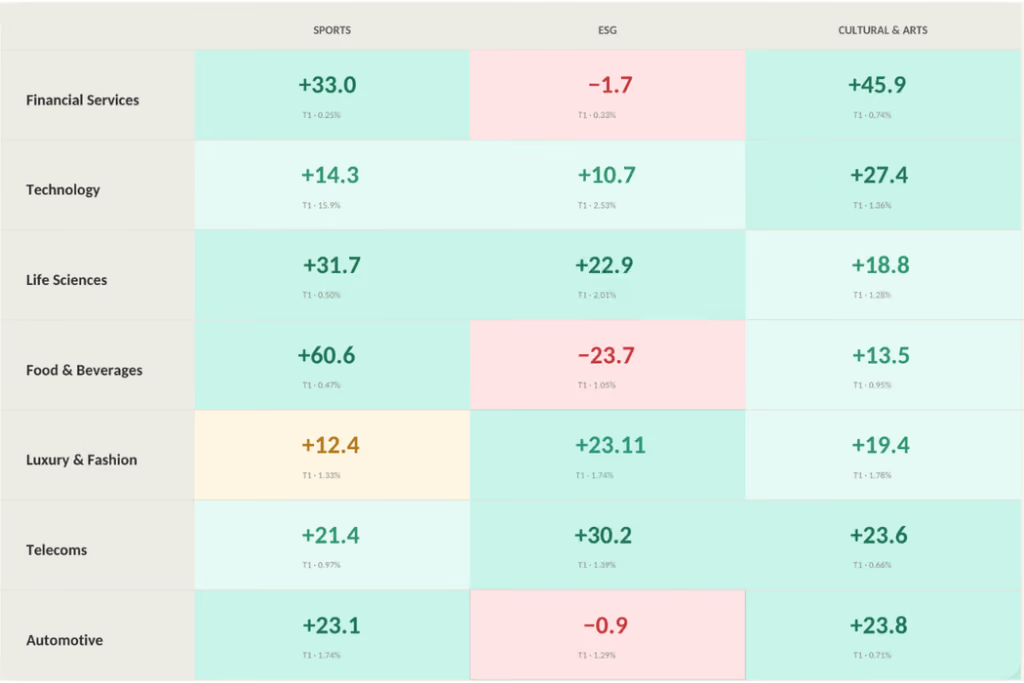
Across 3 sponsorship categories (Sports, ESG & Purpose, and Cultural & Arts), only one delivers positive sentiment in every sector combination: Cultural & Arts. Sports peaks in Food & Beverage at +60.6 but plateaus in the mid-teens elsewhere. ESG is the most volatile: Telecoms scores +30.2 when brand and cause credibly align, while Food & Beverage drops to -23.7 when they don't.
Shifting political winds and growing greenwashing scrutiny mean poorly executed ESG strategies can create the very brand-safety issues they were designed to prevent.
3. Case Study: Rolex turned down $150M to protect its reputation. Data says that was the right call.
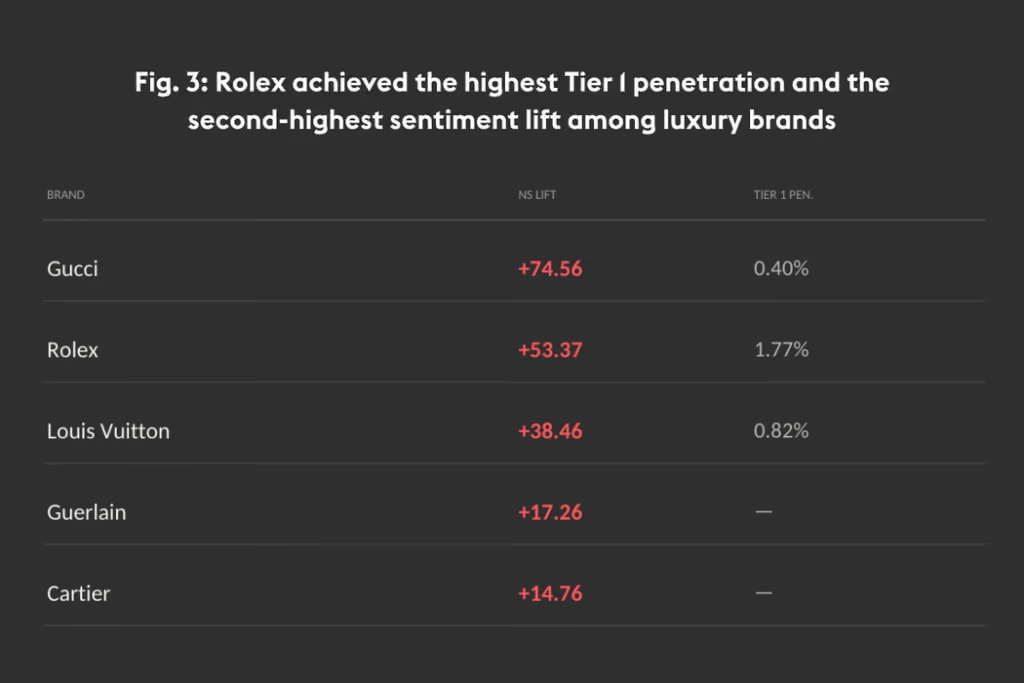
When LVMH outbid Rolex for the F1 timekeeping role at a reported $150m per year, Rolex walked away. Drive to Survive had shifted F1's audience away from the high-net-worth buyers Rolex targets. They deepened their focus on Le Mans instead: 113 million viewers in 2024, with a more qualified luxury audience.
Between 2020 and 2025, Rolex's brand value grew 138%. Among golf fans, it achieves a 36% uplift in brand recognition, compared with 11% for non-sponsoring watch brands.
Choosing your audience is better than chasing it.
Final thoughts
This report benchmarks what good looks like:
- Long-term partnerships win over short-term visibility plays
- Narrative integration should be prioritized over passive logo placement
- ESG & purpose-led activations yield higher-quality coverage and stronger Tier 1 penetration
- Deeper activation beats broad, fragmented sponsorship estates
Now What?
You make critical decisions every day as a business leader. That’s why you need trusted data to help you build a more informed strategy and make more confident business decisions.
Signal AI helps you map your next move by delivering market trend analysis that highlights both hidden business risks and whitespace opportunities, giving you the foresight to shape your long-term plan.

2026 Sponsorships Report
Explore more of the global sponsorship landscape in 2026, where your sector sits, and what the data says you should do next.