
New critical advertising compliance risk flagged with Signal AI's Risk Scanner
Welcome to Signal in the Noise, where we show you the real-world impact behind trending news.
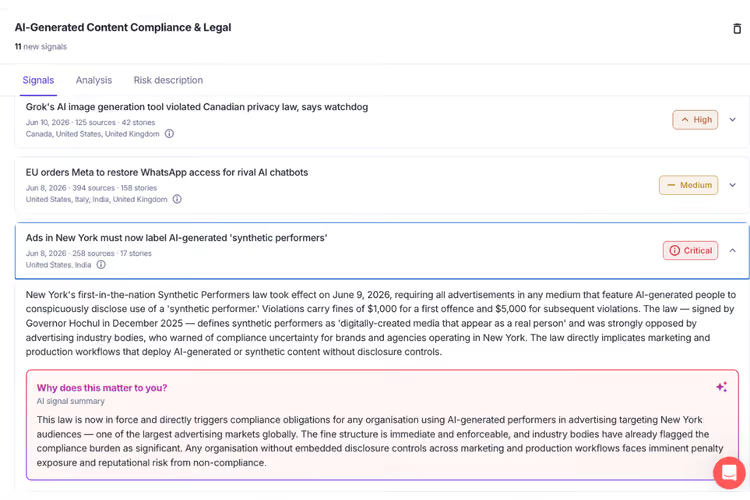
On June 9, 2026, New York announced a first-in-the-nation law requiring disclosure of AI-generated human representations in advertising, or synthetic performers.
A synthetic performer is an AI-generated or digitally created asset or avatar meant to emulate real people. SAG-AFTRA already released a statement in response to Hollywood's first AI actress, Tilly Norwood. The ‘actress’ was even interviewed by the New York Times. As much as synthetic media has made headlines as a threat to human creativity and talent, this is the first critical compliance signal and legal risk to brands.
Signal AI's latest feature release coming this week, the Risk Scanner, flagged this as a critical compliance risk. In this edition, we’ll examine what changed, why it matters to organizations running digital advertising, and what immediate action your team should take.
The question we’re asking: How do brands get ahead of synthetic performer enforcement before it intensifies?
1. The compliance gap: Why timing matters
Coverage for ‘AI Advertising Risks’ jumped from ~200 articles daily to 700+ the moment the law took effect on June 9. That spike signals enforcement is accelerating. Brands that audit and remediate now stay ahead of enforcement actions and regulatory scrutiny. Brands that wait two weeks face exposure during the wave—when enforcement actions and media attention peak simultaneously.
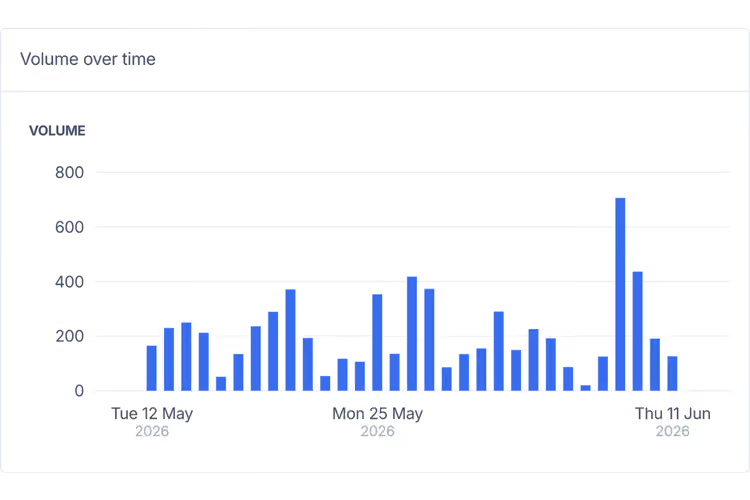
The data shows this: the narrow window between law passage and enforcement action is closing. Organizations that close this gap early avoid the cascading risks of late remediation: regulatory penalties, enforcement actions, and reputational damage during peak media scrutiny.
2. Who's most exposed: A sector breakdown
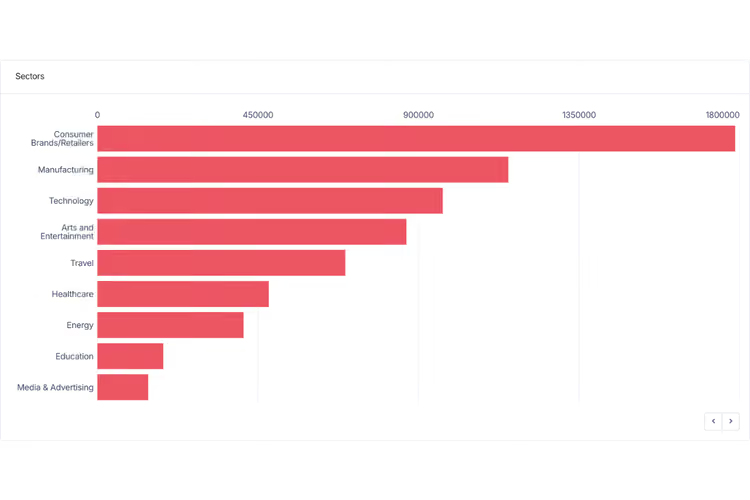
Consumer brands lead in volume: they adopted AI-generated lifestyle models at scale to cut costs and now face the most urgent need to audit e-commerce listings and add disclosure labels.
Manufacturing ranks second, driven by B2B companies using digital avatars for training and product demos—hundreds of organizations scrambling to rewrite production guidelines.
Technology ranks third, caught in a double squeeze: using synthetic personas to market their own platforms while facing scrutiny as the companies that built these tools.
3. The early warning sign: What to do now
One of the largest advertising markets in the country has just created a new category of liability. The fine structure is modest, but the reputational risk is not. Brands have already faced criticism for pushing AI-driven creative in their marketing, such as Toys R Us catching flak for using Sora, Levi’s casting AI-generated models, and Coca-Cola’s Christmas ad.
The legislatures of California, Illinois, and Texas are considering similar bills. Here's what to do now:
- Immediate: Marketing and legal teams should audit current active advertising campaigns in New York for AI-generated human likenesses and confirm disclosure labels are in place; brief agency partners on the obligation this week.
- Near-term: Update advertising production contracts to assign explicit responsibility for synthetic performer identification and disclosure; build a creative asset classification checklist into the production approval workflow.
- Strategic: Track state-level legislative activity (California, Illinois, Texas bills in progress) and model whether a patchwork of disclosure laws creates sufficient compliance burden to justify preparing for a unified national standard ahead of the FTC's 2027 rulemaking calendar.
Organizations that catch this signal early—before mainstream media coverage and enforcement actions—have weeks to audit and remediate. For further reading on this topic, Signal AI also published a report not only on synthetic media, but on disinformation, fake news, and other digital deceptions.
Methodology
Signal AI's Risk Scanner automatically flagged New York's synthetic performer law as a Critical compliance risk. The analysis tracked the law's emergence across 258 sources in 17 stories between June 8 – 12, 2026. Risk Scanner ingests data from traditional media, digital news, and social channels in near real-time, surfacing signals that matter to risk and compliance leaders before mainstream media coverage. This signal was categorized as AI-Generated Content Compliance & Legal with geographic relevance to the United States (secondary coverage from Canada and the United Kingdom).
Resources:
- Gov. Hochul signs NY Synthetic Performers law (Dec 2025) New York Times reporting on enforcement landscape
- SAG-AFTRA statement on synthetic performer enforcement
- New York Synthetic Perfomer Law: What Advertisers Need to Know (June 9, 2026), Manatt
Now What?
You make critical decisions every day as a business leader. That’s why you need trusted data to help you build a more informed strategy and make more confident business decisions.
Signal AI helps you map your next move by delivering market trend analysis that highlights both hidden business risks and whitespace opportunities, giving you the foresight to shape your long-term plan.