
Welcome to Signal in the Noise, where we show you the real-world impact behind trending news.
In April 2026, the U.S. government began distributing $168 billion in tariff refunds to importers after the Supreme Court invalidated sweeping tariffs in February. Fast forward to now: August 2026 earnings season just wrapped. Major corporations across retail, logistics, technology, and manufacturing have disclosed how they're allocating their refunds. In earnings calls and investor reports, their responses reveal a sophisticated ecosystem of strategic choices. Some committed billions to consumers. Some stayed silent. Some explicitly prioritized shareholders. The pattern is unmissable.
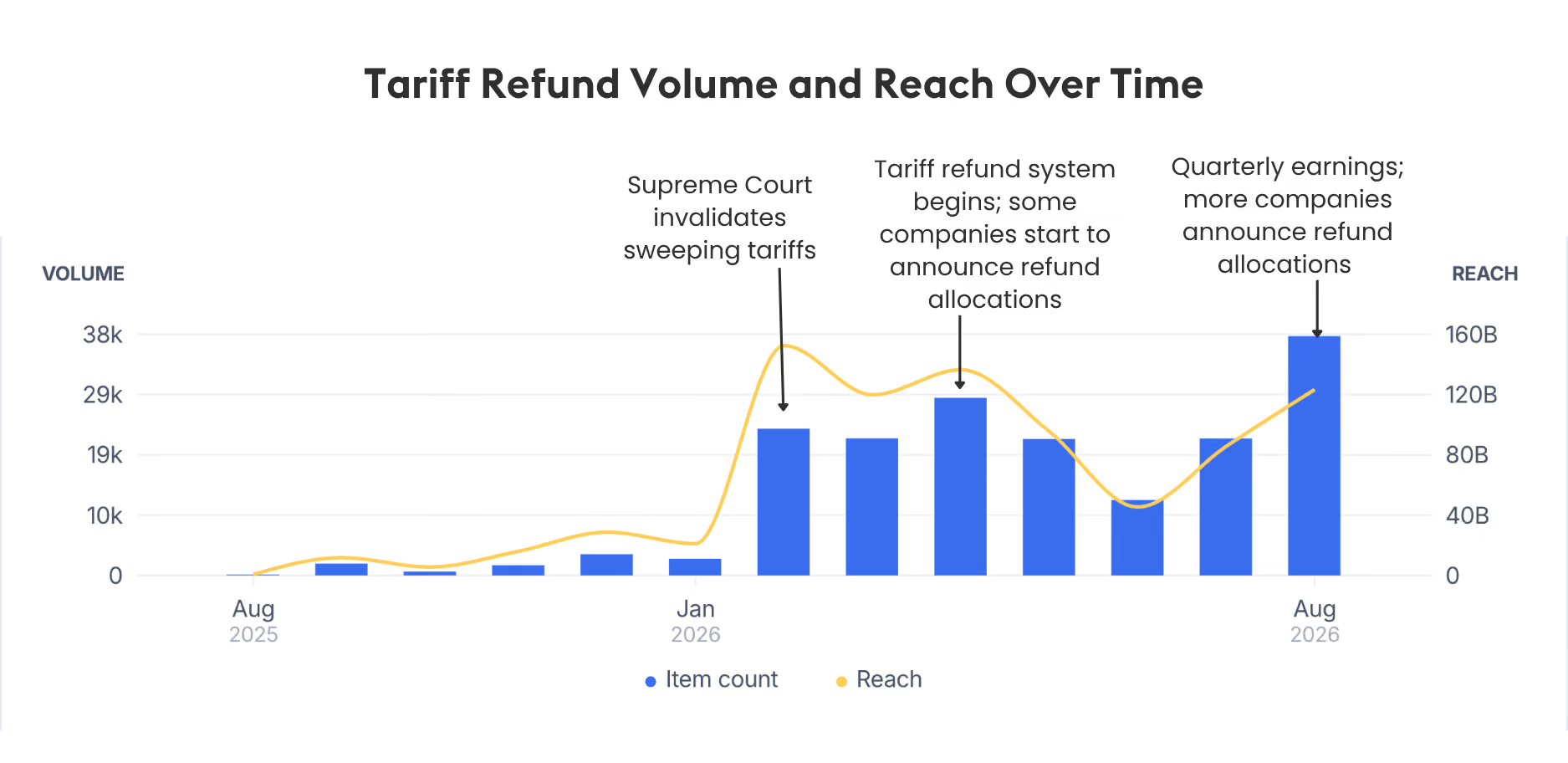
The question we’re asking: When companies receive massive windfalls, does the reputation win go to those most transparent about their actual priorities, regardless of what those priorities are?
The archetypes below reflect actual corporate responses disclosed in August 2026 earnings reports. While company names are withheld, each archetype represents strategic choices made by major corporations.
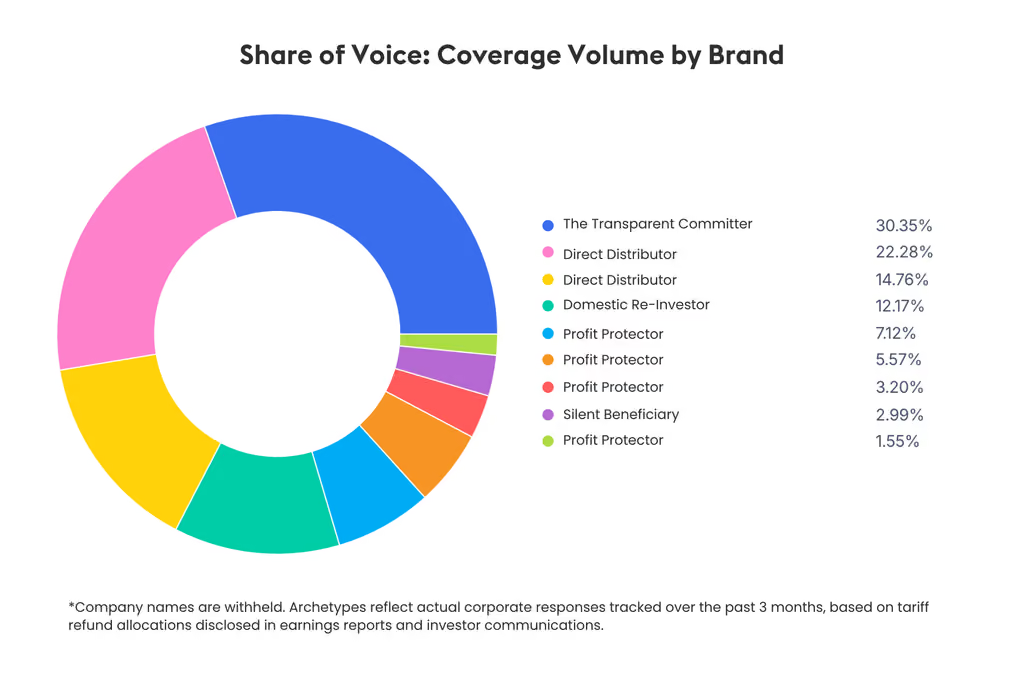
1. The Transparent Committer: Consumer-Focused Strategy Wins the Narrative
A large general retailer received $2.9 billion and immediately committed it publicly to consumer price cuts across grocery and general merchandise. Leadership explicitly confirmed the allocation to investors and the media. The win: a windfall deployed visibly for customer benefit resets trust when skepticism runs high. When consumer sentiment is fragile, clarity beats ambiguity.
2. The Direct Distributor: Active Return Over Silent Absorption
A logistics leader received $800 million and built an active distribution mechanism: an online portal where customers could claim refunds directly. An e-commerce giant received $600 million and committed to share refunds with some customers, though with conditions. Both chose active, verifiable return over passive commitment. One made a blanket offer; the other applied conditions. Both beat silence, but the unconditional approach sends a stronger signal.
3. The Silent Beneficiary: Unspoken Choice Creates Vulnerability
A mid-tier retailer received $1 billion and buried it in earnings reports, framed as a profit driver that effectively doubled quarterly profits. No public commitment to consumers. The money exists. The commitment doesn't. This creates vulnerability. When consumers are budget-conscious, corporate silence on windfall allocation reads as a prioritization of shareholder returns over customer relief. The risk isn't the decision, it's the narrative gap.
4. The Domestic Re-Investor: Strategic Reinvestment (Different Stakeholder, Same Transparency)
A consumer tech giant received $2.2 billion and explicitly committed it to domestic manufacturing expansion. Transparent about a different priority: speaking to employees, investors, and supply chain partners about operational resilience, not consumers. Defensible, but generates no consumer goodwill. A calculated choice: reinvestment signals strength and long-term thinking to certain audiences.
5. The Profit Protector & Macro Offsetter: Legitimate Strategy, Zero Reputation Upside
Several companies confirmed refunds but told investors the money would offset rising costs and protect margins: food manufacturers citing energy and freight pressures, home improvement specialists covering raw materials, automakers repairing quarterly profitability. All defensible. None generate reputation upside because there's no affirmative narrative. It's cost management, not strategic storytelling.
6. The Strategic Prioritizer: Explicit Macro Hedge Signals Investor Confidence Over Consumer Benefit
A premium athletic brand received $986 million and held the cash to protect against supply chain disruptions and geopolitical volatility. Explicitly transparent: no consumer refunds or price cuts intended. Different stakeholder priority: supply chain resilience over consumer goodwill. Legitimate choice, legitimate transparency. Just doesn't compete for consumer loyalty.
Final thoughts
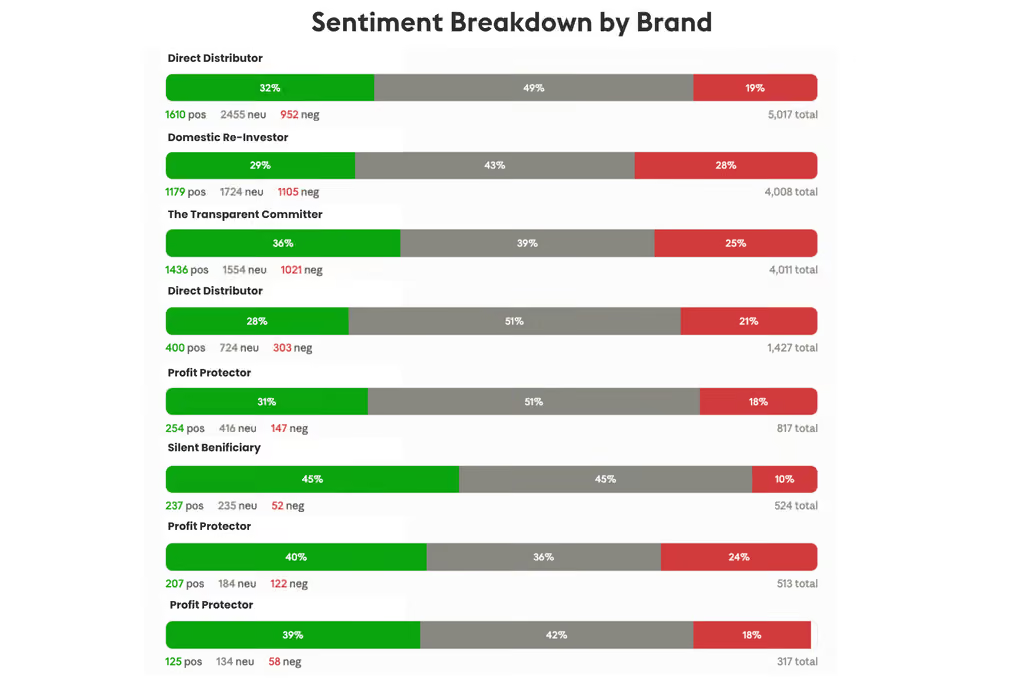
The tariff refund moment reveals something crucial for reputation leaders: corporate windfall strategy isn't about right or wrong choices. It's about stakeholder alignment and narrative transparency. The companies that won weren’t necessarily the most generous; they were the most explicit. Whether they committed to consumers, reinvested in operations, or hedged macro risk, they articulated their actual priorities clearly. Silence created vulnerability. Clarity won. The reputation upside goes to those willing to be transparent about who they’re prioritizing, not to those hiding their choices.
Resource Round-Up:
- https://www.cnn.com/2026/05/13/business/tariffs-trump-refund-vos-victor-schwartz
- https://www.nytimes.com/2025/02/20/us/politics/supreme-court-trump-tariffs.html
- https://fortune.com/article/fortune-500-companies-billions-tariff-refunds-customers-08-19-2026/
Methodology
Signal AI’s platform analyzed Tariff Refund coverage from August 21, 2025 - August 21, 2026.
Signal AI’s AskAIQ feature pulled data across 8 major brands in the context of tariff refunds over the past 3 months.
Now What?
You make critical decisions every day as a business leader. That’s why you need trusted data to help you build a more informed strategy and make more confident business decisions.
Signal AI helps you map your next move by delivering market trend analysis that highlights both hidden business risks and whitespace opportunities, giving you the foresight to shape your long-term plan.

Transparency alone isn’t enough; you also need to measure it. Register for the Coverage, Correlation, Causation: A Practical Framework for Proving Reputation’s Value Webinar to learn how to connect your communications strategy to stakeholder outcomes and prove your impact.