Welcome to Signal in the Noise, where we show you the real-world impact behind trending news.
In this edition, we're diving into alcohol regulation, and we've got insights to share from our Senior Product Manager, Elaine Poon. But before we get into it, let's take a step back to last year.
In 2025, one of the largest spirit brands was blindsided by lawsuits. The legal action sent shockwaves through the industry, U.S. sales falling by more than 20%. The entire spirits sector was operating in a higher-risk regulatory environment.
At the same time, another alcohol industry brand wasn't caught off guard. Using Signal AI's risk intelligence platform, our team spotted early indicators that this action was coming and armed them with what they needed to assess their exposure and respond before it hit.
Not every story ends that way. But this one did because the signal was there, if you knew where to look.
So what are the risk signals telling us now? Alcohol regulation is largely flying under the radar. But "out of the headlines" doesn't mean out of risk. The question we're asking: Where is the next regulatory wave quietly building?
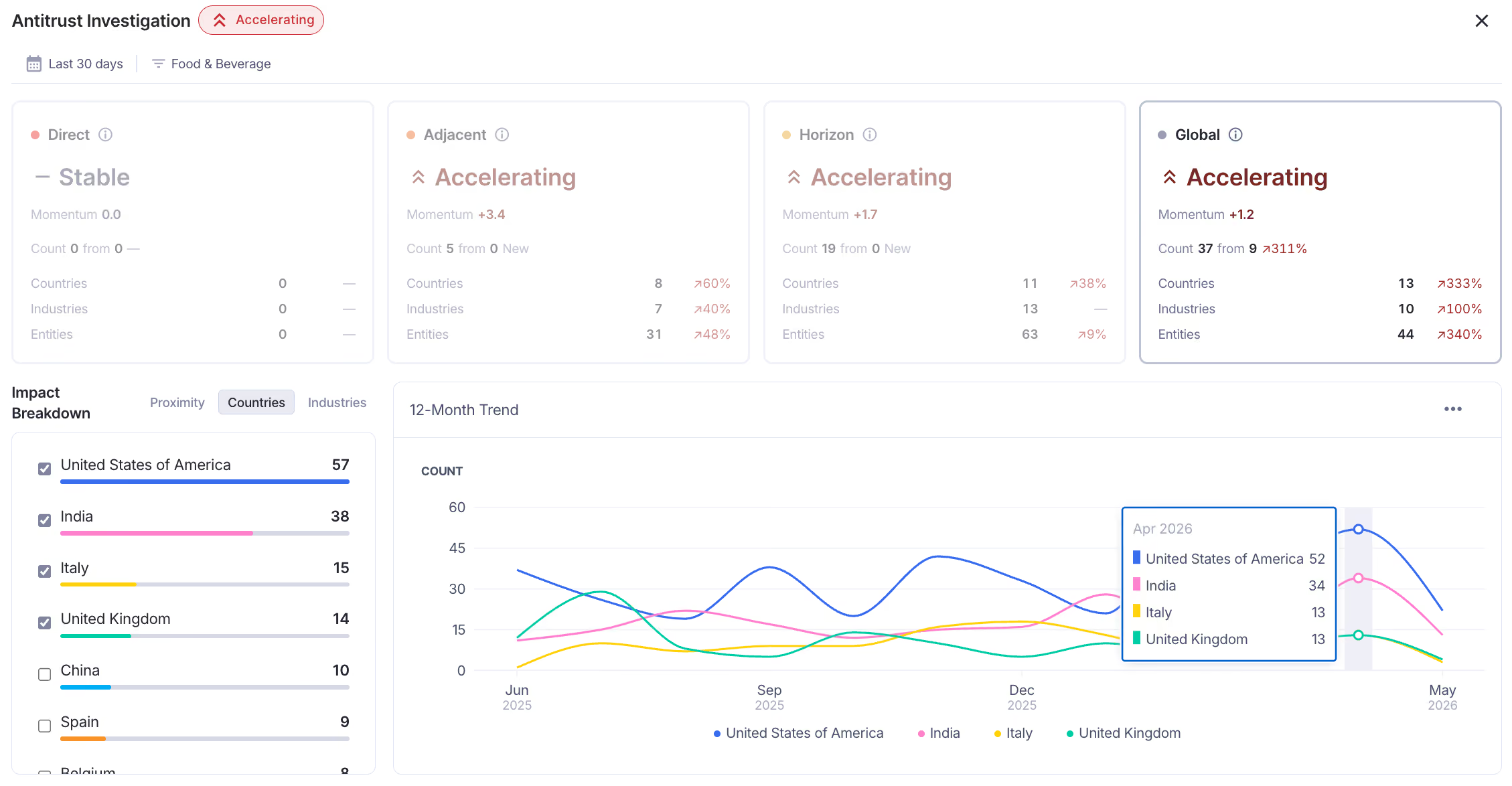
Our platform shows that while direct momentum is steady, the global and horizon risks are accelerating.
1. Critical Signal: The spirits sector isn't in a rough patch. It's under pressure from multiple directions at once.
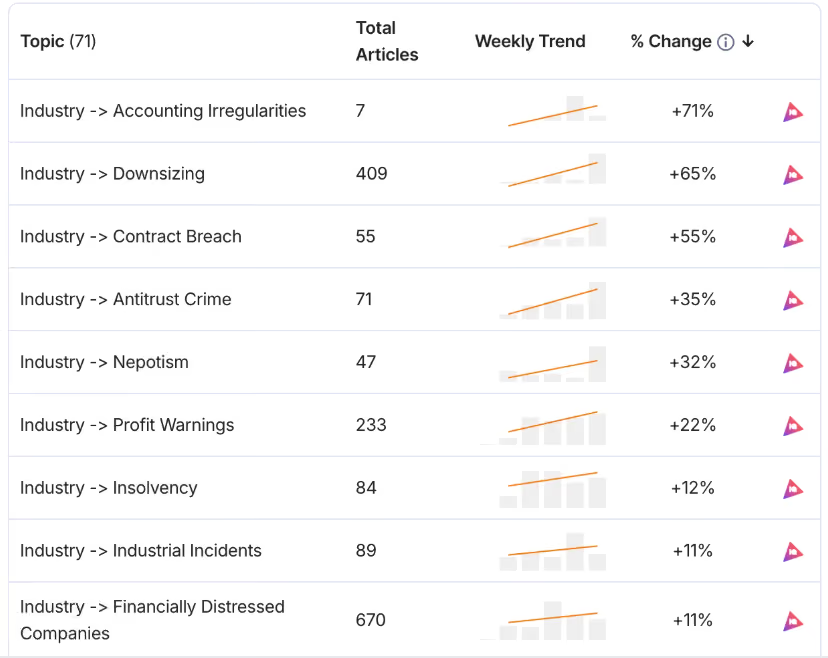
Accounting irregularities are up 83% week-over-week on our platform, the single biggest trending delta across all topics we track in the spirits sector right now. They're joined by accelerating downsizing signals and a surge in financially distressed company coverage.
On their own, each tells a partial story. Together, they point to something bigger: a sector contending with demand weakness, inventory gluts, and financial stress at the same time.
What's driving it: Three consecutive years of global whisky volume declines have collided with US tariff uncertainty to produce a supply overhang that trade media is already comparing to the 1980s "whisky loch." Diageo and Pernod Ricard absorbed roughly $470 million in inventory-related cash flow losses in 2024. US sales of Scotch fell 6% in the first nine months of 2025 alone.
2. Elevated Signal: Two trade deals just reshuffled the global competitive map
Two major market-access events are quietly reordering the competitive landscape.
The EU-India trade deal (January 2026) slashed spirits tariffs from 150% to 40%, putting European producers near parity with UK brands that had only recently gained a first-mover advantage. Signal AI is tracking EU-India coverage at 450x baseline, the highest spike across all topics in this sector.
Separately, a UK-China deal cut Scotch tariffs from 10% to 5%, worth an estimated £250 million over five years, opening a window that favors brands already positioned in China and compressing the timeline for those who aren't.
Producers who assumed their early positioning was locked in are now facing accelerated competition on two fronts simultaneously.
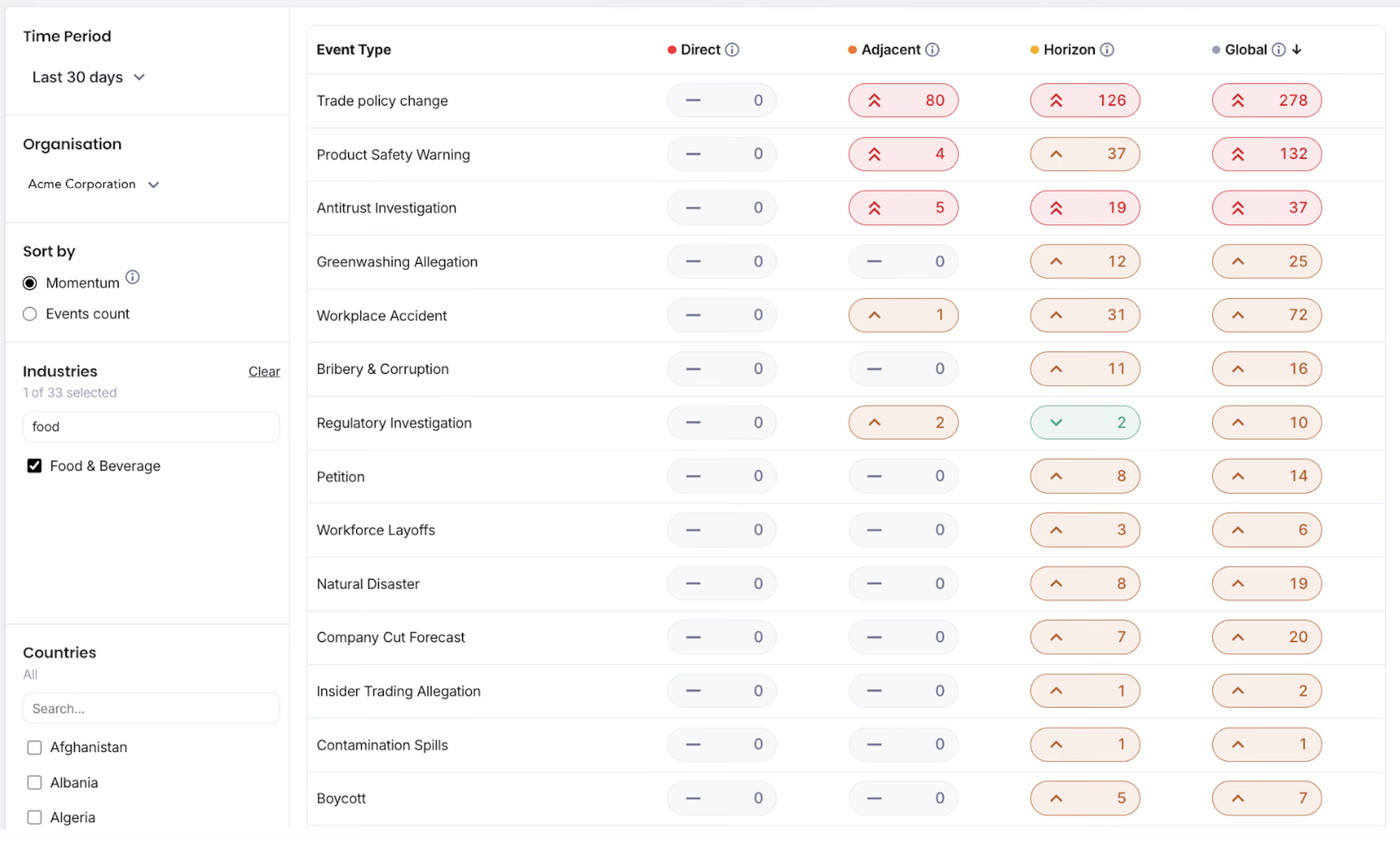
Our event-type momentum table shows that trade policy has moved to the top of the list. It isn’t just one deal; it’s a high-velocity shift across the entire map.
3. Signal Worth Watching: GLP-1 drugs are quietly suppressing demand, and the spirits industry has no response yet
In April 2026, the FDA approved Eli Lilly's oral GLP-1 pill, dramatically expanding consumer access beyond injections. GLP-1 users consistently report reduced alcohol cravings as a behavioral side effect, a pattern now drawing attention from FMCG analysts. Food brands have already started "GLP-1 friendly" labeling.
The spirits sector has no equivalent positioning response.
With adoption scaling across core markets in the US and UK, this isn't a fringe concern. It compounds every other pressure point above: weaker volume, higher inventory costs, tighter margins. The industry has navigated tariffs and trade deals before. A structural shift in consumer behavior is a different kind of problem.
Final thoughts
The alcohol industry isn't facing one risk right now. It's facing several at once, and each is making the others harder to manage.
Financial stress, M&A instability, trade policy shifts, and a behavioral demand suppressor don't announce themselves loudly. They build in the data before they break in the headlines.
You make important decisions every day as a business leader. That’s why you need trusted, early-warning data to help you build a more informed strategy and make more confident business decisions.
Now What?
You make critical decisions every day as a business leader. That’s why you need trusted data to help you build a more informed strategy and make more confident business decisions.
Signal AI helps you map your next move by delivering market trend analysis that highlights both hidden business risks and whitespace opportunities, giving you the foresight to shape your long-term plan.