
Welcome to Signal in the Noise, where we show you the real-world impact behind trending news.
Most brands want one product to carry the story. The media doesn’t always cooperate. A smartphone maker’s flagship reached a record 49% of global smartphone revenue share in Q2 2026, according to Counterpoint Research’s figures reported by MacDailyNews. A soft-drink giant, by contrast, says its World Cup sponsorship scored big, even though its drink barely shows up in the coverage. Signal AI’s Hero Product Strategy report tracks 16 global brands across four sectors from September 2025 to September 2026 to test when a single hero helps and when it works against you.
The question we’re asking: When the media already has a hero product, should your launch plan follow it or fight it?
1.Two-thirds of a tech giant’s product coverage goes to one device
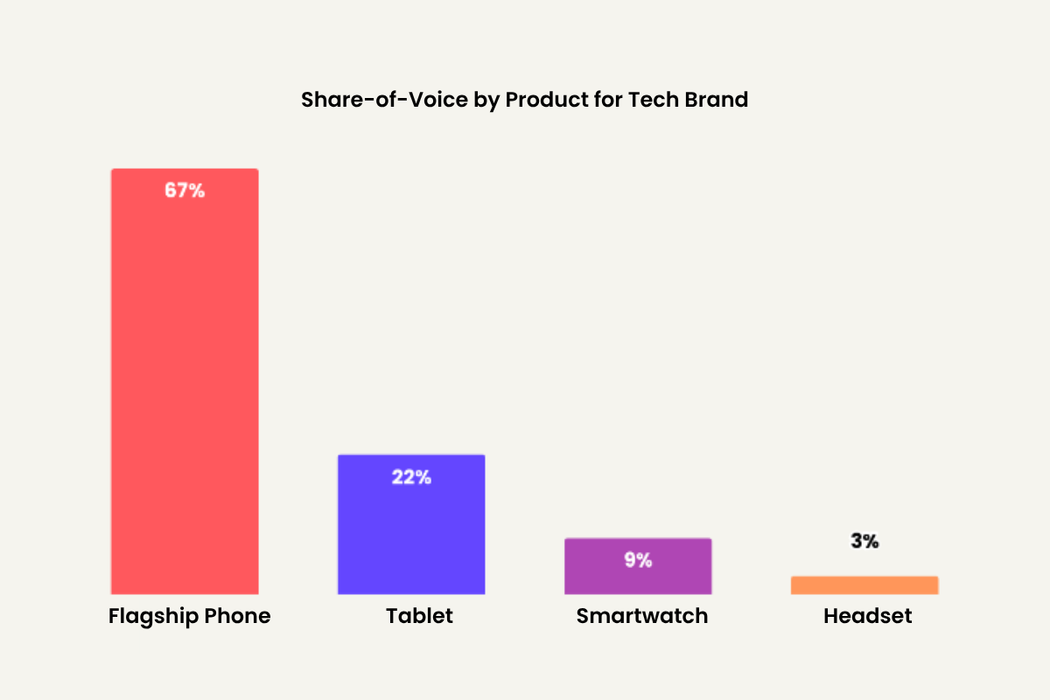
67% of the tracked product share of voice for one tech giant goes to its flagship phone alone, across 2.78 million stories. Its tablet takes 22%, its smartwatch 9% and its headset 3%. The flagship draws 3x the share of voice of the next hardware tier, and the pattern repeats across tech: one product dominates, and the media is already telling that story. Spreading launches evenly across a portfolio does not multiply attention. It dilutes it, leaving secondary products to compete for space the hero already owns.
2. A soft-drink giant’s coverage comes from culture, not the can
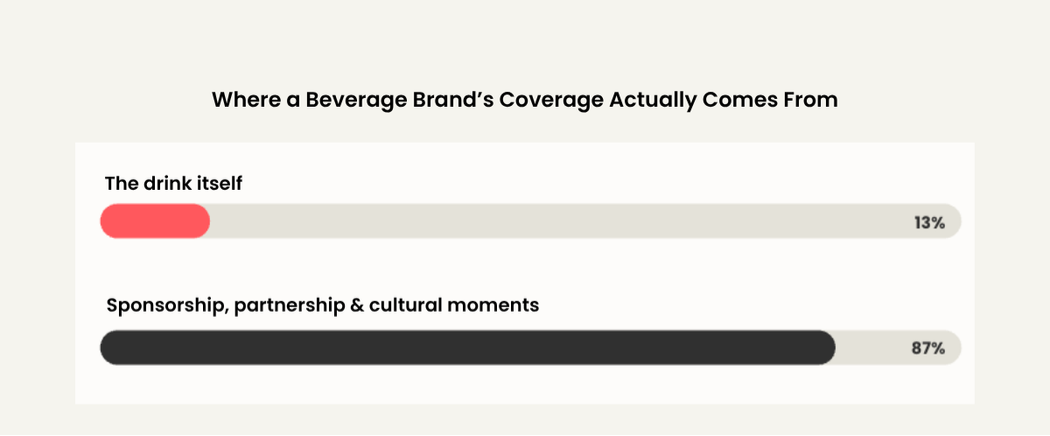
87% of the soft-drink giant’s coverage comes from sponsorships, partnerships and cultural moments, such as the World Cup, F1, the Olympics and celebrity tie-ins. The drink itself accounts for just 13% of its share of voice. Across the retail set, the lead product entity holds only 4 to 14% of company coverage, so no flagship carries the brand. Sentiment still holds between +26 and +30 without a product story. The World Cup shows the upside and the exposure: the same sponsorship that drives the conversation also draws organised public health opposition. For a heritage brand, the job is to own the seasonal and cultural white space audiences already link to it.
3. In financial services, no product becomes the story
Across four major brands, zero product heroes surface in the coverage. Attention goes to corporate performance and payment-network themes instead. Even deep product ranges, such as a premium card issuer’s and a digital payments platform’s, get drowned out by sponsorships, partnerships, philanthropy and corporate news. Forcing a flagship here means fighting how the category earns attention. Consolidate on the premium or trust franchise the firm is known for, and track that reputation over time against peers rather than as a one-off snapshot.
Final thoughts
Focus still wins, but the sector decides where it should sit. Tech and healthcare already gather coverage around a flagship or franchise. In healthcare, 1.2x of the parent company’s coverage is GLP-1 focused, which means the therapy became the story itself, and that concentration carries up to 19% negative coverage on pricing, access and safety. Retail and financial services earn attention through culture and corporate reputation, so a forced hero works against them. USC Annenberg’s 2026 Global Communication Report points the same way, with communicators increasingly weighing each public statement case by case. Before you plan your next launch calendar, map where your coverage concentrates, track narrative velocity, and find the white space competitors leave open.
Until next time,
Nikki at Signal AI
Methodology:
The Hero Product Strategy study tracks 16 global brands across four sectors (Technology, Healthcare, Financial Services and Retail) from September 2025 to September 2026. It uses Signal AI’s media-intelligence platform to measure three things: All Mentions, which is total brand media volume across all topics; net sentiment (NS), which is the overall positivity of each brand’s coverage; and media type, which shows the share of coverage in print, online and broadcast. Product-level share of voice identifies whether coverage concentrates on a single hero product, a franchise, the corporate brand or cultural moments. Each sector’s findings are read against its net sentiment and its share of coverage by product.