Organizations racing to adopt AI-powered cybersecurity solutions face a critical paradox: the same technology protecting their assets could be weaponized against them. As enterprises accelerate their AI integration strategies, leadership teams face a vital question: Does the marriage between AI and cybersecurity represent a strategic vulnerability or a competitive advantage?
Leveraging Signal AI's platform, we examined worldwide media discussions to map the evolving landscape of AI cybersecurity in 2024.
Quick Take:
- Cybersecurity concerns grew by 5% in AI conversations in the latter half of 2024.
- 56% of all conversations about AI portray it as an opportunity for enterprises, while 44% focus on risk management.
- AI cybersecurity regulation discussions increased 68% during 2024, but leaders are divided: As the U.S. signals deregulation, the E.U. strengthens oversight.
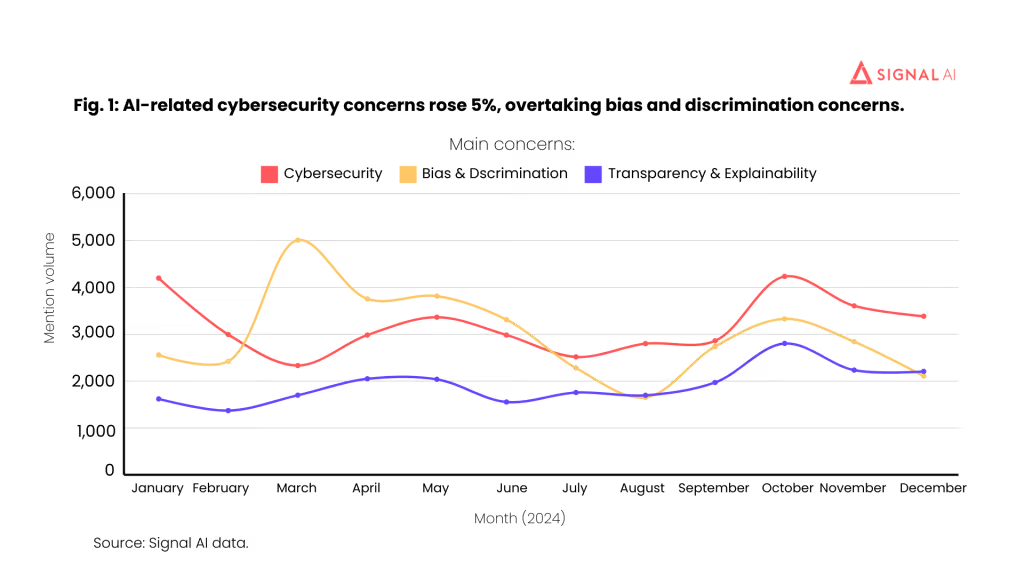
Cybersecurity concerns in AI conversations grew by 5% in the latter half of 2024, surpassing concerns about bias and discrimination.
When AI coverage grew by 4% in late 2023, our analysis identified early signs of a transformation in a business landscape increasingly focused on innovation. By the first half of 2024, these conversations had surged by 21%, showing that AI wasn't just making headlines but was reshaping corporate priorities.
Cybersecurity commanded nearly a fifth (17.88%) of all AI-related discussions globally, marking a 5% year-over-year increase and outpacing concerns about bias, discrimination, and lack of transparency (see Fig. 1).
Risk or Opportunity? Most see it as an opportunity (56%), while 44% perceive it as a risk that needs to be managed.
Cybersecurity incidents inflict immediate financial damage and long-lasting harm to a company’s reputation and trust. Organizations are responding with AI-powered cybersecurity solutions to safeguard their systems and data. But how?
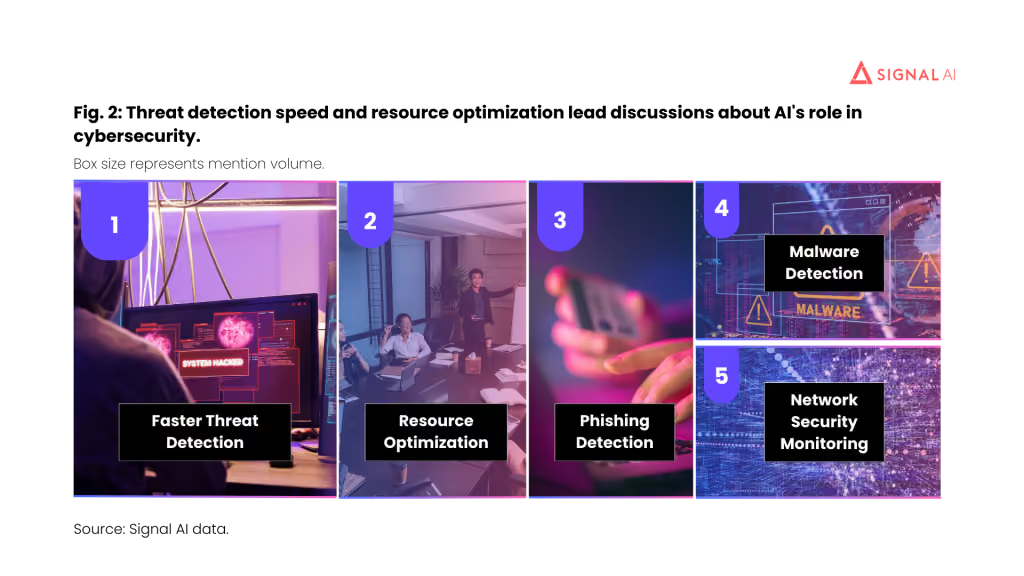
AI's most immediate impact on cybersecurity is improved threat detection and response capabilities (see Fig. 2).
AI can also offer:
- Resource optimization: AI algorithms automate manual tasks, which reduce costs while enabling teams to focus on strategy.
- Improved phishing and malware detection: Machine learning models identify subtle patterns in malicious code and suspicious emails that traditional systems often miss.
- Real-time network security monitoring: AI systems analyze network traffic patterns and continuously flag anomalies and potential breaches before they escalate.
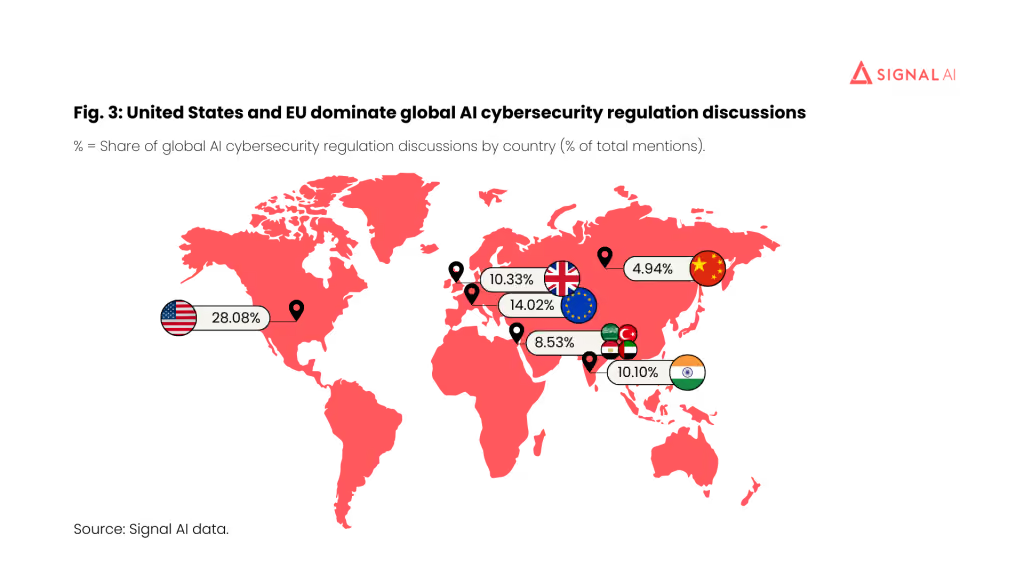
Cybersecurity and AI regulation conversations grow 68% in 2024 as the U.S. and E.U. lead policy push.
Governments worldwide are implementing AI-specific regulations to address mounting security concerns. The U.S. and the EU lead global discussions, being mentioned in over 40% of all discussions on the regulation of AI-powered cybersecurity solutions (see Fig. 3).
United States: Shifting Priorities
Under the new administration, the U.S. may shift toward deregulation, which could impact global business standards. Yet federal security requirements continue to tighten, with NIST 2.0 (2024) providing comprehensive risk management guidelines across industries, government, and academia.
European Union: Setting Standards
The EU's Digital Operational Resilience Act (DORA), effective January 2025, establishes new cybersecurity standards for financial institutions. The Network and Information Security Directive (NIS-2) extends similar requirements across various business sectors. Meanwhile, the EU AI Act promises to reshape global AI governance and data privacy regulations.
Asia and the Middle East: Emerging Frameworks
China's expanding regulatory framework creates new compliance challenges for Western companies. The Middle East has developed regional guidelines, with Saudi Arabia's SDAIA framework directing AI security operations
Looking Ahead
Risk professionals can't afford to wait for quarterly reports anymore. Their reality has shifted. A comment appears on Reddit. Then, a Telegram group lights up. Next, a Twitter thread explodes. By the time traditional security tools ping, it's often too late.
Learn more about how you can use social and traditional media to stay ahead of emerging risks →
Risk professionals across industries also need to think globally. The digital world has erased borders between threat and impact. With the E.U. and U.S. divided on AI cybersecurity regulation and rising geopolitical tensions, monitoring developments across markets outpaces traditional risk monitoring.
Modern cybersecurity demands a new vision. It is one where teams spot digital whispers before they become screams, where AI transforms scattered signals into clear warnings, and where prevention starts with perception.
The future belongs to those who see it coming.
How can Signal AI help?
Cyber attacks often reveal themselves on social media long before technical systems alarm. As threats multiply across digital channels, business leaders are now racing to spot these early warning signs.
Today's threats don't operate in isolation. Organizations must track an intricate web of global trade shifts, supply chain disruptions, and market competitive moves.
Our Enterprise Risk Intelligence platform tackles these challenges head-on:
- Real-time monitoring catches threats before they impact operations
- Risk Dashboards track competitor moves and weak points
- Regular Briefings keep teams ahead of critical developments
Learn more about how you can use our AI-powered solutions to stay ahead of emerging risks.
Methodology:
Unless otherwise stated, data in this report covers the period from January through December 2024.