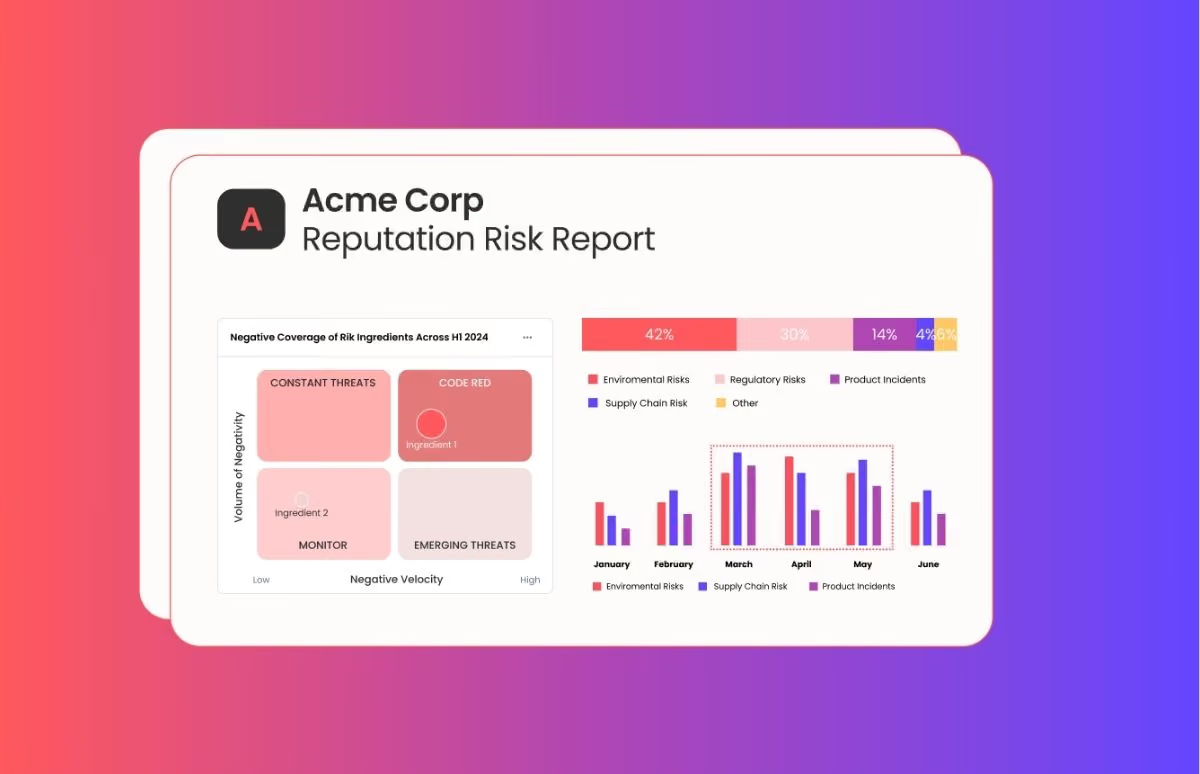
Reputation risk management should be an ‘all-weather’ strategy
Bad news travels fast, and your reputation management tools need to travel faster. According to a study by Weber Shandwick, corporate reputation can account for up to 63% of a company's market value, and companies can lose an average of 22% of their market value following a major reputational crisis.
As a business leader trying to navigate the world we live in—one filled with misinformation, a lack of corporate trust, culture wars, and geopolitical turmoil—you can't just wait for the storm to approach, you need to anticipate the next one.
Just like an all-weather portfolio, your company's reputation management strategy should focus on not just reacting but proactive response: sensing and monitoring upcoming turbulence and weather events rather than bearing down the hatches and waiting out the storm.
In this article, we’ll cover:
- 3 elements of a Signal AI Reputation Risk Report
- What makes our reputation risk reports different?
- See the data from our reputation risk reports in action
3 elements of a Reputation Risk Report
Signal AI's Reputation Risk Reports leverage AI to deliver strategic, C-suite-ready insights. By integrating data from traditional media, social media, and regulatory sources, we help you manage risks and mitigate potential crises before they escalate. Signal AI Reputation Risk Reports help companies do three things:
- Identify which emerging risks could potentially impact your brand and corporate reputation
- Report on, categorize, and assess the top risk issues that drove the most negative coverage during the reporting period.
- Compare your reputational risk profile to competitors by identifying the top issues that are driving negative coverage for each company.
Let’s dive into the major ingredients that make up a Reputation Risk Report.
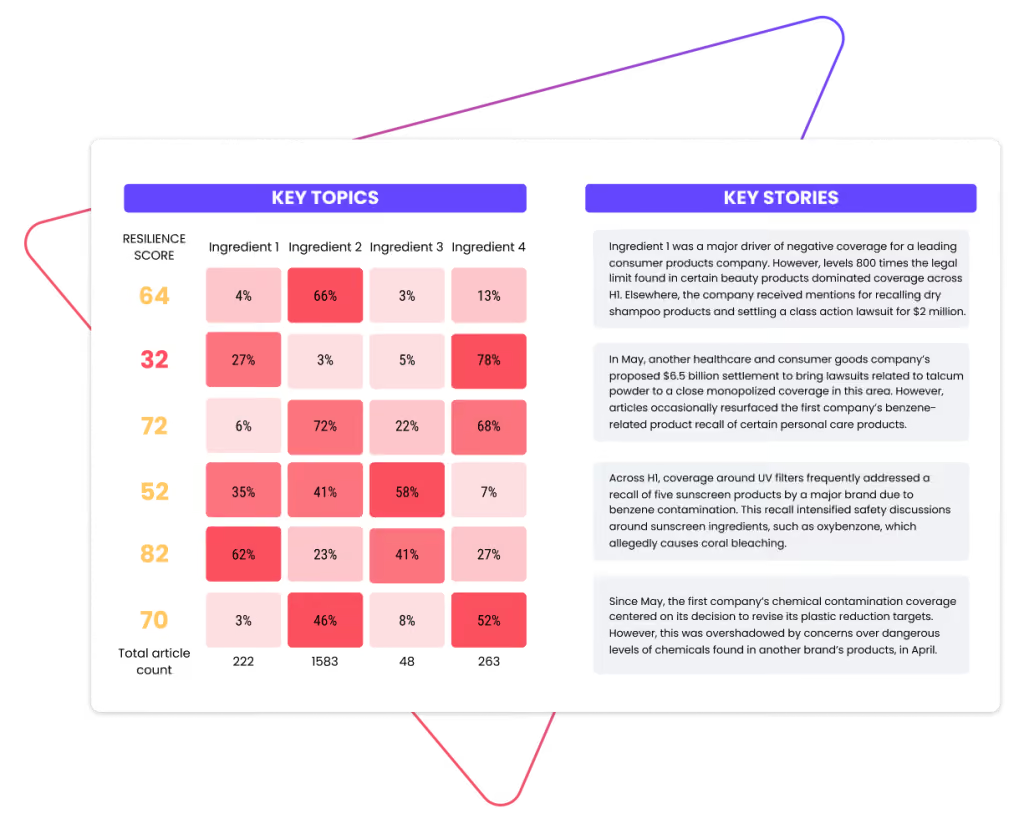
1. Resilience Score: Track your Reputational Risk with a Clear, Quantifiable Metric
How do you measure resilience? Signal AI measures a company’s reputational risks through a single quantifiable metric, the Resilience Score.
Signal AI's proprietary Resilience Score is a metric designed to assess a company’s ability to maintain positive momentum in both volume and sentiment relative to its competitive set over time.
A higher Resilience Score indicates a company’s ability to sustain positive momentum despite market fluctuations. This approach provides a dynamic and competitive measure of brand resilience, helping to identify which companies are successfully maintaining positive engagement and visibility.
All Reputation Risk Reports start with an executive summary, which includes your brand's overall resilience score, key takeaways to consider, trending issues and risk topics, and reputational risk analysis.
2. Overview of Key Reputation Risk Events: Reputational Risk Matrix and Heat Mapping
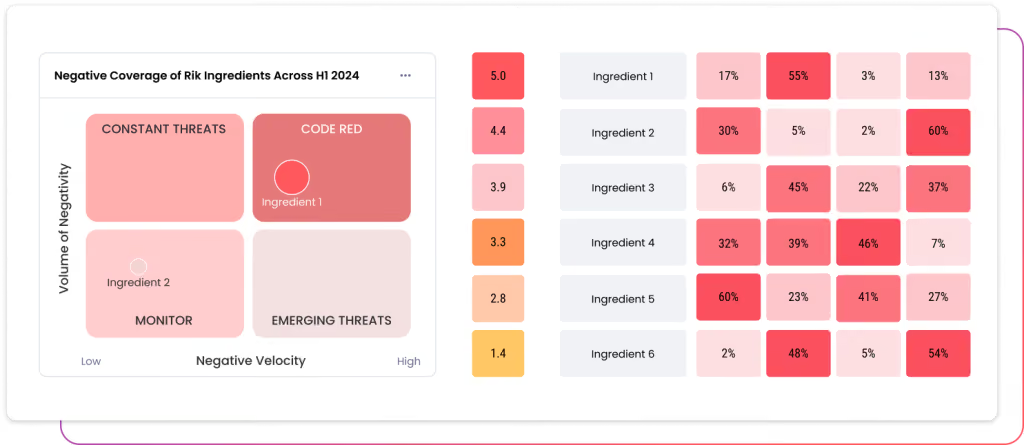
In an easy-to-read risk matrix, we measure against both the negative volume and velocity of key reputation risk topics so you can easily assess emerging, constant, or code-red threats.
We also monitor the threat level over time. We analyze exactly where your company’s reputation risk factors stand, compared against:
- Your previous performance
- Your competitors
- Within your sector/industry
- Across the globe or in specific markets
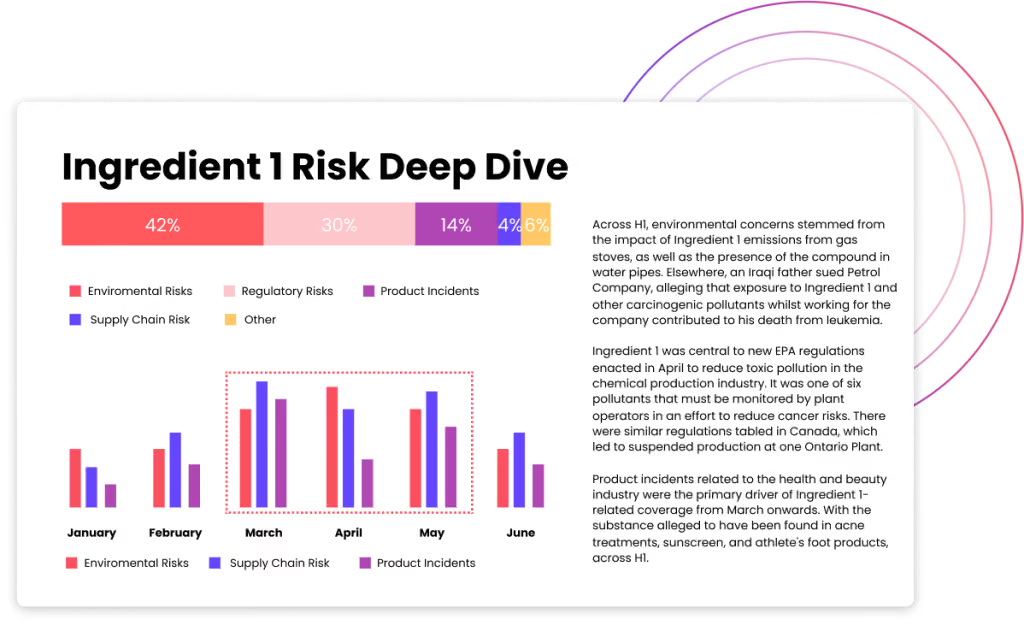
3. Reputation Risk Deep Dive: Further Reckoning of Key Risk Topics
The deep dive section outlines key risk events based on priority (high priority, ongoing, on the horizon, and monitor), helping you assess the threat level and focus on what matters.
Our AI-powered analysis can double-click into thousands of individual organizations, executives, products, diseases, locations, sources, and topics.
What makes Signal AI Reputation Risk Reports different?
Our Reputation Risk Management solutions are an ‘all-weather’ approach: assess the climate of the corporate landscape, planning ahead for long-term reputational risk and issue management strategy, and navigate the day-to-day weather changes, staying on top of fluctuations and crisis communications in the heat of the moment, turning insights into action in just a few clicks.
Flexible risk event framework
Our proprietary Risk Framework organizes external risk data into 15 key categories and 30 risk topics and provides a comprehensive view of risks affecting your business. Our expert recommendations provide tailored messaging and mitigation strategies, equipping your team to act decisively and protect your brand’s reputation with confidence.
High-quality, global data
It’s not just about any data, but the right data. Millions of data points are analyzed in English and 75+ local languages globally. This conversation data is then aggregated into AI-trained topics that inform how companies are laddering up to universal storylines in Innovation, Performance, and Purpose.
AI-trained accuracy
Hundreds of Signal AI’s topics (like R&D) and entities (like Microsoft) are AI-trained—as opposed to Boolean searches limited to humans typing keywords—which offers far better data accuracy. Our AI also scores sentiment at an entity level, not the entire article. This means we can capture if a company is mentioned positively or negatively, regardless of the article’s tone.
Multi-faceted scoring
Our proprietary algorithm fuses multiple metrics, like share of voice and net positive sentiment. AI enables us to capture salience—or how prominent a company is featured in an article. Because storylines shift daily, our Dynamic Weighting system changes the importance of a topic in a given period, ensuring a story’s importance (or irrelevance) is accurately factored into scores.
Our scoring is based on three key variables to measure impact: how often a company is mentioned against a topic (volume), how prominently it appears in a story (salience), and how positively or negatively it is portrayed (sentiment).
Objective and unbiased
Our topic framework is designed to capture different industries’ most influential storylines, allowing us to compare companies on fair and unbiased baselines. We don’t make assumptions on what topics matter, we let their prevalence tell us if they matter.
Where tech meets expertise
Human expert analysts are involved in the entire process, from training and retraining topics relevant to your industry to mapping them into key pillars and deriving actionable insights to inform your business and communications objectives.
Transform reputational risks into opportunities
Ready to transform your reputation risk management strategy? Learn more about our Reputation Risk Reports.