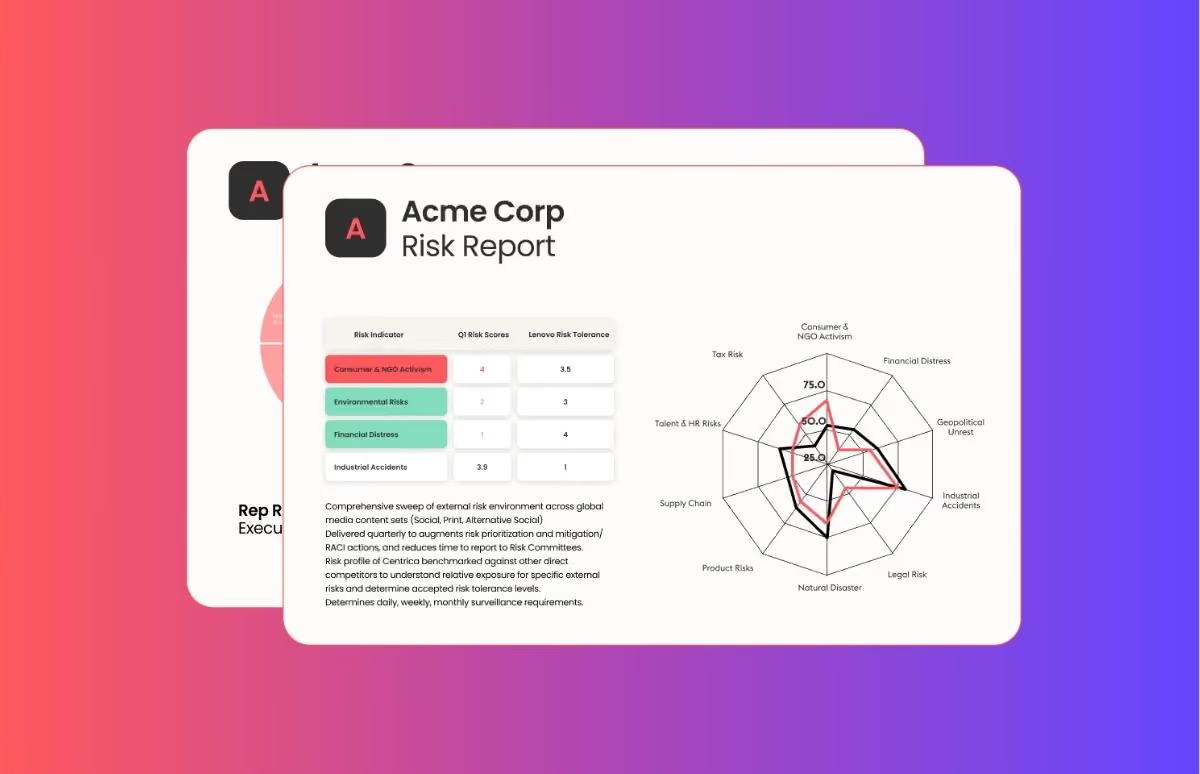
A more proactive approach to enterprise risk management
In today's volatile business landscape, enterprise risks emerge at unprecedented speed and from unexpected directions. Traditional enterprise risk management approaches—focused primarily on internal data and known historical patterns—are proving insufficient against rapidly evolving external threats. How do you monitor the millions of risk signals across the risk landscape—all while distinguishing meaningful threats from background noise? What can we do about the 'unknown unknowns'?
According to a PwC Pulse Survey of risk leaders, only 11% say they spend significantly more on proactive risk management efforts than on reactive efforts. Yet this blind spot is costly. Interconnected and evolving risks can cause both financial and reputational damage.
The solution is external intelligence for better business resilience. In fact, McKinsey research indicates that organizations with robust external risk intelligence capabilities demonstrate 23% higher resilience during market disruptions.
Signal AI's Risk Reports address this fundamental gap by harnessing AI-powered external intelligence to transform enterprise risk management from reactive to proactive. Our risk solutions process millions of global data points daily to identify emerging risks before they materialize - turning the overwhelming volume of external information into a strategic advantage.
In this article, we’ll cover:
- 4 elements of a Signal AI Risk Report
- What makes our risk reports different?
- See the data from our risk reports in action
4 elements of a Risk Report
Signal AI Risk Reports assess your business' enterprise-level risks in relation to emerging threats and industry trends to:
- Identify the emerging enterprise risks your company should monitor, prioritize, and mitigate.
- Report on, categorize, and assess the top risk issues that drove the most negative impact during the reporting period.
- Compare your risk profile vs. competitors and identify opportunities and threats across your peer set.
Let's dive into the ingredients that make up a Signal AI Risk Report:
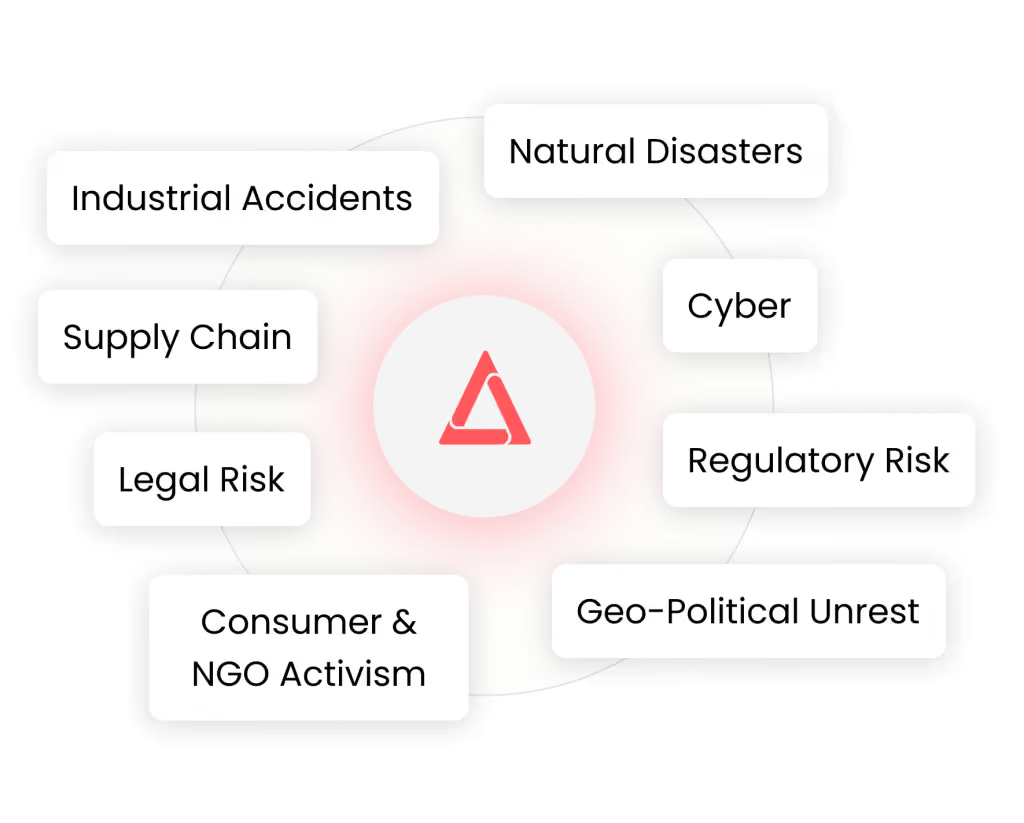
1. Signal AI’s Proprietary Risk Framework Across 15 Event Categories
The average Fortune 500 company faces an interconnected and evolving risk landscape that transcends across geographies and sectors. That's why Signal AI's proprietary risk framework covers more than 30+ risk events across 15 categories of enterprise risk.
Our framework integrates industry-specific risk factors with universal enterprise risks, ensuring comprehensive coverage while maintaining relevance to your specific business context. Our risk categorization enables a holistic view that connects internal vulnerabilities with external perceptions.
What sets our framework apart is its dynamic nature—continually refined through machine learning to detect emerging risk categories before they become mainstream concerns. This future-focused approach helps risk managers stay ahead of the curve, particularly valuable in industries where regulatory landscapes and consumer expectations evolve rapidly.
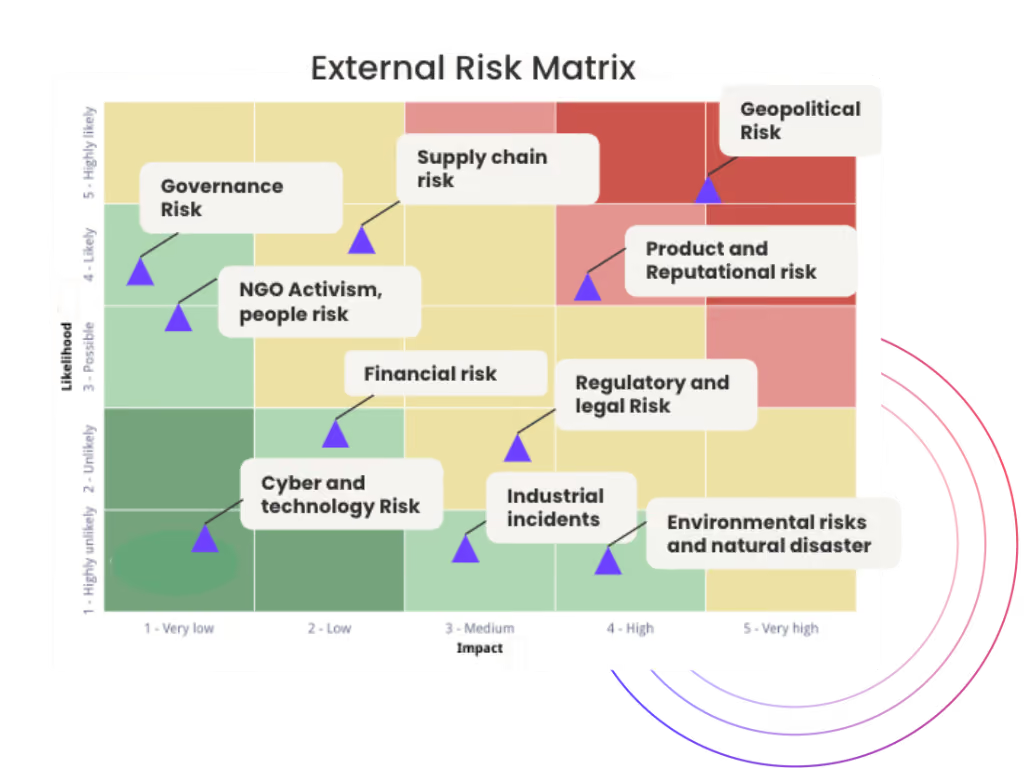
2. Overview of Key Risk Events: Reputational Risk Matrix and Heat Mapping
The External Risk Matrix helps answer the crucial question: "Where should we focus our risk mitigation efforts first?” For Enterprise Risk Managers who must balance competing priorities with limited resources, this visual analysis transforms complex data into actionable intelligence.
Each analyzed risk, categorized by topics or events, is placed on the matrix based on its likelihood of occurrence and potential impact. We then add a layer of human expertise to provide context and nuance, with a detailed look at what's happening on the matrix.
This expert risk analysis ensures that AI-identified patterns are interpreted within the appropriate business context, helping executives understand not just what risks are emerging but why they matter.
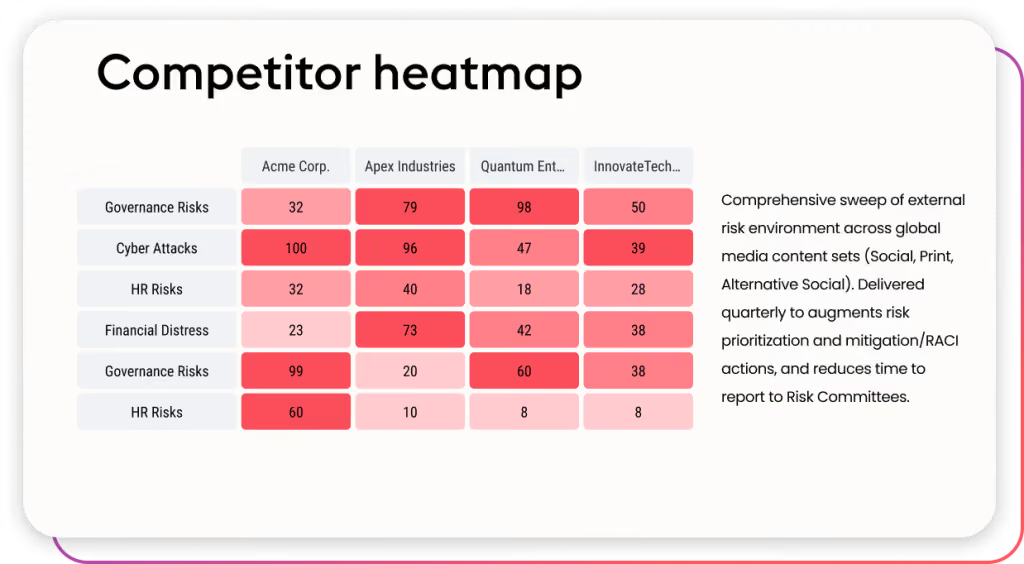
3. Competitive Intelligence: Industry & Competitor Heat Mapping
Thirdly, we utilize heat mapping to assess and compare your organization's risk position against competitors and industry peers.
This comparative view addresses a critical blind spot in traditional risk management: understanding your relative vulnerabilities. As PwC's 2023 Risk Survey found, 67% of companies that suffered major risk events were actually performing "industry standard" risk management—they simply didn't know their competitors had implemented stronger protections in specific areas or were suffering from similar industry-related risks.
Our heat mapping helps identify risks that impact industry peers and uncover potential competitive advantages or vulnerabilities. This intelligence can inform both defensive strategies on where to strengthen protections and proactive opportunities to get ahead of the curve.
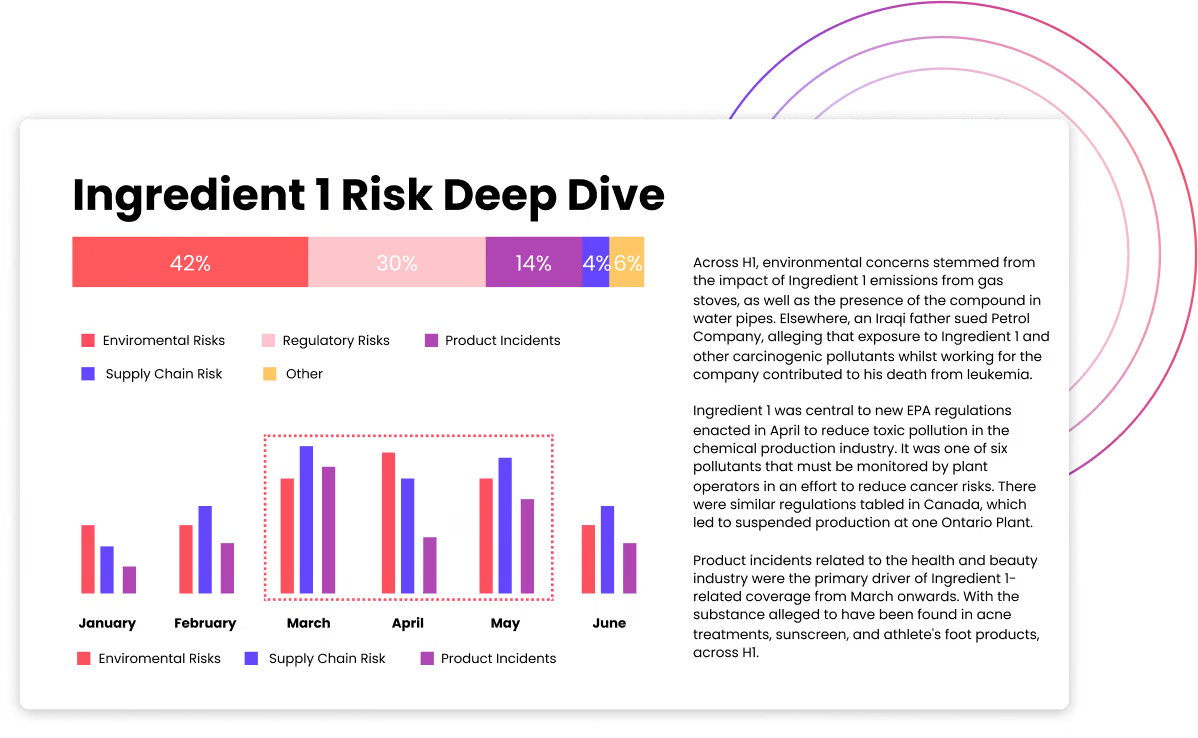
4. Risk Event Deep Dives across Sectors, Geographies, and Competitor Sets
When significant risk signals emerge, surface-level awareness isn't enough. Our deep dive analyses double-click into risk events that are evolving across key sectors, geographies, in the competitive landscape, and for your specific organization.
These comprehensive analyses include:
- Tracing risk narratives to their origins
- Identifying key opinion leaders amplifying the risk
- Assessing stakeholder reactions across different segments
- Evaluating regulatory implications
- Providing strategic response recommendations
For Enterprise Risk Managers, these deep dives transform overwhelming information volume into clear, contextualized intelligence that supports confident decision-making even in uncertain conditions.
What makes Signal AI Risk Reports different?
Unlike traditional enterprise risk management tools, our platform covers external intelligence for a more proactive ERM program:
Accuracy
Our AI is rigorously trained on vast, diverse datasets, ensuring precise risk detection and minimizing false positives. Millions of data points are analyzed and translated across 75+ local languages globally. This breadth is critical in an interconnected world where risks increasingly transcend geographical boundaries.
AI domain expertise
Traditional keyword searches miss approximately 67% of relevant risk mentions due to evolving terminology, contextual usage, and implicit references (Forrester, 2023). Signal AI solves this through sophisticated machine learning.
Signal AI has over a decade of specialized AI development ensure risk intelligence that's both sophisticated and reliable. Hundreds of Signal AI's topics (like R&D) and entities (like Microsoft) are AI-trained—as opposed to Boolean searches limited to humans typing keywords—which offers far better data accuracy so you know when a risk event truly pertains to your organization.
Completeness
Enjoy a holistic risk view by analyzing billions of data points across global markets and languages. According to the World Economic Forum's 2024 Global Risks Report, 82% of significant corporate risk events originated outside a company's home country—making global monitoring essential. Our comprehensive data coverage ensures you don't miss critical signals due to language or regional barriers.
Traceability
Every risk insight is backed by transparent data sources, allowing you to understand the origin and evolution of threats.
Compliance
We compliantly source our data, ensuring ethical and legal integrity in every risk insight delivered.
Bottom line: A more volatile business environment demands proactive enterprise risk management
Reactive risk management is a costly liability in an increasingly volatile business environment. Organizations that leverage external intelligence to anticipate and respond to emerging risks demonstrate measurable advantages in financial performance, market resilience, and strategic agility.
Benefits of Signal AI Risk Intelligence:
- Identifies risks on the horizon before they materialize
- Replaces manual monitoring with continuous risk monitoring using AI-powered analysis
- Delivers global, compliant, data-driven risk assessment
Ready to transform your enterprise risk management? See an example of our Risk Reports in action. Download the report here.