
Author: Raquel Oliveira, Senior Insights Strategist
Companies across industries face a potential upheaval in how they make and move their products, as proposed tariffs threaten to redraw the map of global manufacturing. Trump's day-one agenda includes imposing 25% tariffs on Mexico and Canada and boosting duties on Chinese goods by 10%. Using Signal AI’s AI-powered analysis, we assessed which industries face the biggest risks - and how they're preparing.
Quick Take:
- The auto industry takes the biggest hit in the tariff war: The sector dominates media coverage at 47%. The industry outlook is grim, with 89% of reports focusing on the negative consequences.
- Electronics brace for massive downturn: The sector claims 39% of tariff discussions, with analysts projecting sales decreasing up to 68%. Industry coverage remains overwhelmingly negative at 85%.
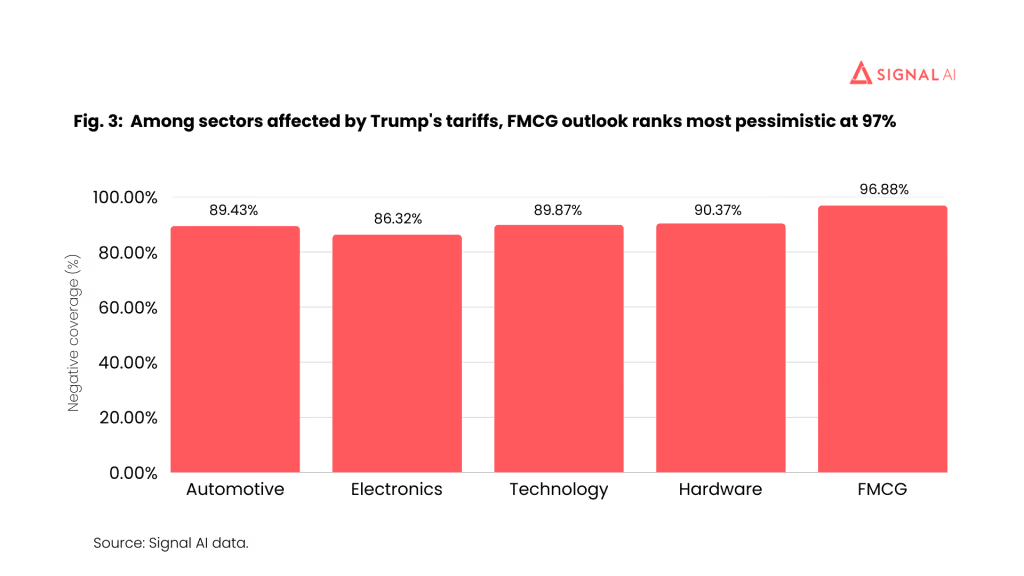
- Consumer goods fly under the radar but might face the bleakest future: Despite minimal coverage (<2%), the sector shows the highest negative sentiment at 96%.
Nearly half (47%) of the conversation about the potential impacts of Trump’s proposed tariffs focuses on the auto sector, with 89% of the coverage projecting a dim outlook.
The automotive sector stands at the epicenter of the conversation. Nearly every major car company has significant operations in Mexico, and the proposed tariffs would fundamentally alter their business models:
- Toyota builds all its Tacoma trucks there (over 230,000 sold in the US in 2023)
- One of Volkswagen's largest plants worldwide is in Mexico
- Honda sends 80% of its Mexican-made cars to the US
- BMW is planning to make its new electric cars in Mexico from 2027
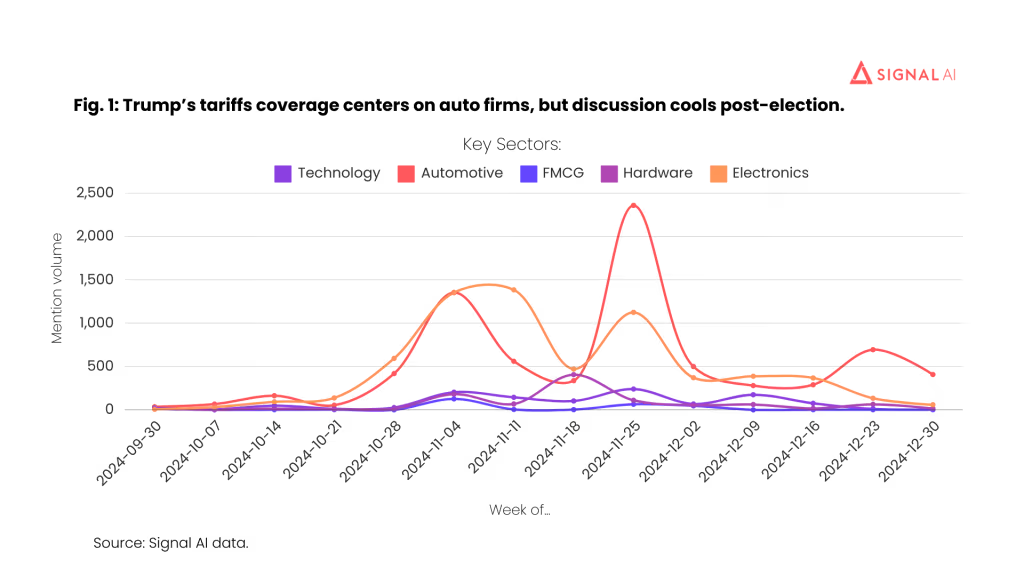
Though media coverage of tariffs' impact on automakers has declined since its election-month peak, auto companies aren’t sitting still. Honda's chief has already warned that they might need to move production if permanent tariffs hit. Others are speeding up plans to build more in the US. Premium manufacturers face particular challenges. Volvo Cars and JLR are especially vulnerable due to their heavy reliance on European production, while GM and Stellantis must contend with extensive Mexican and Canadian assembly operations.
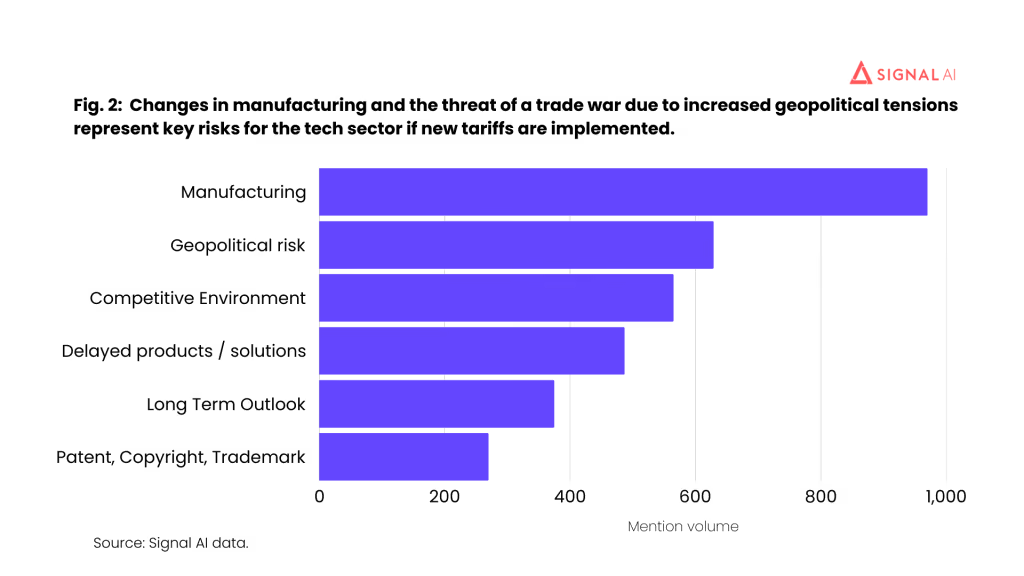
Over 85% of news coverage on the impact of Trump’s tariffs on the tech and electronics sector is negative, with manufacturing and geopolitical tension representing the key risks.
The electronics sector faces its own set of challenges. Foxconn is currently building a massive AI factory in Mexico, while Lenovo produces all its North American data center products in Monterrey. Samsung and LG both manufacture appliances in Mexico for US customers.
Consumer tech sales could plummet under President-elect Trump's proposed tariffs, with the Consumer Technology Association projecting steep declines: laptop purchases could decrease by 68%, gaming consoles 58%, and smartphones 37%. The impact could slash consumer tech spending by up to $143 billion.
Despite trade tensions, the AI sector shows resilience. Tech giants plan to boost AI investments to $267 billion in 2025, benefiting semiconductor companies focused on AI chips. However, chip equipment makers face heightened risks due to Chinese market exposure, and the Philadelphia Semiconductor Index has shown volatility with previous trade restrictions, dropping 15-20% in recent years before recovering.
While the outlook for all sectors is negative, driven by a cocktail of rising prices and supply chain disruptions, the FMCG sector faces the dimmest prospects, clouded by uncertainty over its ability to adapt.
The ripple effects extend well beyond auto and tech. Consumer goods companies, which make up less than 2% of tariff discussions, are still grappling with difficult decisions about their supply chains and pricing strategies. E.l.f. Beauty, for example, has already reduced its Chinese production from 99% to 80%, while others are actively negotiating with vendors to offset potential costs.
How are companies adapting?
Forward-thinking businesses aren't waiting to see what happens. They're conducting comprehensive supply chain audits, evaluating domestic manufacturing options, and accelerating automation plans. Many are building inventory before tariffs hit, while others are exploring production shifts to countries like Vietnam, South Korea, Malaysia, and Indonesia.
The impact could extend far beyond individual companies. European analysts warn of potential recession risks, with ABN Amro predicting up to 1.5 percentage points off European growth. The effects could be particularly severe in Germany, where analysts project a potential 0.5% GDP decline, with other major EU economies facing similar challenges.
What This Means for Your Business
Trade disruptions create ripple effects across all industries. When major manufacturers shift operations, the entire supply chain feels it. Rising costs, supplier instability, and competitor moves can threaten your business before you see them coming.
Business leaders face a clear challenge: spotting these risks early enough to act. But monitoring global trade shifts, supply chain disruptions, and competitive moves across key markets takes time you don't have.
Our Enterprise Risk Intelligence platform transforms this challenge into opportunity. Through real-time risk monitoring and early warning alerts, you'll spot emerging threats before they impact operations. Our Advanced Dashboards can help you uncover the winning and losing storylines within your industry, while our Newsletters & Briefings ensure your team never misses critical developments. When market dynamics shift, Signal AI helps you move from uncertainty to informed action.
Learn more about our reputation and enterprise risk management tools here.
Research Methodology
Signal AI ingests and analyzes data from over 5 million documents daily, spanning 226 markets and 75 languages. Our AI-powered web app delivers actionable insights, offering companies access to media coverage, key industry trends, 100+ trained topics, and events. Learn more here.
Date range: October – December 2024.
Corporate analysis: When looking at overall industries this report includes data from the Signal AI 500, which looks at 500 of the most talked about companies across 20+ industries. For this piece, we focused on the top 10 companies for each sector:
Tech sector: Microsoft, Google, ServiceNow, SAP, Salesforce, Oracle, Cisco, Apple, HP, IBM.
Automotive sector: Hyundai Motor Company, Toyota, Honda, Stellantis, BMW, Mercedes-Benz, Volvo, Volkswagen, BorgWarner, Nissan Motor Company.