
In my role at Signal AI, I meet a lot of people who are considering whether or not to start a measurement framework or program and, if they have already, how to go about it. It is a tricky thing to get right and you can easily get distracted or caught up trying to please a lot of people. A key reason for writing this blog was to help people answer the questions ‘why do I want to start a measurement program?’ or ‘why do I want to change the measurement framework that I already have in place?’I often ask, what is it that you want to achieve? Is the framework designed to demonstrate the good work that is happening in the Comms team? Do I want to confirm that my current strategy is working? Is there a tactical element? Do I want to know what is working and what isn’t, what my competitors are doing, how journalists feel about my brand?Good measurement should both PROVE and IMPROVE how effective the communications team is. This means that it needs to be both simple and actionable. Simple enough for a non Comms person to understand and actionable enough for the Comms team to interpret the data and inform the next steps.
The benefits of a strong PR measurement program
Practical ways that a good measurement program can help with both of these requirements are:
- It can help a Comms team gain more control over the narrative associated with their company or brand. If I know the perception of my company or brand I can do something about it. Gut feeling is not enough anymore, decisions need to be made based on data.
- It can measure penetration into new markets.
- It can demonstrate how my company compares with competitors. I can set the measurement program up to measure the game I want to be playing. A quality over quantity game. A share of voice with context, against areas I care about. No more vanity metrics.
- It can identify what good looks like and we can start benchmarking against that. A scoring system that includes key media penetration, sentiment, prominence and topics can help us track how many ‘good’ articles we are achieving.
Analyzing Deliveroo's media coverage
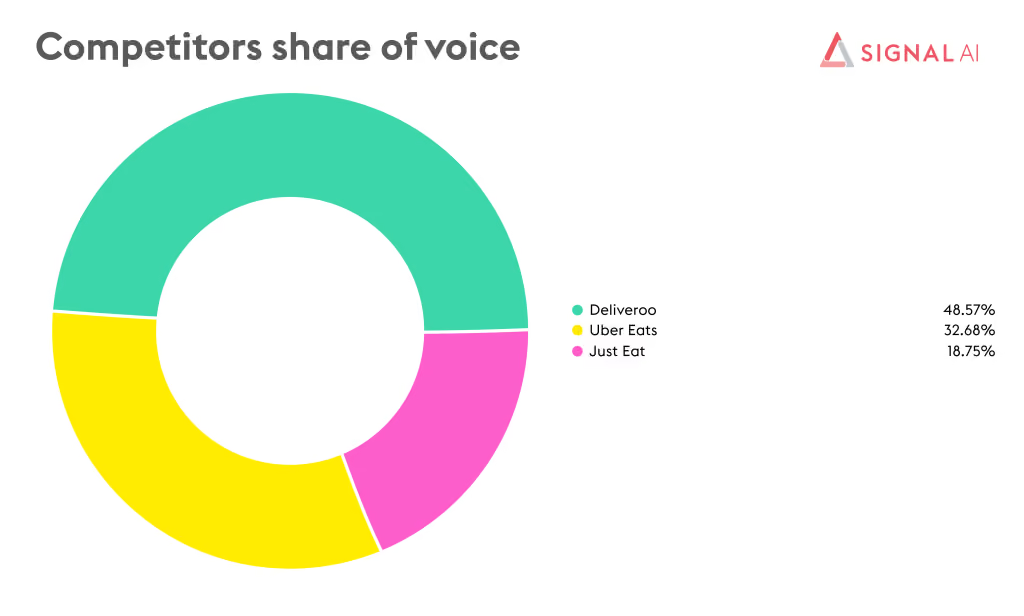
I set up a measurement framework on the Signal AI platform for Deliveroo by way of example. In order to focus the analysis, I set up a search for Deliveroo, Just Eat and Uber Eats in a list of global tier 1 titles. I then set the time frame to 2021 and in less than two minutes I had some interesting findings:Deliveroo dominated the coverage within the key media list. This is the first benchmark to set. 48.57% is the current benchmark, what can we do to improve on this?
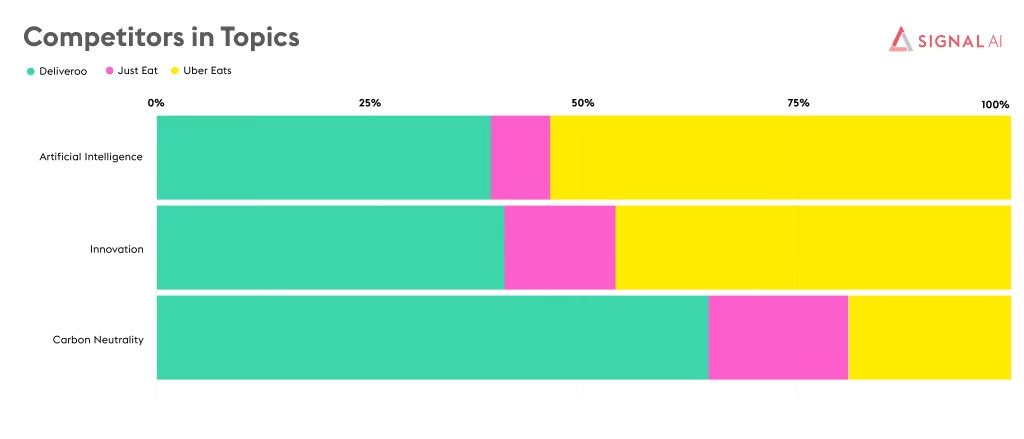
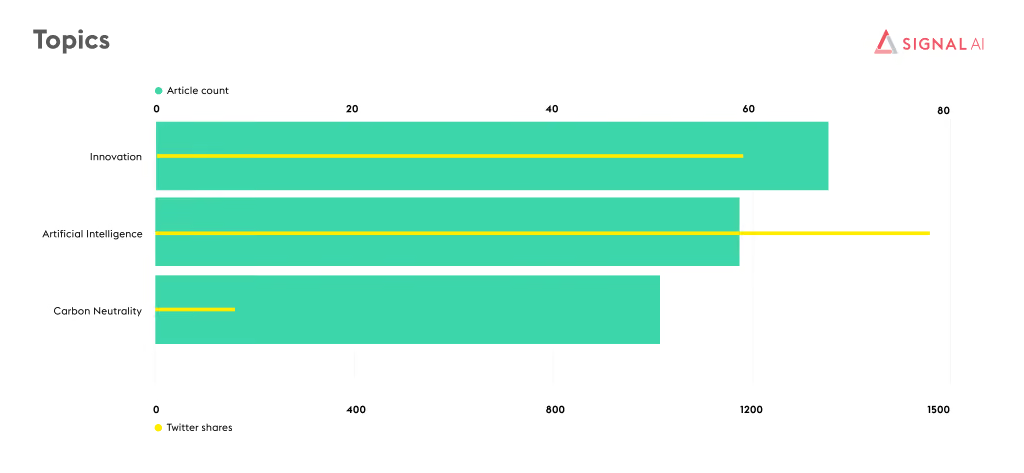
I then linked the coverage with three topics that I considered to be of interest within this industry. Deliveroo led the conversation on Carbon Neutrality whilst Uber Eats had the most coverage on AI and Innovation. What campaigns could Deliveroo run in order to improve their voice on AI and Innovation?
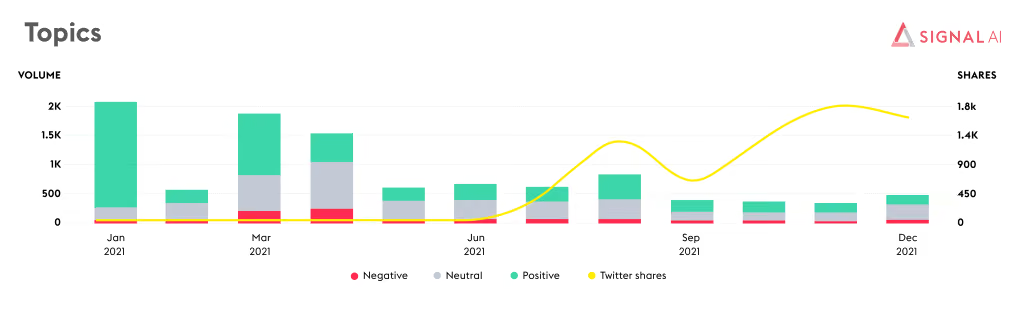
Both positive and negative coverage peaked in March and April 2021 surrounding IPO speculation. In November we saw lower volumes of coverage but content around Black Friday deals was shared heavily on Twitter.* The learning here is that deals related coverage is more engaged with by the consumer audience.
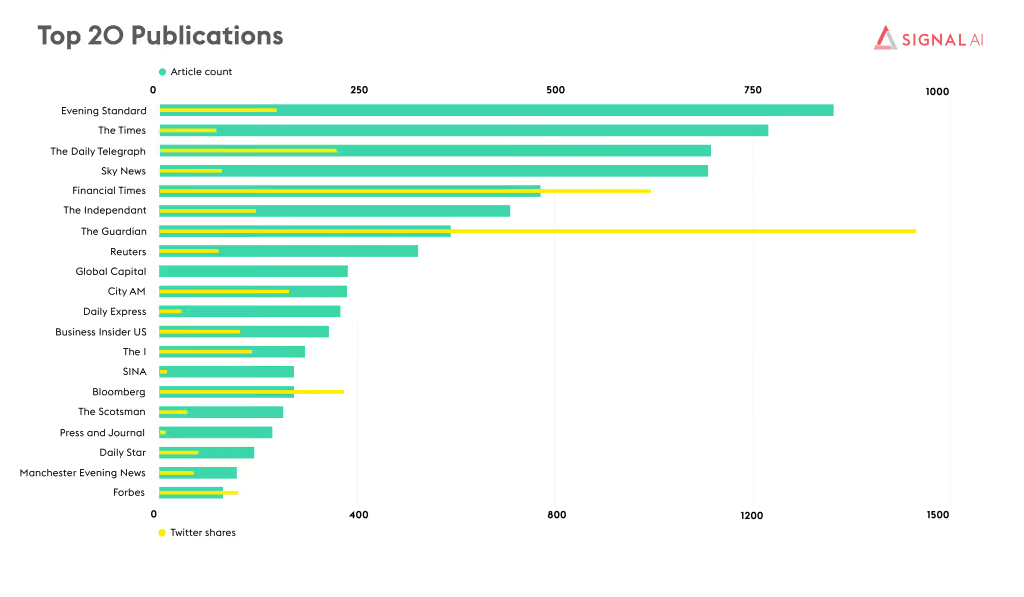
Articles in the FT and the Guardian are more likely to be shared on Twitter for Deliveroo. This is a key indication that the consumer is engaging with the content.
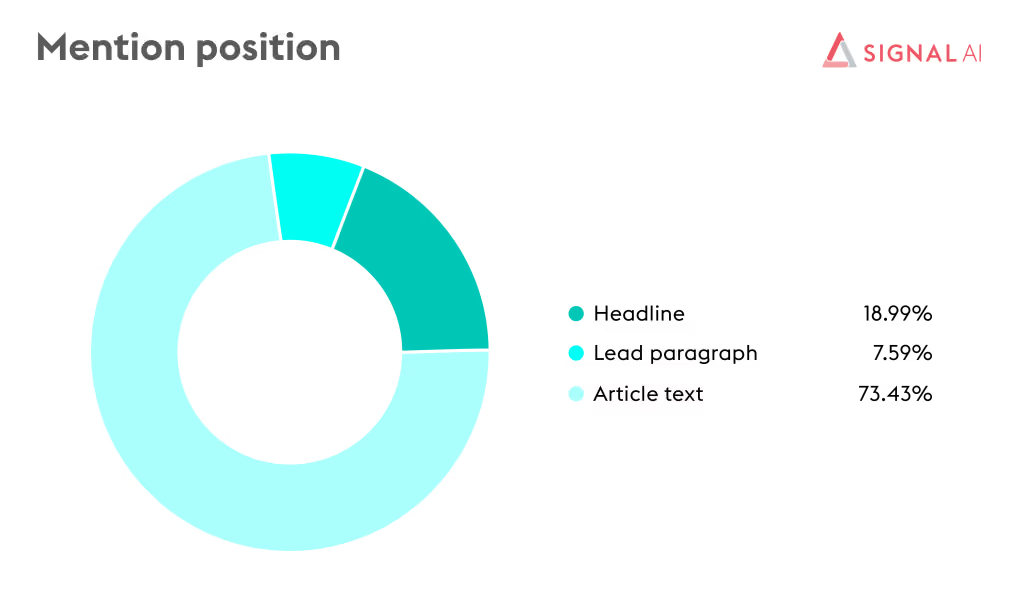
Most Deliveroo mentions, in the tier 1 media list, were in the article text. This is another key benchmark and improvement in this metric would enable Deliveroo to better control how their brand is positioned in the media.
Perhaps counterintuitively articles on AI are more shared on Twitter than those about carbon neutrality. Maybe a focus on AI could help Deliveroo engage their audience.
Access to more reliable quantifiable reputation data could improve business performance by an average of 63%, according to a survey of 1,000 business leaders by Signal AI. It is easy to see why, with the information available on the Signal AI platform I am able to accurately measure performance, set benchmarks for improvement and have access to the data that will inform my decision making and communications strategy.