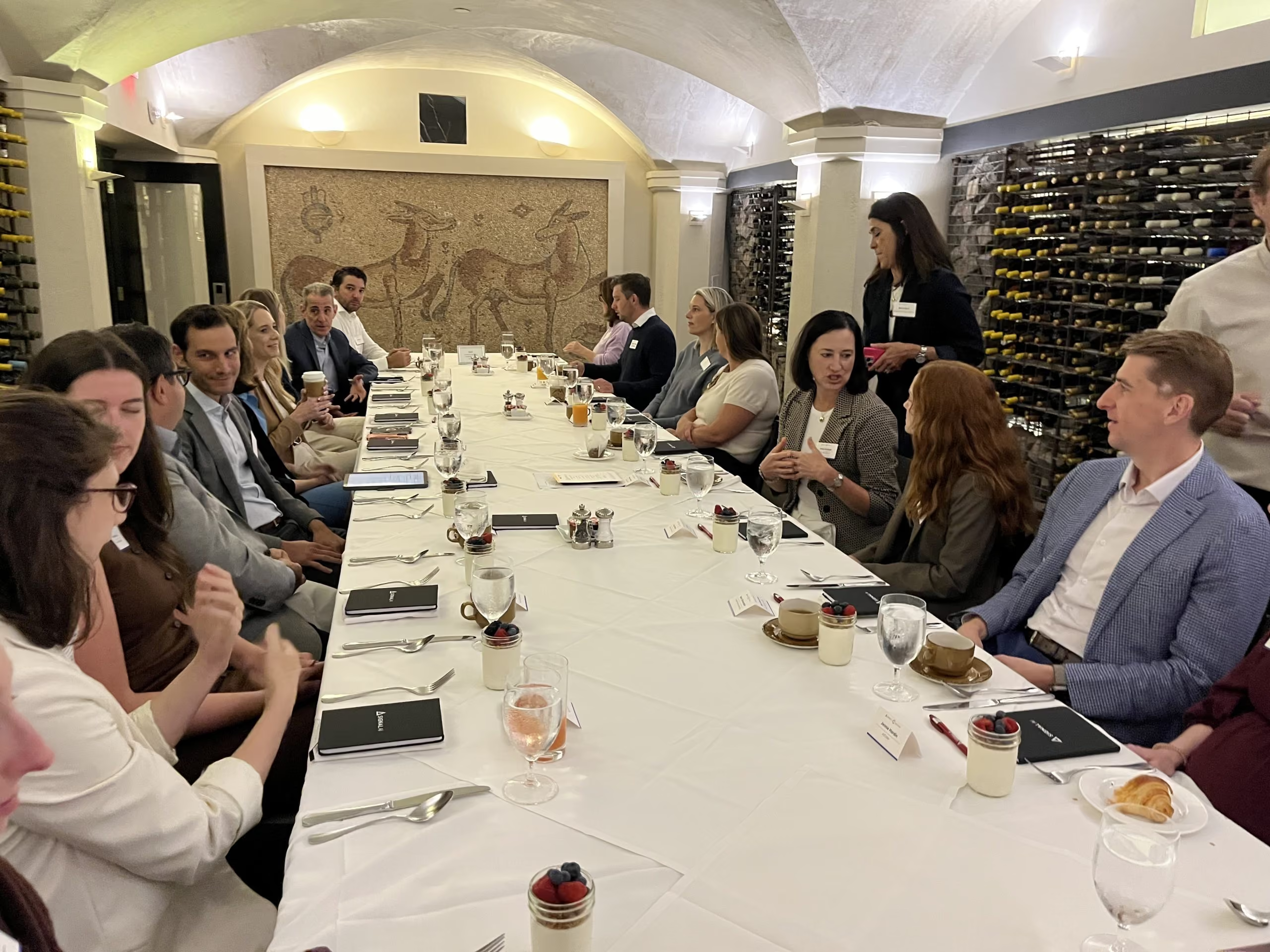
Our recent Exec Connect event in Boston brought together senior communications leaders to discuss the industry's most pressing challenges. From navigating geopolitical tensions to leveraging AI for competitive advantage, the conversations revealed critical shifts in how communications professionals are adapting to an increasingly complex global landscape.
This Boston Exec Connect featured guest speakers Nicky McHugh, Global Head of Reputation and Crisis and Governance Communications at Schneider Electric, and Bianca Olson, Chief Communications Officer of HMH, who gave insight into their career trajectories and how they navigate their current roles.
While Exec Connect events provide a private forum for attendees to share insights and best practices, we're highlighting the key themes that emerged from these discussions.
Internal Communications: The Strategic Foundation in Turbulent Times
The consensus was clear: when it comes to geopolitical tensions, hot-button topics, and current events, internal communications efforts are just as valuable, if not more, than external communications. As all communicators inherently know, "words matter"—and in today's polarized environment, terms like DEI, CSR, and ESG have become so politicized that organizations are grappling with how to stay neutral.
Best practices for navigating this tumultuous environment center on three key principles: consistency, clarity, and choosing proper channels to unify the internal communications experience. Attendees shared their approach to ESG and CSR via employee engagement through volunteering, community work, and transparent internal dialogue.
Crisis Communications: Building Frameworks for Uncertainty
A critical question emerged during discussions: Is there a tried-and-true framework for engaging or not engaging in crisis situations? Attendees emphasized that while common sense and trusting your gut instinct remain important, successful crisis management requires structured preparation.
The conversation revolved around a three-step approach:
- Set Protocol: Bring the right subject matter experts into decision-making processes
- Create a Playbook: Proactively plan crisis scenarios before they occur
- Establish Internal Process: Socialize guidelines widely across the organization
One attendee proposed an additional decision framework built around three key questions: Is it relevant to our brand? Can we have an impact? What will our stakeholders think? Others added a fourth consideration: Are we taking care of our employees through transparent internal communications?
The overarching advice was to stick to brand values without looking back and to "stay focused on your business." Most people actually welcome clear guardrails and guidelines—no one wants to operate in uncertainty or ambiguity.
When discussing building trust with senior stakeholders, particularly those with decades of tenure, the most effective approach involves not just sharing the what, but "the why" behind communications thinking with a data-driven strategy.
AI's Impact: From Media Relations to Content Governance
The discussion around AI revealed both opportunities and challenges for communications professionals. Generative Engine Optimization (GEO) is driving stakeholders to pay renewed attention to earned media, with a particular focus on local and niche publications rather than just Tier 1 outlets. The shift reflects how communications teams are shifting content distribution strategy based on what the LLM sources.
From a practical standpoint, AI is already being deployed for content review and approval processes. One attendee shared that they're using AI to review and approve daily press releases from a corporate governance perspective, which is particularly valuable for global companies managing multiple communications streams.
The conversations at Exec Connect Boston underscored a central theme: communications has never been more strategic to business success. As the function continues to evolve, professionals who can navigate internal politics, build crisis-ready frameworks, maintain stakeholder trust, and leverage emerging technologies will be best positioned to drive organizational impact in an increasingly complex world.