A campaign you can't measure is a story you can't tell.
Most PR and comms teams wait until the dust settles to check what actually happened. The launch went out Tuesday. By Thursday morning, someone asks: "Are we on track?" The honest answer: nobody really knows.
Campaign measurement isn't email digests from a tracking tool. It's the operating system that lets you brief the room with evidence instead of impressions. It shows you which channels and spokespeople are actually doing the work. It lets you course-correct while the campaign is still running, not after it's over.
Here's the four-stage framework.
Stage 1: Define Your Searches
A search is the smallest unit of campaign monitoring. It tells your platform what to surface from millions of sources in real time. For a single campaign, you'll typically need five core searches.
The five searches every campaign needs:
- Your organisation: Everything about your company in the news. This is the baseline.
- The campaign topic: Direct hits on the launch itself. For a sustainability initiative, this combines net zero, packaging, and supply chain coverage.
- Your spokespeople: The CEO, CSO, or other named executives. This powers quote tracking and speaker mentions later.
- Your competitors: A peer set that lets you measure share of voice and see who's getting coverage.
- The issue landscape: The broader conversation you're riding. A horizon scan showing where the wave is moving.
Signal AI's AIQ engine reads context the way a human analyst would. It knows Apple the fruit from Apple the company. It catches CEO names in stories that never mention the company name. It finds articles about your industry without requiring you to hand-code every possible synonym.
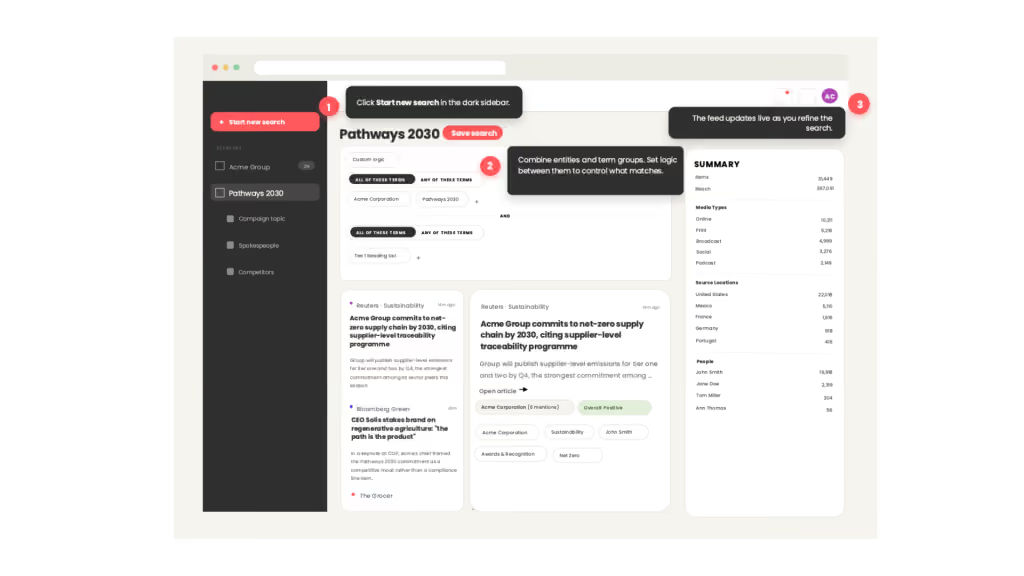
Name your searches clearly. Save them to campaign folders. Then move to the next stage.
Stage 2: Organise Your Searches Into a Campaign Workspace
Loose searches won't build a dashboard. You need structure.
Create five folders that mirror the shape of your campaign:
- Organisation (required): Your master org search
- Campaign topic: Direct campaign coverage
- Spokespeople: Your named executives
- Competitors/peers: Your comparison set
- Issue landscape: The broader topic
Stage 3: Visualise Your Campaign Data on a Live Dashboard
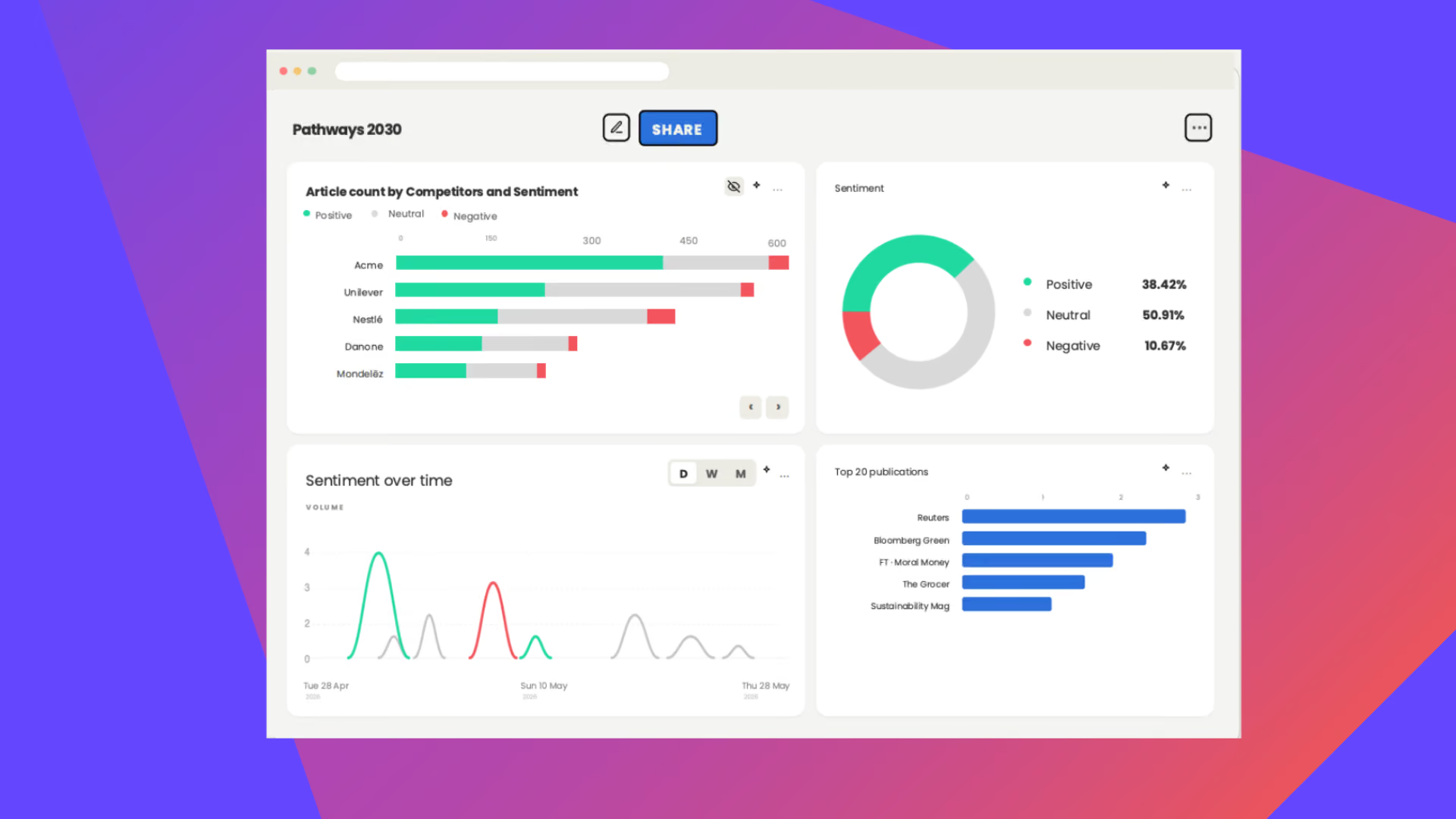
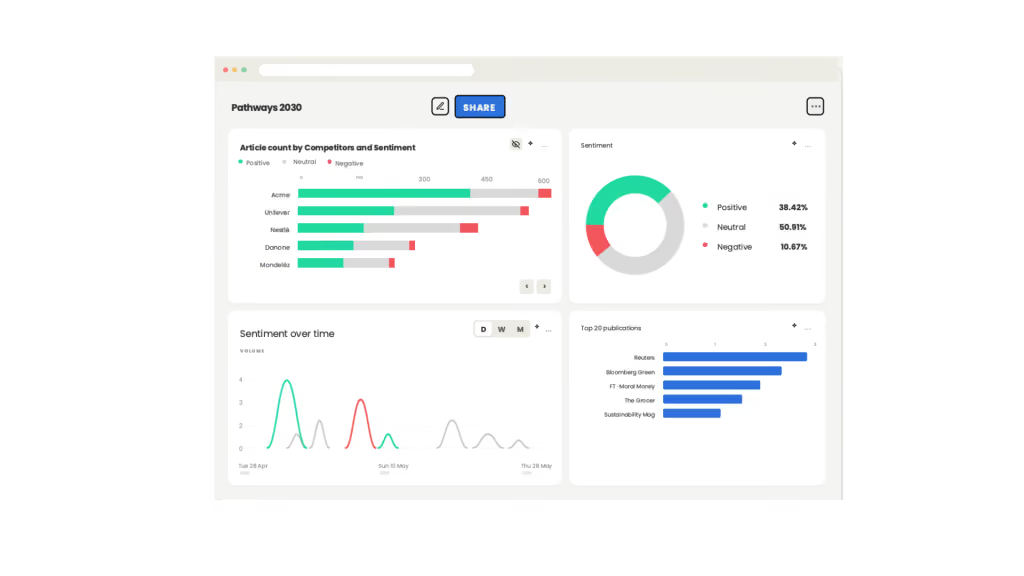
Your folders become a live dashboard. Volume over time, sentiment breakdowns, share of voice against competitors, top publications, which spokespeople are getting mentioned most. All visible at a glance, refreshing as new coverage arrives.
What you can do with your dashboard:
Edit charts inline. Rearrange them. Resize from the corner. Add from the library when you need a different angle. Brand it with your logo and accent colour so it feels like your work, not a vendor tool.
Share it with stakeholders and use it in your briefings. Let the data speak.
Stage 4: Distribute Campaign Insights to Your Stakeholders
You have two distribution formats. Choose the one that fits.
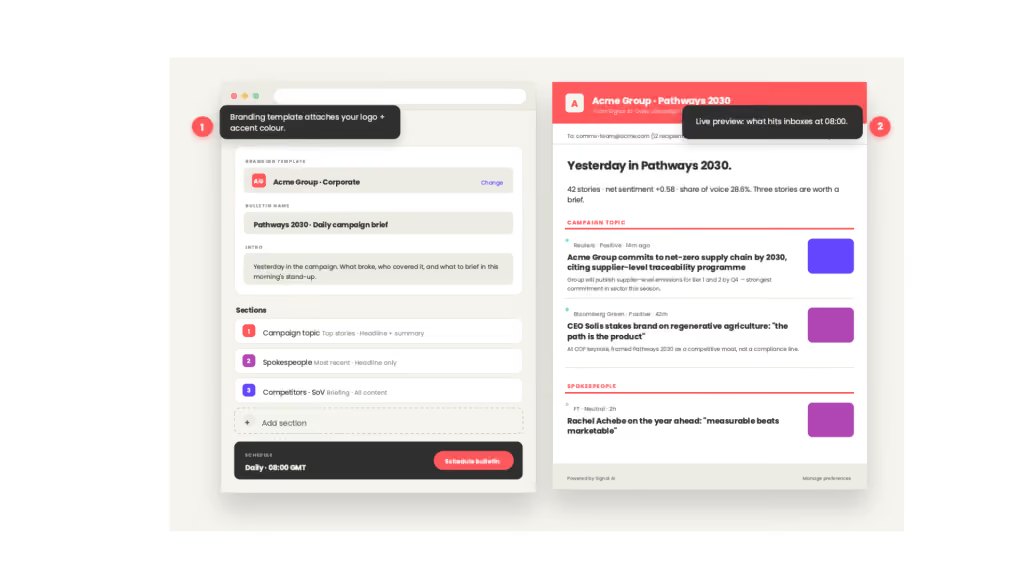
Bulletins are automated email summaries. Daily or weekly, powered by your saved searches, personalised with your branding, and addressed to the people who need them. Wake up Monday and the comms team has yesterday's campaign summary. Friday afternoon the exec committee gets a weekly digest. No manual copy-paste. No forgotten briefings. Set it and leave it to fire.
Reports are curated. You pick the stories, write the commentary, add custom sections and images, then send or schedule. A report is what you send when the story matters and you want to shape the narrative around it. "Here's what landed and why it matters."
Both use branding templates. Your logo, your accent colour, applied once and used everywhere. Bulletins, reports, dashboard charts. Everything looks like it came from you.
Why This Matters: Three Campaign Wins
Campaign monitoring on Signal AI isn't just about reporting. It's about three core wins:
Know first. Velocity alerts fire before a story breaks wide. You brief the room with context, not surprise. You see mentions spike before it becomes a crisis or an opportunity you missed.
Show your work. Share of voice, sentiment, and reach are measurable, comparable, and defensible. When the exec asks if the campaign is working, you don't guess. You show the chart.
Course-correct mid-flight. Spot which channels are doing the heavy lifting. See which spokespeople are actually getting quoted. Know which topics resonate and which are being ignored. Then adjust while the campaign is still running, not after it's over.
Ready to measure your next campaign? See how Signal AI helps teams like yours monitor campaigns in real time.