
Selecting the right metrics
There are many ways to measure Communications and many metrics to choose from, and the selection of the appropriate metrics is key. The metrics must be relevant to the objectives of the team or they can be highly detrimental to those objectives. Let’s take a look at some metrics and see how useful they are and where they might support this.
Volume
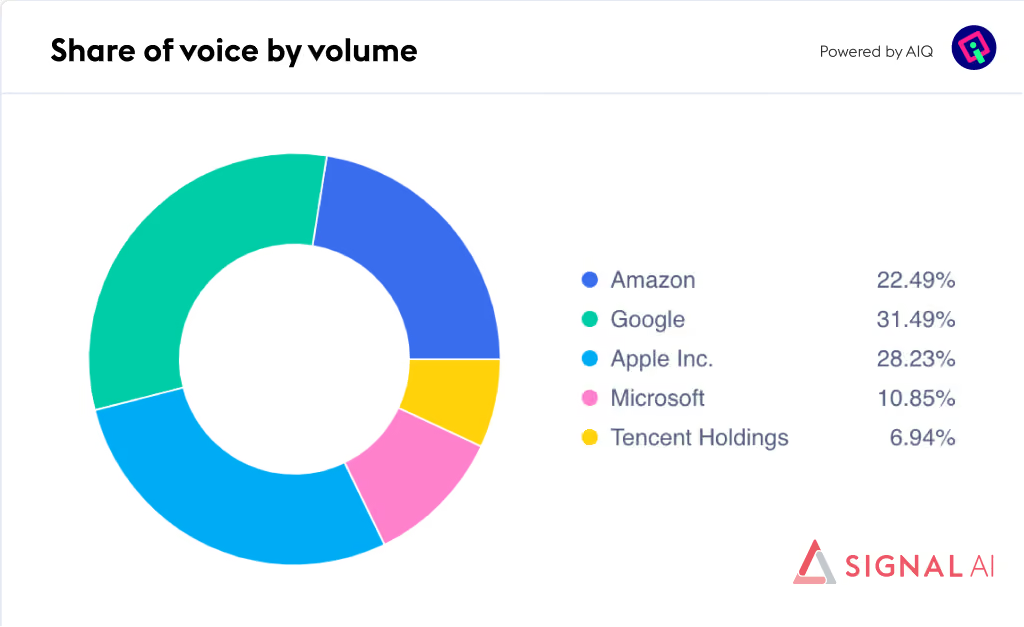
Pure volume in itself is not a particularly useful metric. "We got more coverage than last year. We got more coverage than competitor X." This might look good, but it doesn’t pass the "so what" test, and it's hard to imagine any board really caring about this. It’s a useful tactical metric, but in terms of strategic goals, the volume of coverage and the raw share of voice against competitors doesn’t provide us with any insight.
Below is a raw share of voice chart for Amazon in a set of global media titles related to volume only. It’s interesting to see, but it is not telling us anything. At this point, I have no idea what forms each competitor's coverage in terms of sentiment or strength of mention.
Sentiment
Sentiment is an excellent indication of perception. How do journalists perceive us and how is this represented in the media? Understanding if coverage is negative or positive gives your board a better indication of how the company is perceived. On its own, it is useful and when added to other metrics, it becomes even more interesting.
Salience
Salience allows a much more granular understanding of the dominance of coverage.
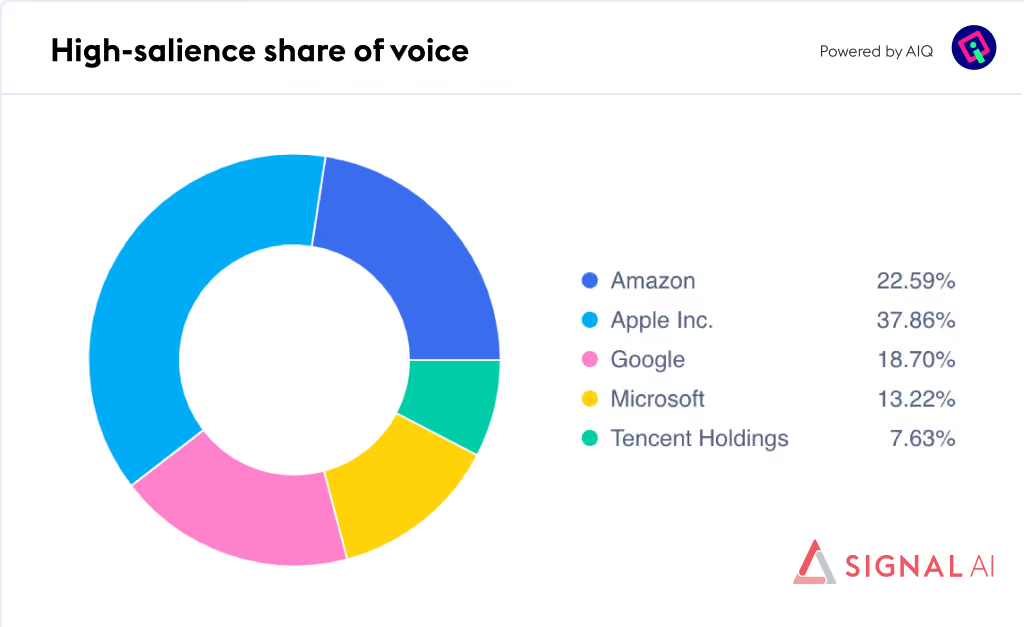
At Signal AI, we will score each mention of a company determined by where it is located within an article and the strength of the mention. In itself, this is an incredibly useful metric. If you add it to volume, you get immediate context. 1,000 articles with high salience supports your objectives much more than 1,000 passing references. Add this to the share of voice against competitors, correlate it with sentiment, and you can demonstrate dominance in a market place. This is starting to sound like supporting a business objective!
Below is a reconfigured share of voice chart that includes high salience articles only in the same set of media as the previous chart. Interestingly, we can see that Apple is winning when we focus on strength of mention.
Themes/Topics/Messages
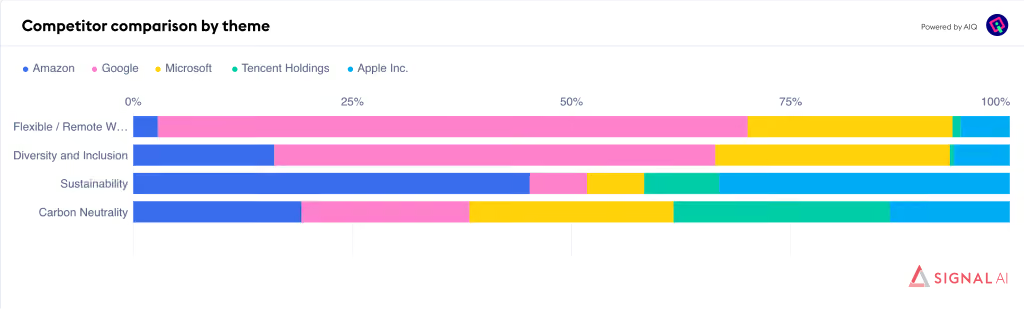
This will tell us if we are associated with the topics that we want to be. We might have a strategy to be thought leaders in sustainability issues or to have a voice on issues such as diversity and inclusion. These metrics have a tangible link to business objectives. Investors will want to be sure about the ESG credentials of a business and companies will want to hire the best talent.
Managing the topics that a company is associated with should be a key part of any measurement program. In the same sample of content as the chart above (high salient coverage in selected global media), we can see that Google’s voice on workplace topics is strong and Apple clearly has work to do in this area.
Overall, volume is not enough
With a carefully targeted measurement framework, we can demonstrate that the coverage you have gained or managed in the media is portraying your brand as you wish it to, that the sentiment is on track, and that you're dominating the coverage and supporting your business in all kinds of different ways. It is no wonder that people do not value a volume-based approach, and until the advent of AI, it was all that was available at a reasonable budget point.
This wasn’t only to the detriment of perception of PR, but to the detriment of doing good work. Bad metrics can cause bad behavior, and using the right metrics can help the PR team demonstrate that it is aligned with and supporting the overall business objectives of their company or brand. It is easy to see why, with the information available on the Signal AI platform, we are able to accurately measure performance, set benchmarks for improvement, and have access to the data that will inform more strategic decision-making.
Helpful Resources:
- For more on Signal's AI-powered sentiment model, check out this webinar or this blog.
- If you're interested to see how leading brands have leveraged our communications metrics in innovative ways, read customers testimonials from Petco, Delivery Hero, and FleishmanHillard.
- Curious about the impact of AI on communications? Listen to Signal AI's CEO explain how communications leaders can take advantage of AI and avoid pitfalls in this webinar.