
In the boardroom, an advisor’s value isn’t just in their answers; it’s in the questions they think to ask. Knowing how to work with generative AI is no different.
For the modern CCO or CRO, the goal of using AI doesn’t have to be simply to "generate content," but to strategize. To move from tactical execution to proactive strategy, you must stop using AI as a search engine and start using it as a strategic partner.
We’ve spent over a decade at Signal AI perfecting the fusion of discriminative and generative AI. We know that in a world of "noise," output quality is only as good as the inputs. While many are distracted by the "magic" of LLMs, the real strategic advantage lies in prompting with purpose to get the best insights possible from your chosen generative or agentic AI tool.
Whether you are using a general LLM or a proprietary tool like Ask AIQ, this practical guide offers 10 actionable tips and best practices to help you craft more effective prompts.
Why prompting matters
A recent Workday survey found that 8 in 10 respondents saved one to seven hours a week by using AI, but about 37% of that time savings was lost to correcting or reworking the AI output.
Gen AI can be a powerful research and insight tool, but the quality of the insights depends on how you set up and ask your question.
The following 10 tips will help break down best practices for asking the right strategic questions.
1. What: Context is King
Don’t assume the model has context or knows your world. Treat your LLM like a human assistant or analyst, and give it a clear brief to deliver board-ready insights. Specify the industry, the stakes, and the specific drivers you want to investigate. Avoid ambiguity or vagueness in your request. Vague prompts lead to "fluffy," unusable results.
- Pro Tip: Instead of asking for "key industry trends," ask the AI to "surface key technology trends affecting the finance industry specifically through the lens of regulatory risk and long-term reputation." Rather than “surface important insights,” try “surface insights that highlight the effect Tariffs may have on the AI industry.”
2. Who: Define the Persona
When using any tool, always provide the "lens" of your specific role and the identity of the agent acting on behalf of that role. Think of the details as you’d see in a job description.
With Ask AIQ, you can skip this step—our engineers have already assigned the agent the role of reputation and risk intelligence analyst.
- Pro Tip: Assign a role, for example: "You are a Chief Risk Officer evaluating market entry in APAC. Analyze the following data for hidden geopolitical friction.”
3. Where: Narrow the Focus
This is telling the AI where to look. Rather than just asking for topics and trends, ask the agent to cover specific areas within them. Specify sources.
Keep in mind: General LLMs are trained on historical data. If you are preparing for a real-time board briefing, ensure your tool has access to a live, vetted news feed to avoid "hallucinating" outdated trends.
- Pro Tip: Rather than "What are people saying about us?", try: "Analyze media sentiment regarding our sustainability initiatives in Northern Europe compared to our top three competitors."
In Ask AIQ, the foundation of our AI engine, AIQ, grounds our proprietary AI in a custom, trusted content set to eliminate hallucinations. With Ask AIQ, we also give users the ability to choose a specific search or a custom content set to focus on.

4. How: Provide Examples
Don't just tell the AI what to do—show it. Providing 2–3 examples of the format or tone you expect (few-shot prompting) drastically improves the sophistication of the output.
- Pro Tip: If you want a risk brief, paste a snippet of a previous report you liked and ask the AI to mirror that structural logic.
5. Prioritize Action-Oriented Outputs
Ask for outputs that drive decisions, not just summaries. Use the "Signal AI" mindset: we aren't just looking for information; we’re looking for signals. For example, “key risks,” “emerging opportunities,” or “sentiment trends.”
- Pro Tip: Instead of "Summarize this," ask for "the top 3 emerging risks that could impact our share of voice (SoV) this quarter."
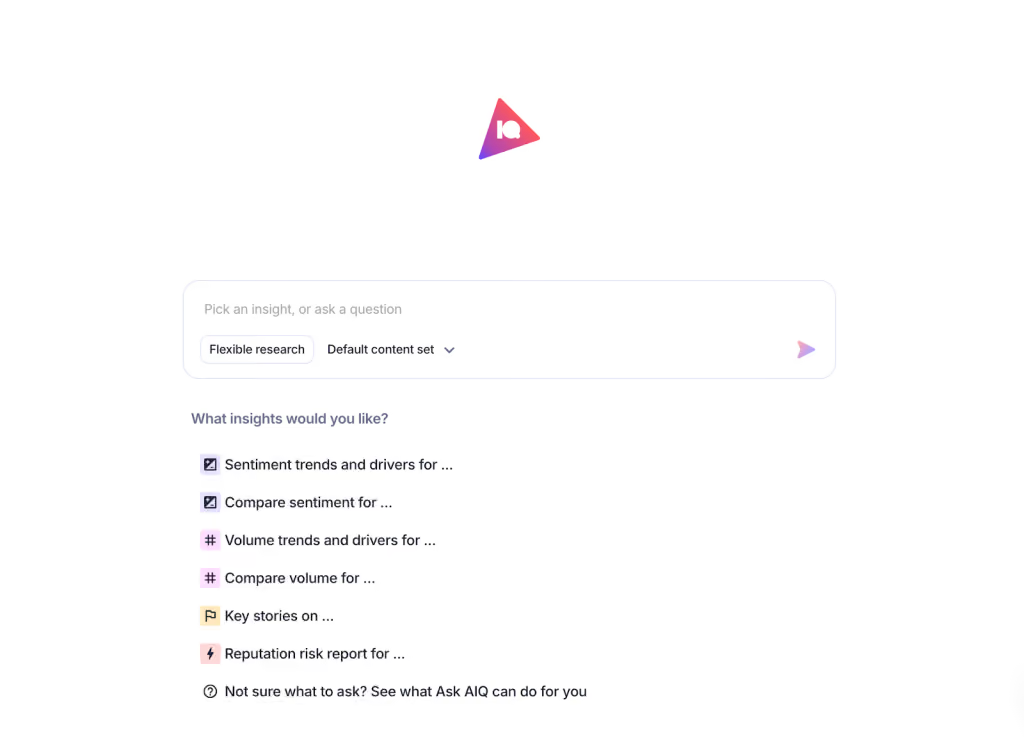
Ask AIQ offers templated threads to help you get started.
6. Why: Use Structure to Cut Through the Noise
Break your prompt into three pillars: Goal, Context, and Desired Format. Breaking down your prompt prevents the AI from getting lost in the data "noise" and gives you the output you need without the extra legwork.
- Pro Tip: "Goal: Identify reputational threats. Context: Recent merger announcement. Format: Bulleted list of risks with suggested mitigation themes."
7. Benchmarking is the Ultimate Reality Check
AI is exceptionally good at comparison. Use prompts that force the AI to look at "X vs. Y" to uncover non-obvious market gaps or reputational blind spots.
- Pro Tip: Use our tool to compare your volume of coverage against competitors, specifically during crisis windows, to see who "owned" the narrative.
8. Refine, Don't Restart (The Iterative Strategy)
Strategic thinking is a process. If the first answer isn't deep enough, don't start a new chat—drill down. Feel free to start broad, and then refine insights with pointed follow-ups.
- Pro Tip: "That's a good overview. Now, take point #2 and expand on the potential impact for our stakeholders in the US market specifically."
9. Focus on "Entity-Based" Thinking
Focus your prompts on specific entities (people, places, or organizations).
- Pro Tip: As we do at Signal AI, measuring sentiment by entity—not just by sentence—provides a much more accurate picture of how your brand is actually perceived.
Ask AIQ also allows you to drill into sources or locations directly in the prompt, which helps with specificity.
10. Use the LLM to write the prompt for you
Zach Cutler, CEO and Founder of Propel AI, shares this final tip:
“You don’t need to write a masterful prompt. Simply ask the LLM to write a prompt based on all the context that you just gave it from your previous few messages. Then you should review, and if you want, further request from the LLM to make improvements to your prompt. This is much more efficient than writing your own prompt from scratch, and it leverages the intelligence of the model in addition to yours.”
Bonus Tip: Know When to Step Up to AIQ
LLMs are creative partners, but they aren't live "truth engines." They can struggle with real-time data and strict accuracy. When the stakes are high, you need insights grounded in 5.5 million data points across 75 languages, and move beyond the general chatbot. Use a tool like Ask AIQ, built for the precision a C-Suite role demands.
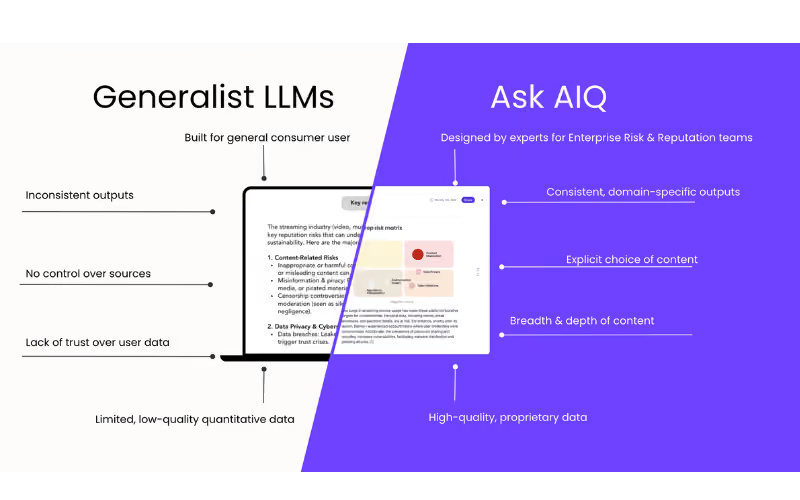
Ask AIQ can drill into these types of analyses, purpose-built for risk and reputation intelligence needs:
- Sentiment Trends & Drivers – Understand how sentiment around an entity, issue, or sector has evolved and what is driving changes.
- Compare Sentiment – Benchmark sentiment between multiple entities (e.g., competitors, partners, regulators).
- Volume Trends – Understand how the volume around a topic, entity, or key phrase has changed over time and what’s been driving those changes.
- Compare Volume – Directly compare the volume between entities or key phrases.
- Key Stories – Identify the most covered or influential stories around a given entity or topic.
- Reputation & Risk Reports [beta] – Explore media momentum vs. negativity across topics to surface emerging or established threats.
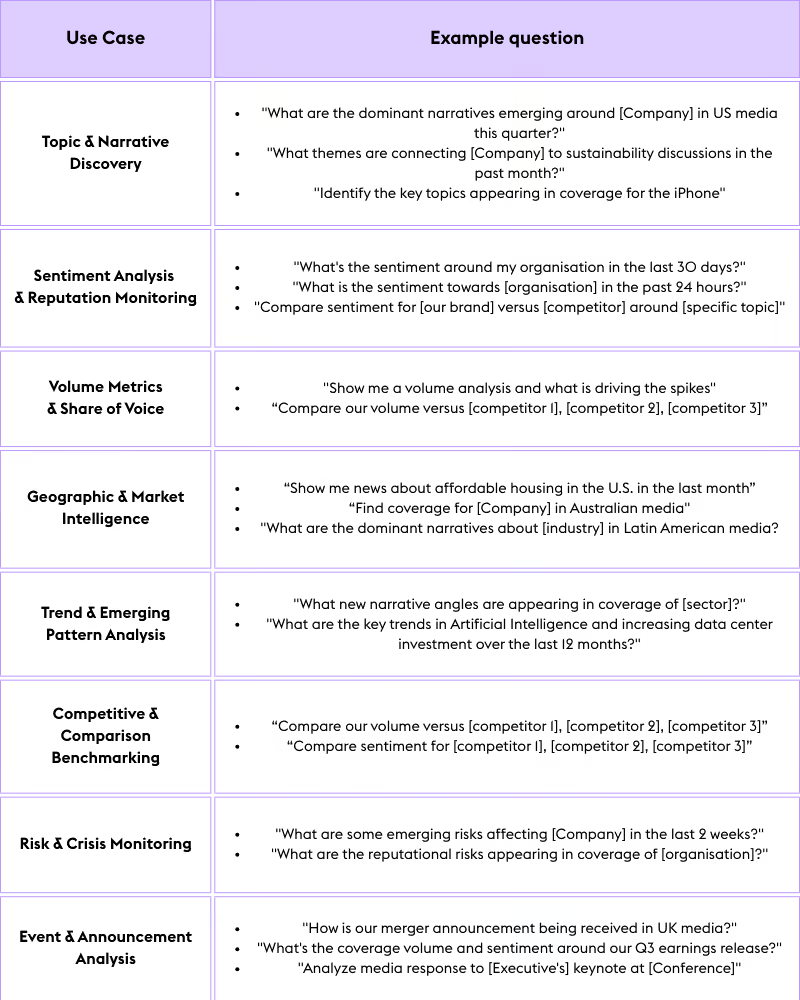
Getting started: Example prompts for Ask AIQ
Ready to move from basic questions to strategic answers?
Request a demo to explore the power of Signal AI’s Ask AIQ tool today.