%20(2).jpg)
AI assistants can write a board update, summarise a meeting, or research an issue. But ask a question with real business consequences — Which risks are accelerating? Is our reputation actually changing? What does this geopolitical event mean for us? — and the challenge isn’t always the model.
It’s what the model can see.
Signal AI MCP brings external risk and reputation intelligence directly into the AI tools teams already use, helping turn business questions into evidence-backed insights.
1. Give your AI better intelligence
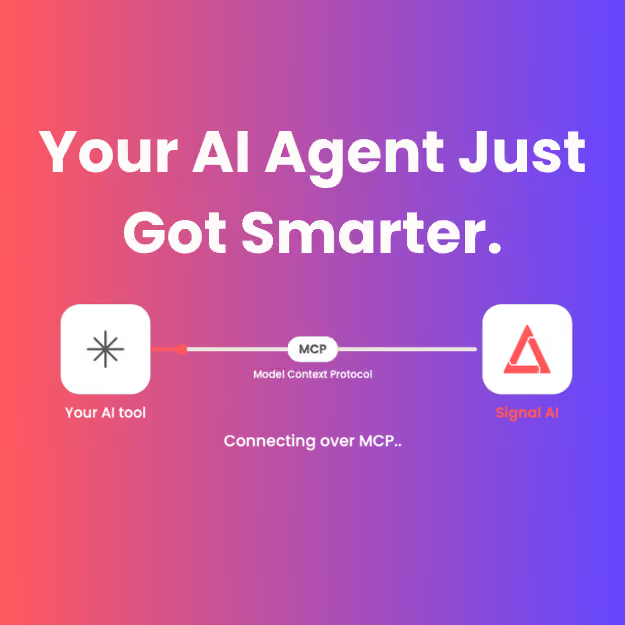
MCP (Model Context Protocol) is an open standard that allows AI applications to connect to external systems and data. Think of it as the USB-C of AI.
Signal AI MCP connects AI tools such as ChatGPT, Claude and Microsoft Copilot with Signal AI’s external intelligence.
The model is simple:
Your AI reasons → MCP connects → Signal AI supplies the intelligence.
Instead of switching platforms, exporting data or rebuilding context, users can ask a business question from their existing AI environment and bring relevant Signal AI intelligence into the conversation.
2. Why not just ask Claude?
General-purpose AI is extremely good at reasoning and synthesis. But its answer is only as useful as the information it can access. For high-stakes risk and reputation questions, teams need more than a plausible response. They need relevant external intelligence and the evidence behind it. Signal AI provides intelligence across companies, people, topics, narratives and risks, drawing on global media, premium content and multilingual sources.
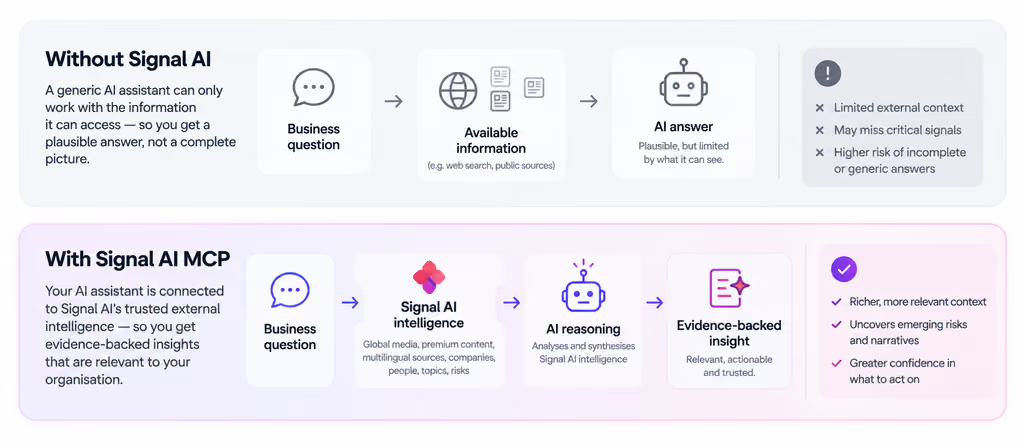
You’re not adding another chatbot. You’re giving your AI better intelligence to work with.
3. From monitoring to asking better questions
For reputation teams, that could mean asking:
- “How has the narrative around our CEO changed in the last 30 days — and what’s driving it?”
- “Which narratives around this incident are accelerating fastest?”
- “What changed in our reputation this week, why does it matter, and what’s the evidence?”
For risk teams, it could mean asking:
- “Which external risks relevant to us are accelerating?”
- “Which risks on our register are becoming more urgent?”
- “What adjacent risks should we be investigating?”
- “What are the five developments our CRO needs to know before tomorrow’s risk committee?”
The shift is simple: from searching for information to interrogating intelligence.
4. Two ways this could work in practice
Discover emerging risks
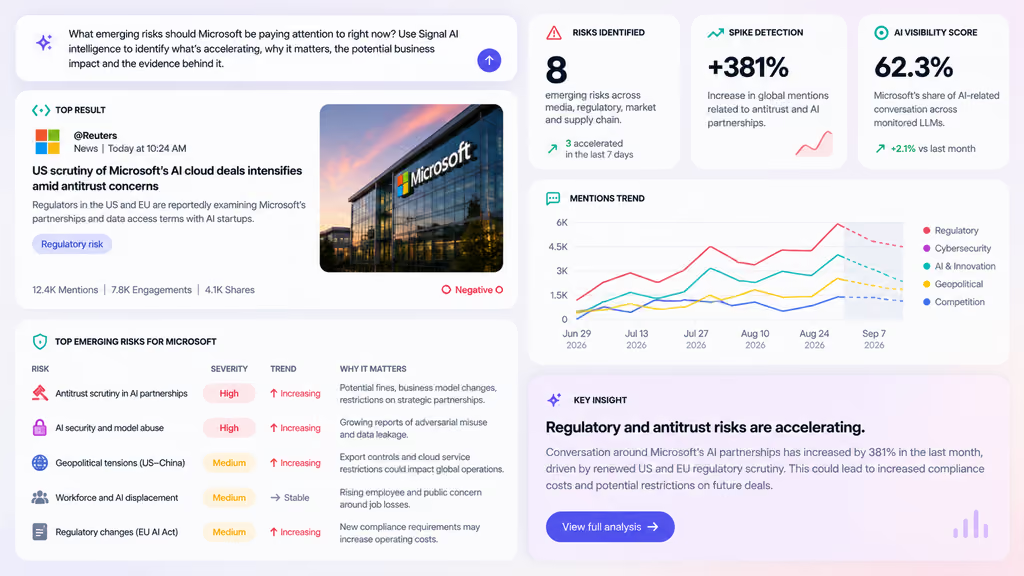
A risk leader at Microsoft could ask:
“What emerging risks should Microsoft be paying attention to right now?”
Signal AI intelligence can help identify accelerating external signals across areas such as regulation, AI security, geopolitics and stakeholder narratives; bringing together what’s changing, why it matters and the supporting evidence.
Understand the impact of a known event
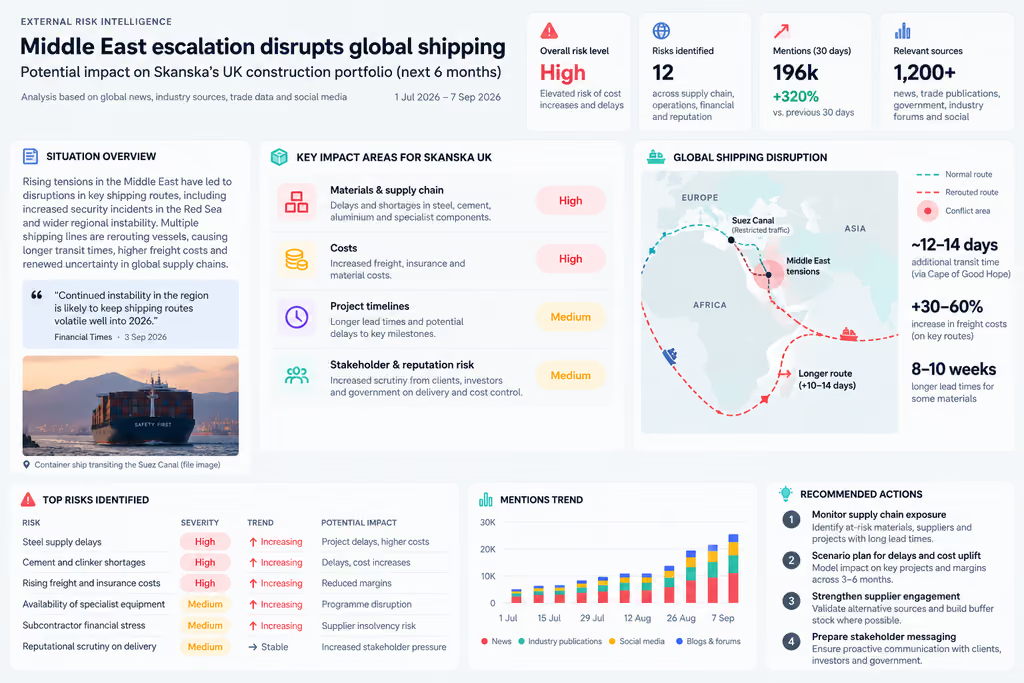
A company such as Skanska might already know that disruption in Middle East shipping is escalating. The more valuable question is:
“What could this mean for our UK construction portfolio?”
The investigation can move from summarising the event to examining potential implications across supply chains, material costs, project timelines and stakeholder risk.
These scenarios represent two important intelligence jobs:
What risks are emerging that we should know about?
What does something already happening mean for our business?
That is the difference between asking AI “What happened?” and asking “What does this mean for us?”
5. Better intelligence, where your teams already work
Different teams use different AI tools. Reputation might work in ChatGPT, another team in Claude, while a Microsoft-led organisation may standardise on Copilot.
The AI interface shouldn’t determine where your intelligence lives.
With MCP, Signal AI intelligence can support different questions and workflows from the AI environments teams already use.
Reputation investigates a narrative. Risk interrogates a threat. Strategy tracks external change. Leadership gets an evidence-backed brief.
Most enterprises aren’t short on data or tools. Increasingly, they’re short on confidence in what to act on.
And as AI takes on more discovery, synthesis and interpretation, the quality of the intelligence underneath it matters more, not less.
Signal AI MCP isn’t another place to work. It brings better intelligence into the places you already work.
Give your AI better intelligence.
Explore Signal AI MCP and learn more about our latest partnership with Microsoft Copilot 365.