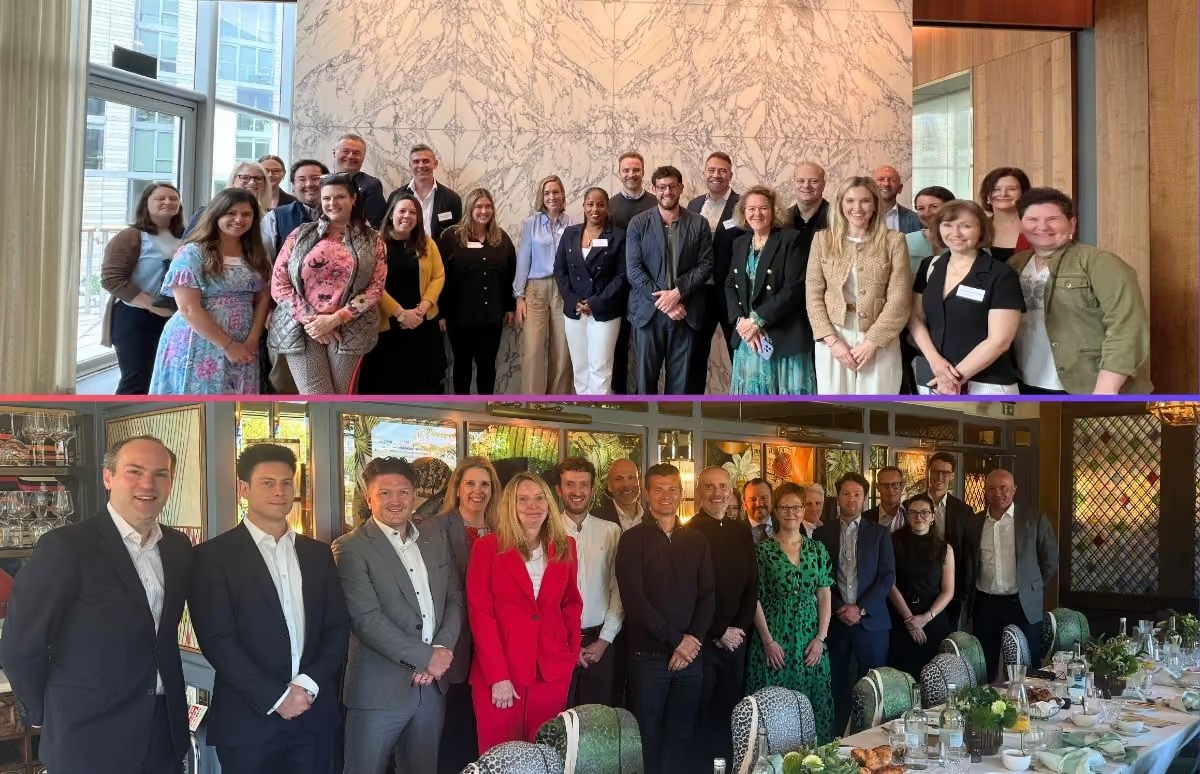
It was a jam-packed week with Exec Connects in Washington, DC, and London to connect, communicate, and collaborate on the most pressing issues facing communicators today. Our Founder & CEO, David Benigson, also visited the White House for a series of discussions hosted by World of DaaS, with some of the key individuals in US politics shaping the future of AI, data, and technology policy.
The DC Exec Connect featured guest speakers Yolanda DuCille, VP of Communications at NetApp, and Brian Bescanceney, former CCO of Boeing, Disney, and Walmart. The London event featured guest speaker Aoife Reynolds, Managing Director and head of Corporate Communications at Nomura.
While Exec Connect events are a private space for attendees to come together and share ideas, we’ll highlight the key themes and trends shaping the role of Communications.
The CCO+: Building reputation & the evolving role of Communications
There’s no doubt that the role of communications is changing (dubbed the CCO+) to expand the responsibilities into other functions, like corporate affairs. In its evolution, it’s evident that the communications team should be treated as a valuable asset—and that the role requires the foresight to "chart the course" for thoughtful messaging and responses, especially in turbulent times. For example, the recent Marks & Spencer cyber attack incident was widely regarded as a case study on effective crisis communications.
Today, communicators are moving from a “no comment” approach to more proactive engagement with journalists—a shift already helping build trust and transparency. Even when information is limited, a thoughtful response can influence how a story is shaped. Though it’s still a work in progress, attendees shared that it’s been a process of educating the C-suite on the value of openness.
Legal risk remains a key concern across many organizations, particularly as regulatory scrutiny increases and reputational stakes rise. This means a greater need for communications teams to navigate complex issues carefully and ensure public messaging aligns with legal strategy. Building strong relationships with legal teams is essential—it enables faster decision-making, translates to more cohesive responses, and reduces the risk of missteps in high-pressure situations.
The “first adopter” mindset: Transforming the Communications function with data & AI
It’s more important than ever for communications teams to become data-driven activists inside their organizations. AI's information revolution enables communications professionals to speak to data with more credibility, driving clear value back to the C-suite. There was widespread consensus that approaching issues with technology and data increases communications credibility at the executive level.
It was discussed that the communications function must be treated as a critical corporate asset. One attendee phrased it as: “Comms has finally moved from the kiddies’ table to the adult table” in business leadership. That means AI isn’t optional; it’s an amplifier for impact, credibility, and influence at the executive level.
However, this pressure for AI adoption at scale is causing concern. Anecdotally, some company leaders are looking for places where AI can increase productivity, so much of the conversation was focused on embracing and leveraging AI tools effectively. For communications teams, the two major use cases thus far are content creation and leveraging AI for message consistency.
There are also lingering concerns about job displacement. Still, it was reiterated that a communicator's job is to "pick up the baton" and act as a leader in data, technology, and insights. No matter how sophisticated the tools become, strong stakeholder relationships—especially cross-functional ones—remain foundational to effective communications.
One attendee advocated for identifying and supporting "first adopter mindset" individuals as AI champions across business units, even if those champions come from different areas of the business. For communicators, it’s about “positioning yourself as an activist.” One attendee noted that many clients remain in the early stages of understanding AI, creating an opportunity for agencies to position themselves as consultants who can help senior leaders navigate the AI-driven landscape.
Trust, risk, and AI governance: Takeaways from the White House
The idea of Applied AI still raises trust issues, as reported in a KPMG report on trust in Artificial Intelligence. The governance of AI remains a major concern among business leaders today. Technology is accelerating at a pace exceeding our current governance capabilities—echoing lessons we should have learned from the rise of social media. Now, responsible, thoughtful AI use is a boardroom issue.
As reflected by David Benigson, hearing directly from leaders like the White House Staff Secretary, CIO for Treasury, White House CTO, and Deputy Treasury Secretary Michael Faulkender really underscored something critical: Logistics and processes, the often invisible side of government, drive real change. It was made clear that Federal IT faces a stark picture of inefficiencies—and smart software investments can unlock billions in savings.
In today’s turbulent world, risk intelligence and real-time data are more important than ever. Data is the backbone of innovation, and leaders at the White House spoke powerfully about the urgency for alternative data and real-time intelligence to inform policy, manage economic risks, and tackle significant challenges like fiscal instability.
From the IRS’ struggle to modernize to the broader race for AI leadership, one thing is clear: governments and industries alike need better, faster, more reliable data to make smarter decisions.
Trending topic: Generative engine optimization (GEO) and Answer Engine Optimization (AEO)
How are communicators adapting to shifting channels? It’s more difficult than ever to maintain messaging integrity and consistency across changing channels—from what used to be global press releases to shifting social media platforms. There’s pressure to balance global consistency with local sensitivity, particularly in global organizations. While it’s essential to adapt messaging to local markets, overall consistency remains a top priority.
Teams are expanding their comms toolkits with new tech, including internal AI tools (like ChatGPT-style platforms) to support tone consistency across global markets. While consistency often outweighs hyper-local relevance, human oversight remains essential to ensure messaging lands appropriately.
The conversation introduced emerging fields of Generative Engine Optimization (GEO) and Answer Engine Optimization (AEO) as critical evolutions beyond traditional SEO. One attendee shared their internal AI audit, revealing that chatbots and AI read websites differently than traditional search engines, creating new optimization challenges for Communications and Marketing roles. The focus is shifting from just driving website traffic to shaping how brands are represented in AI-generated search summaries and overviews — a fast-emerging front in brand perception.
Overall, one thing was clear: Communications has never been more central to business strategy, and AI will only accelerate that trend.