With thousands of new media monitoring and reputation management tools available on the market, it’s critical to come prepared with a list of questions you need to answer to key stakeholders at your company.
But the types of questions Communications leaders need to answer have become increasingly complex and time-consuming. How is your brand really performing? Where are the biggest threats and opportunities? How do internal goals align with external perceptions?
And it’s on your to-do list to find the right tool that can tackle these critical business questions. Traditional solutions often fall short, requiring hours of manual aggregation, Boolean search queries, and overwhelming data that lacks direction. This means many Comms leaders are left to make business-critical decisions based on intuition or guesswork.
In this article, we’ll explore the six fundamental questions a reputation management tool should answer, to help you decide where to invest with confidence.
1. “How is my brand doing?”
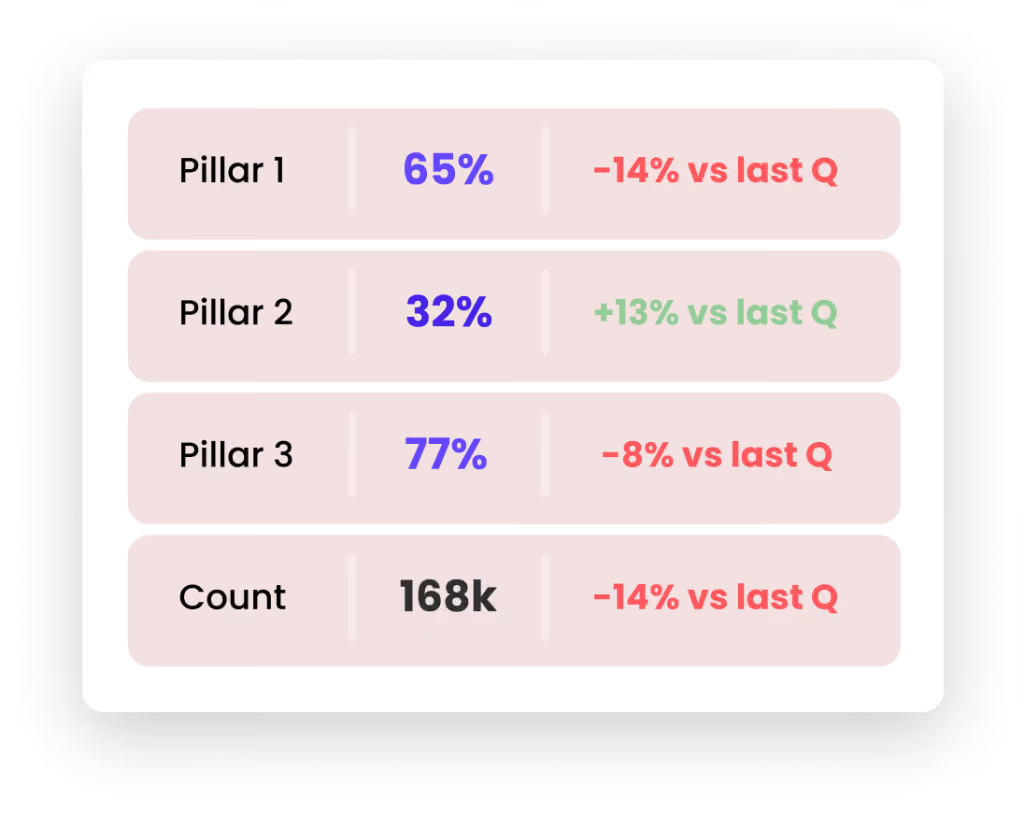
Your reputation intelligence tool should give you an overall understanding of how your messaging is landing and how your brand is performing in the media landscape. Like a pulse check or health monitor, it should allow you to understand your performance at a glance.
Some key considerations for an overall brand health check:
- What metrics and KPIs are included?
- Does the tool track performance over time?
- Can the tool align with my brand’s key company pillars?
- What does the data visualization look like? How easy is it to interpret the insights at a glance?
Some metrics or KPIs to consider to help you measure this are media coverage volume, reach, sentiment, salience or prominence, and bespoke media impact scoring across your strategic pillars, over time. Whether or not a tool covers these metrics should help you decide which one is right for you.
2. “How has my brand performed over time?”
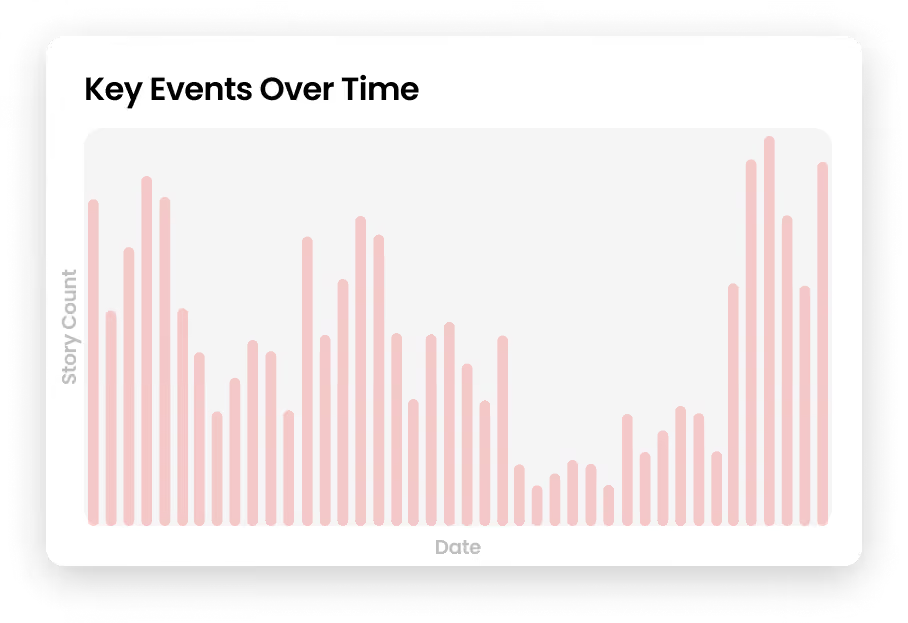
Timing is also key depending on the frequency of your reporting needs. You should consider whether your reputation management tool provides historical context as well as real-time data, so you can measure and report on your reputation over time.
Improvement to your reputation doesn't happen overnight. For continuous and proactive reputation management, your tool should be responsive in real time to anomalous media trends, so you have time to react accordingly.
3. “How does my brand compare to my peers?”
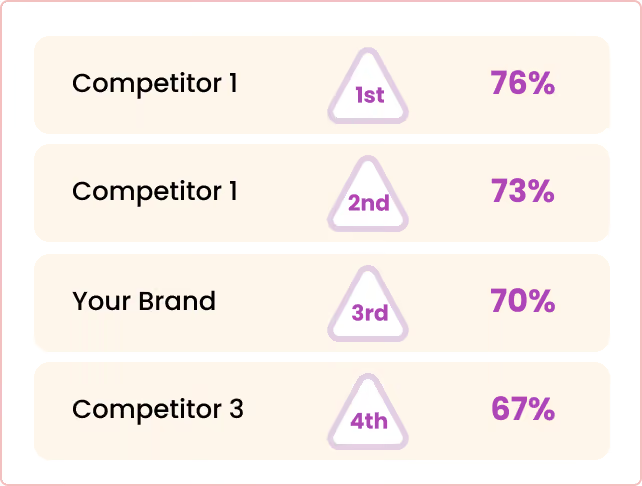
Measuring your overall brand health is great, but without competitor analysis, it’s like training for a race without considering how fast others are running.
A good reputation management tool will help you assess and analyze the industry and competitor landscape to better benchmark your performance against peers. Once you understand your peers’ strengths and weaknesses, it can help you inform your communications strategy, where there are whitespace opportunities, battleground topics, or potential reputational risks to prepare for.
Maybe you know your standard list of competitors but want to see who’s coming in around the corner. Your reputation management tool should give you an understanding of the wider industry landscape to understand market intelligence, helping you determine your key competitors and where you rank in your sector or vertical.
4. “Where should I focus my brand messaging?”
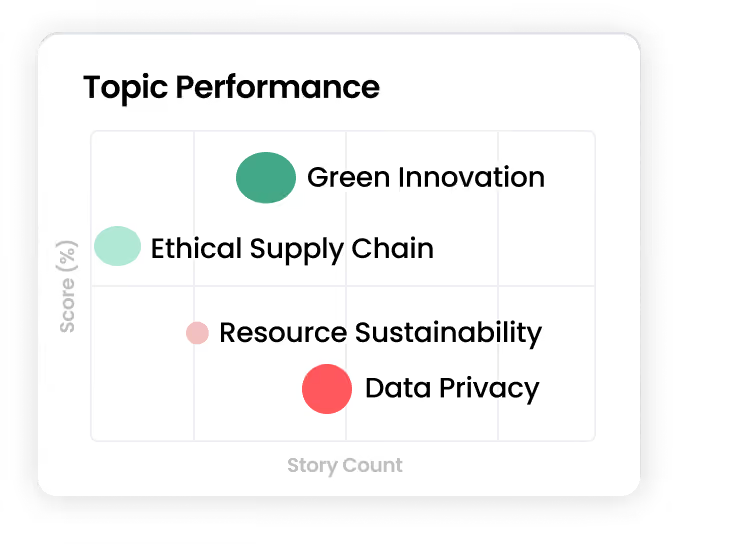
As a Communications professional, you’re in the driver's seat of the conversations happening around your organization. You most likely know which direction you want to take, but is it where your customers also want to go? To help build a strategic communications roadmap, you need the context of what your customers, target audience, and the public want to hear, not just what you want to say.
As Kareen Atkinson, Head of Communications for the NYC Department of Education shared in our Signal in the Noise podcast, “The data is essentially talking to the audience… they’re telling you so much in terms of their behavior. If you look at [the data], you’re really in constant communication.”
With your reputation management tool, you should have a good understanding of how reputation pillars and underlying topics perform relative to each other and to historic benchmarks within your framework. Your tool should accurately measure topic impact using media coverage, volume, and sentiment analysis to identify topics that stand out, then drill into the stories driving the trends.
5. “What are the risks & opportunities for my brand strategy?”
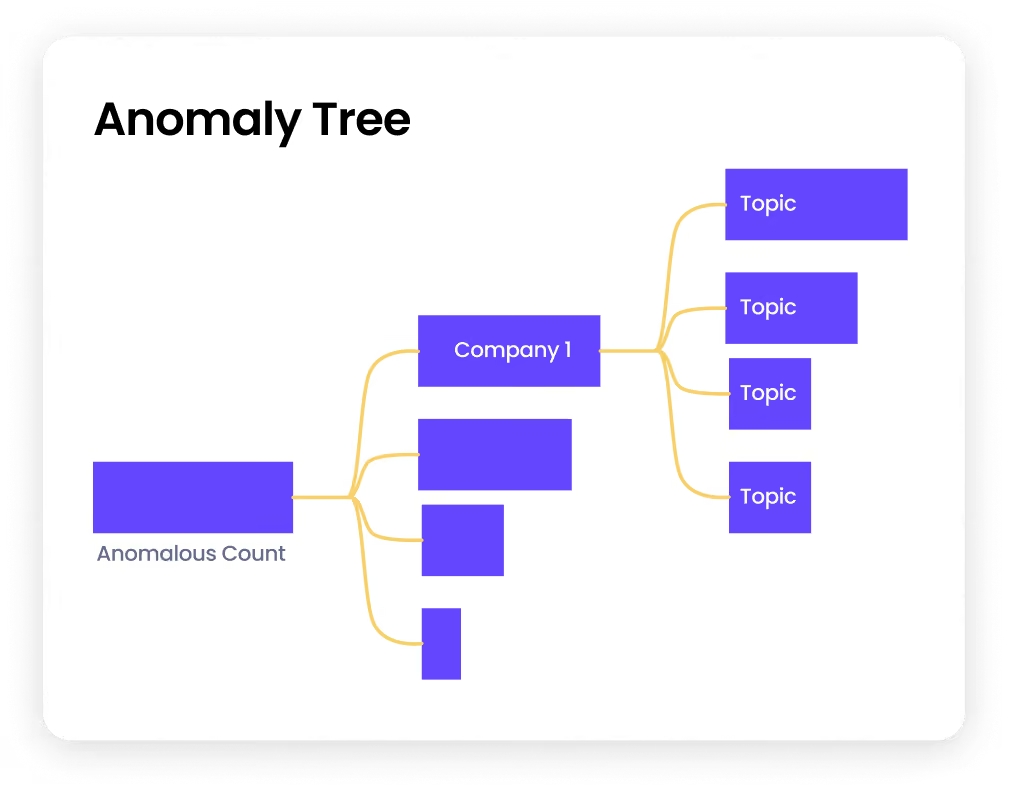
As the saying goes, ‘You don’t know what you don’t know.’ Your tool should allow you to zoom out and detect ‘red flag’ threats or anomalous changes in the data to better react to crises or issues. Look for a tool that can detect significant spikes in coverage for your brand outside of your topic framework, and be able to alert you on those findings in real-time.
Outside of just brand mentions, an advanced reputation management tool should analyze where you’re winning and areas that may require a risk mitigation strategy with hotspots for positive and negative impact.
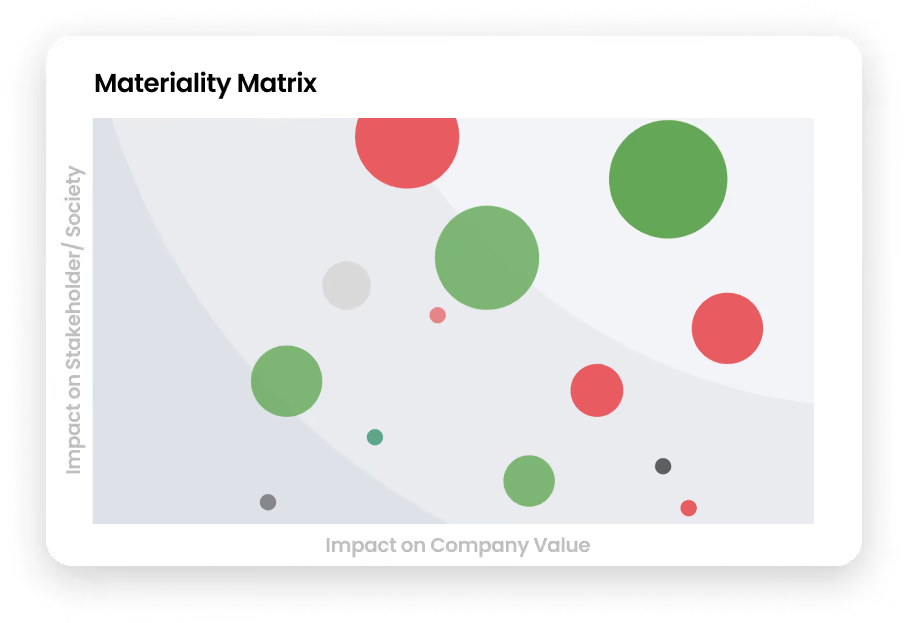
6. “What are my brand’s reputational strengths and weaknesses?”
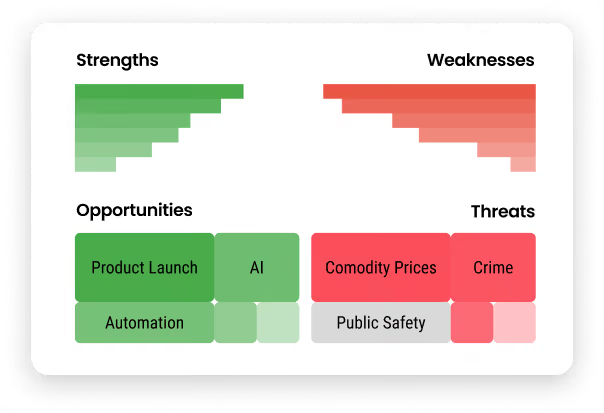
A more advanced reputation management tool could help you conduct a SWOT analysis for your organization, assessing your strengths, weaknesses, opportunities, and threats relative to your brand pillars.
Even better? Conduct a SWOT analysis with your competitors to create a winning reputation strategy for your business.
Answer more with Advanced Dashboards
With Signal AI Advanced Dashboards, you can answer strategic questions about your brand health, topic scoring, brand pillars, competitor landscape, industry ranking, and more.
- Tailor benchmarking to your reputation pillars
- Move beyond basic metrics with topic scoring
- See where you stand with industry rankings
- And much more
Through these configurable dashboards, you can efficiently demonstrate the success that contributes to your business goals, allowing communicators to adapt strategies with quantifiable data. Learn more about Advanced Dashboards here.